


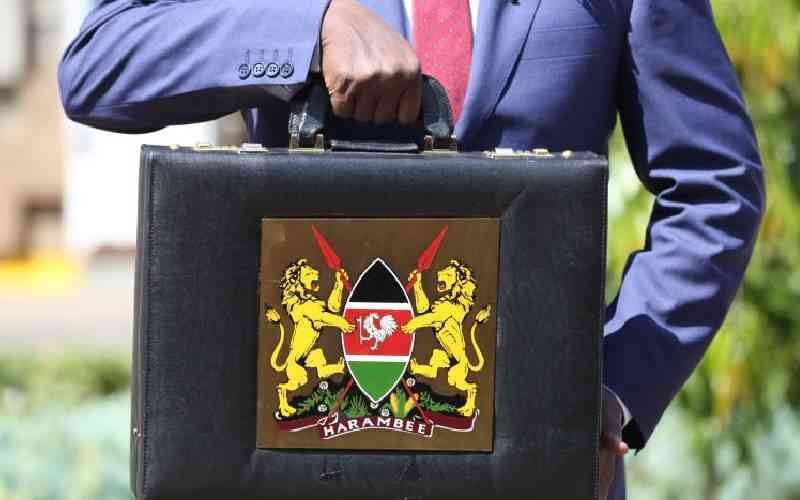
The education sector is set to receive the highest share of the National Government’s proposed budget for the 2025/26 financial year.
According to an analysis by the Parliamentary Budget Office, education has been allocated Sh701.1 billion, which represents 28.1 percent of the total budget.
This significant allocation will go toward school capitation across primary, junior secondary (JSS), secondary, TVET, and university levels.
It will also cover salaries for teachers, instructors, and lecturers, as well as the development and maintenance of school infrastructure and other related areas.
The report was presented to the Budget and Appropriations Committee chaired by Alego Usonga MP Samuel Atandi.
This marks the beginning of the committee’s deliberations on the estimates.
Departmental committee chairpersons are now expected to make formal submissions concerning the ministries, departments, and agencies under their oversight.
The Energy, Infrastructure, and ICT sector has received the second-largest allocation at Sh500.7 billion. This budget will support road construction and maintenance, housing and urban development—particularly through the Affordable Housing Fund—power generation and electricity distribution, and improvements in both rail and air transport. Recurrent spending in this sector includes Sh69 billion from the Road Maintenance Levy Fund and Sh25 billion from the Petroleum Development Levy.
Under the National Treasury and Economic Planning docket, the budget includes Sh58 billion for the National Government Constituencies Development Fund (NG-CDF), Sh10.2 billion for the Equalization Fund, Sh32 billion to the Kenya Revenue Authority (KRA), Sh11.5 billion for Financing Locally Led Climate Action (FLLoCA), Sh13.5 billion for the Global Fund targeting malaria, tuberculosis, and HIV, and Sh9.6 billion for Kenya’s subscriptions to the African Union and other international organizations.
The Governance, Justice, Law, and Order (GJLO) sector has been allocated Sh276.65 billion. This includes Sh125 billion for the National Police Service, Sh38 billion for correctional services, Sh35 billion for internal security and national administration, Sh26.6 billion for the Judiciary, Sh20.3 billion for immigration and citizen services, and Sh9.6 billion for the Independent Electoral and Boundaries Commission (IEBC).
The National Security sector has been allocated Sh251 billion, with Sh200 billion going to the Ministry of Defence and Sh51 billion to the National Intelligence Service.
The health sector will receive Sh136.8 billion. Of this, Sh54 billion will support national referral and specialized health services. An additional Sh16.8 billion will go toward reproductive, maternal, newborn, child, and adolescent health programs. The Primary Healthcare Fund has been allocated Sh13 billion, while Sh10 billion will be directed to an emergency fund for chronic and critical illnesses. KEMSA will receive Sh5 billion, KMTC will get Sh8.8 billion, and Sh4 billion will be used to advance Universal Health Coverage.
In the agriculture and rural development sector, the government has proposed an allocation of Sh78 billion to improve food security and reduce the cost of living. This includes funding for the fertilizer subsidy program, the National Agricultural Value Chain Development Project, and the Food Systems Resilience Project. Additional funds will go toward enhancing pastoral economies, supporting fisheries and aquaculture development, reforming the sugar sector, and revitalizing the coffee industry through the Coffee Cherry Revolving Fund.

Email your news TIPS to Editor@Kahawatungu.com — this is our only official communication channel
