


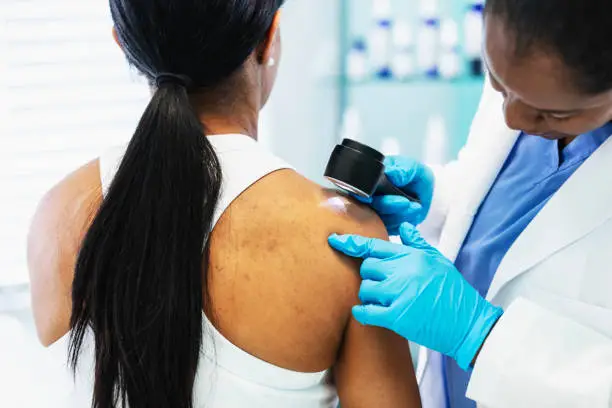
Dermatologists are medical doctors who specialize in diagnosing and treating conditions affecting the skin, hair, and nails. They also manage skin cancers, allergies, infections, and cosmetic skin concerns. Becoming a dermatologist in South Africa requires extensive medical education, clinical training, and specialist registration. Learning how to become a dermatologist in South Africa can help you prepare for this challenging and rewarding medical career.
-
Complete Your National Senior Certificate
Begin by obtaining a National Senior Certificate (NSC) or an equivalent qualification with excellent results.
Strong performance in Mathematics, Physical Sciences, and Life Sciences is usually required for admission to medical school.
- Complete Grade 12 or an equivalent qualification
- Achieve competitive admission results
- Meet your chosen university’s entry requirements
-
Earn a Medical Degree
Apply for and complete a Bachelor of Medicine and Bachelor of Surgery (MBChB) degree at an accredited South African university.
The programme provides the knowledge and clinical skills required to become a medical doctor.
- Complete the MBChB programme
- Study medical sciences and clinical medicine
- Participate in hospital-based clinical training
-
Complete Internship and Community Service
After graduating, you must complete the required medical internship and community service before practising independently.
These stages provide supervised clinical experience across different areas of medicine.
- Complete the prescribed internship
- Finish the required community service
- Gain broad clinical experience
-
Register and Specialise in Dermatology
Register as a medical practitioner and apply for specialist training in dermatology at an accredited institution.
Specialist training includes advanced education and supervised clinical practice in skin diseases.
- Register with the Health Professions Council of South Africa (HPCSA)
- Secure a dermatology registrar position
- Complete the specialist training programme
-
Obtain Specialist Registration
After successfully completing your specialist training and examinations, apply for registration as a dermatologist.
This allows you to practise independently as a specialist.
- Pass the required specialist assessments
- Apply for specialist registration
- Meet all professional requirements
-
Continue Professional Development
Dermatology continues to evolve with new treatments, technologies, and research.
Continuing education helps you maintain your skills and provide high-quality patient care.
- Attend professional development courses
- Stay updated on advances in dermatology
- Participate in conferences and specialist training opportunities
Also Read: How to Become a Chiropractor
Email your news TIPS to Editor@Kahawatungu.com — this is our only official communication channel
