


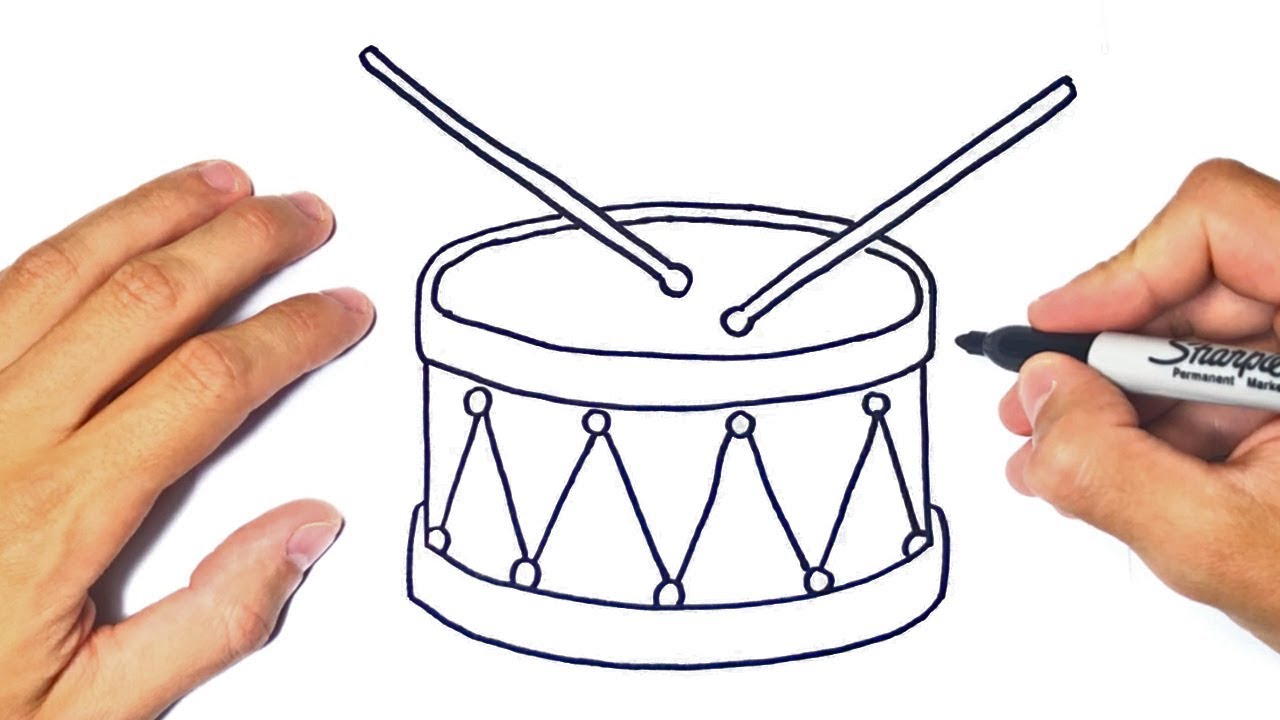
Drawing a drum is one of those simple but satisfying art exercises that help you understand shapes, balance and shading. A drum is mostly made of basic forms, but the challenge comes in giving it depth so that it looks solid instead of flat. Once you understand how the cylinder works, you can draw any type of drum from a snare to a bass drum or even traditional African drums. This guide will show you how to build the shape step by step, how to add realistic details and how to shade it so it appears three-dimensional.
- Understanding the Basic Shape
Before touching your pencil to the paper, take a moment to picture what you are drawing. A drum is essentially a cylinder. You only need to break it into simple shapes first, then refine those shapes with detail.
- Think of the top as an oval, not a circle, because you are seeing it from an angle.
- Notice that the height of the drum depends on the style. A snare is short while a djembe or conga is long.
- Decide the exact angle you want the drum to face so you can maintain symmetry as you draw.
- Drawing the Drum Outline
Start building the form slowly. Even rough lines are useful at this stage because they guide the final shape.
- Sketch a light oval to represent the top drum head.
- Drop two straight lines down from the edges of the oval to define the body of the drum.
- Connect these two lines with a curved line at the bottom to complete the cylindrical form.
- Adjust the proportions until the body looks natural and balanced.
- Adding Drum Details
Once the body is in place, start transforming the simple cylinder into a realistic drum.
- Draw a second oval inside the top one so the rim or hoop becomes visible.
- Add tension rods or lugs along the sides. These are evenly spaced, so try to maintain equal distance.
- For drums with skins on both ends, repeat the same rim structure at the bottom.
- If it is a traditional drum like a djembe, shape the body with gentle inward and outward curves.
- Refining the Structure
At this stage, you want neat, clean lines that represent the final design.
- Trace over the right lines while erasing unnecessary construction marks.
- Straighten the sides of the drum if they appear tilted or uneven.
- Define the rims clearly so they stand out from the drum body.
- Shading and Finishing the Drawing
Shading is what makes a simple outline look three-dimensional.
- Add shading on the sides to show roundness; the darkest area should be opposite the imaginary light source.
- Use lighter shading on the drum head so it appears smooth and stretched.
- Deepen shadows around the metal parts to give the drum a more solid feel.
- Add texture if the drum body is wooden, fabric-wrapped or metal.
Also Read: How To Delete Incognito History
Email your news TIPS to Editor@Kahawatungu.com — this is our only official communication channel
