


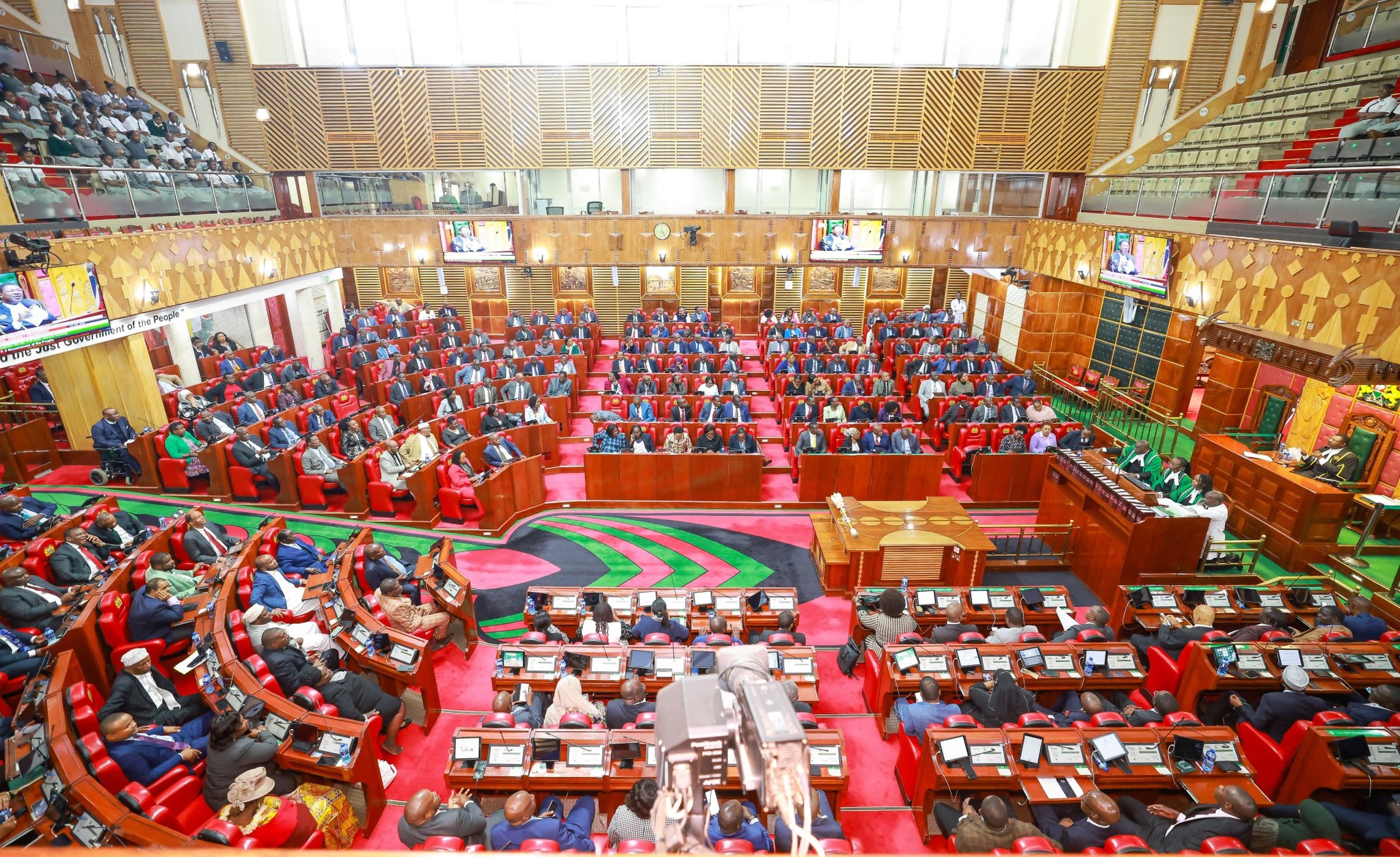
The National Assembly Public Petitions Committee has received a petition from former Taita Taveta Governor John Mruttu seeking far-reaching reforms to Kenya’s succession laws, arguing that cumbersome inheritance processes are locking families out of the economic benefits of assets owned by deceased relatives.
Appearing before the Committee chaired by Runyenjes MP Muchangi Karemba, Mruttu said millions of Kenyans continue to occupy, cultivate and invest in land that remains legally registered in the names of deceased persons, limiting their ability to fully utilize or transact with the assets.
He noted that lengthy, costly and complex succession procedures have prevented many beneficiaries from securing legal ownership of inherited property, creating a disconnect between actual use of assets and official ownership records.
“As a result, productive assets remain physically present but economically constrained. The living work the land, yet in the State’s records, the dead still own it,” Mruttu said.
He argued that the issue has evolved beyond inheritance and should be viewed as a national development challenge affecting justice, economic inclusion and wealth creation.
“This disconnect between economic reality and legal ownership has quietly become one of Kenya’s most significant yet least discussed development challenges. Succession reform should therefore be viewed not merely as an inheritance issue but as a justice issue, an economic transformation issue and an opportunity to unlock rural capital for inclusive national development,” he added.
Among the proposals contained in the petition is the establishment of a National Multi-Sectoral Task Force on Succession and Inheritance Reform to undertake a comprehensive review of the Law of Succession Act and related legislation.
While presenting the petition to the House, National Assembly Speaker Moses Wetang’ula acknowledged challenges within the current legal framework, noting that existing procedures do not adequately guarantee affordable, accessible and timely succession processes.
“The petitioners therefore pray that this House initiate a review and amendment of the Law of Succession Act to provide for simplified succession procedures for small estates, administrative settlement of uncontested estates and expanded and decentralized probate services across the country,” said Wetang’ula.
Committee Chairperson Karemba said succession disputes and inheritance matters affect a significant number of Kenyans and pledged a thorough review involving key stakeholders.
“Land succession is a matter that affects most, if not all, Kenyans, and this Committee is keen to further interrogate this matter by involving all relevant stakeholders to ensure that land succession processes are simplified and access to justice is strengthened,” he said.
Committee members Janet Sitienei and Beatrice Elachi supported the proposal to establish a multi-sectoral task force, saying it could help streamline succession procedures and improve access to inherited assets.
Elachi further proposed the inclusion of the Unclaimed Financial Assets Authority in the proposed task force to address challenges faced by families seeking to recover assets left behind by deceased relatives.
“You see, many Kenyans have never followed through on these unclaimed assets, so I agree with the Engineer that there is a need for the President to establish this multi-sectoral task force. Let them go around the country and come up with recommendations on how we move forward with this succession law, especially for the most vulnerable,” she said.
Meanwhile, the Committee also received a separate petition from members of the Kenya National Association of Public Service Pensioners in Kericho, who are seeking reforms to the public service pension framework.
The petitioners, led by John Serem, Richard Bett and Olive Chepkoech, argued that retirees under the Non-Contributory Defined Benefit pension scheme continue to face inadequate and irregular payments following the government’s transition to the Public Service Superannuation Scheme.
They said the shift to a Defined Contributory pension scheme in 2021 excluded new entrants from the old system while leaving existing pensioners under a framework that has failed to adequately meet their needs.
According to the petitioners, the dual pension structure has created disparities between retirees under the two schemes, with beneficiaries of the older system receiving lower and less predictable payments.
“We pray that the old Defined Benefit Pension be converted to a Defined Contributory Pension Scheme under one legal framework,” Serem told the Committee.
The Public Petitions Committee said it will engage relevant government agencies, experts and stakeholders before making recommendations on both petitions.

Email your news TIPS to Editor@Kahawatungu.com — this is our only official communication channel
