


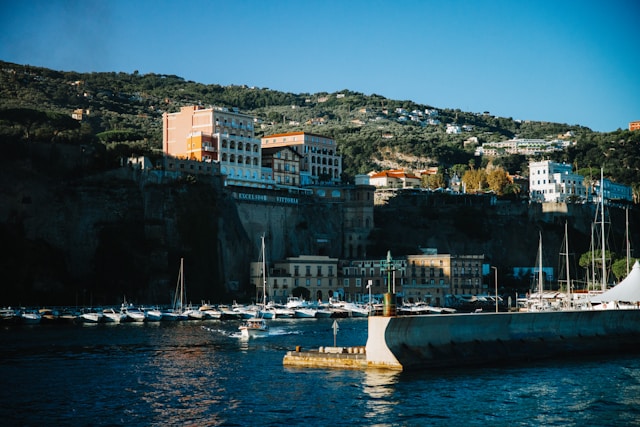
Southern Italy is the kind of place that greets you with warmth long before you understand why. Maybe it’s the way the sunlight settles on stone buildings, or the scent of citrus that drifts across coastal roads. Perhaps it’s the easy laughter in village squares. Whatever the reason, this corner of Italy has a way of slowing your steps and widening your gaze, inviting you into days filled with simple pleasures and deep-rooted traditions.
There’s a softness to this place that you feel before you see. It lingers in the quiet of early mornings, in the glow of whitewashed towns, and in the hum of conversations floating through open windows. Life here moves at a pace that encourages curiosity — a pace that lets you notice the small beauties you might miss elsewhere. It’s a region shaped by sun, stone, and centuries of story. It’s the way locals greet each other in village squares, the smell of basil drifting from kitchen windows, the faint sound of church bells echoing across limestone towns. This part of the country isn’t polished into perfection; it’s textured, lived-in, and endlessly welcoming — a place where authenticity thrives without trying to impress.
The Coast That Captivates the World
Many visitors first fall in love with the region through Amalfi Coast trips, and it’s easy to see why. The cliffs rise sharply from the sea, dotted with lemon groves and pastel houses that look almost impossibly balanced on rocky ledges. The roads curve in long, dramatic sweeps, offering views that shift with each turn — one moment a turquoise bay, the next a hillside village glowing under the sun.
Positano, with its cascading terraces, feels like a postcard brought to life. Amalfi hums with seaside energy, its cathedral doors opening onto a lively square. Ravello, perched high above the coast, seems made for contemplation. Music drifts from gardens, the air smells of warm stone, and the sea stretches far beyond what the eye can trace.
But the true charm of the coast lies in the moments between its famous stops — the quiet beaches hidden by cliffs, the small cafés where fishermen chat over morning espresso, the smell of citrus that lingers long after you’ve left.
Puglia: Italy’s Quiet Masterpiece
Move east and the landscape softens. Puglia, stretching along the heel of Italy’s boot, offers something entirely different: olive groves that seem endless, whitewashed towns perched on hilltops, and coastlines where the water turns from deep blue to crystalline green.
Travellers who join a Puglia tour often speak of the region’s ability to surprise. Alberobello’s trulli — small stone houses topped with conical roofs — make the town feel like a storybook village. Ostuni gleams like a pearl under the midday sun, its maze of alleys opening into squares framed by cafés and local shops. Lecce, often called the “Florence of the South,” dazzles with its Baroque architecture, where churches and palaces display an intricacy that rivals anything in northern Italy.
The beauty here isn’t just visual. It’s the pace of life. People talk to each other in the street. Meals stretch well past sunset. Olive oil tastes like nothing you’ve ever had before — fresh, peppery, alive.
Villages Suspended in Time
Southern Italy is full of places where time seems to move differently. In Matera, ancient cave dwellings glow at night, making the city look like a constellation on Earth. In Maratea, a colossal Christ statue overlooks the sea, and the town winds gently through wooded hillsides. Inland, tiny villages sit among fields and stone walls, untouched by modern rush.
Wandering through these smaller places feels like stepping into another era. You might find a group of elderly men debating football outside a café, women arranging produce at morning markets, or children racing through narrow lanes as church bells ring. Nothing is staged; everything feels lived.
Flavours That Tell a Story
Food in the south is more than nourishment — it’s heritage. Recipes are passed through families, shaped by local produce and seasonal rhythms.
In the Amalfi region, lemons are treasured, appearing in everything from granita to fresh pasta. Seafood tastes like it was pulled from the water minutes ago. Pastries are filled with ricotta so light it feels like eating a cloud.
In Puglia, the cuisine becomes earthier. Orecchiette pasta is made by hand on kitchen tables, each piece shaped with a thumb. Burrata arrives as creamy as the morning it was made. Bread from Altamura is baked with ancient traditions, its crust thick and satisfying. And throughout the region, olive oil is not an ingredient but an anchor — peppery, aromatic, often produced by families who have tended the same groves for centuries.
Landscapes That Shift With Every Turn
Southern Italy’s geography is a wonder in itself. One hour might take you from dramatic cliffs to quiet beaches, another from olive orchards to Baroque cities. The diversity is striking but never disjointed. The region feels connected by its landscapes: sun-bleached stone, rolling fields, and the ever-present shimmer of the sea.
Hiking trails reveal hidden coves. Rural roads wind through vineyards and olive groves. Coastal paths offer views that make you stop mid-step. Even the train journeys feel cinematic, sliding past fields of wheat, clusters of whitewashed houses, and stretches of coastline washed in sunlight.
A Culture Built on Warmth and Pride
What ultimately defines Southern Italy isn’t its scenery — it’s its people. Hospitality here feels effortless, woven into the culture. Ask for directions and you may receive a full walking tour. Compliment a dish and someone will tell you where the ingredients were grown, who harvested the olives, and how their grandmother used to cook it.
There’s pride, certainly, but there’s also a generosity that softens everything. Locals want you to understand their home, to see the details that make it special. It’s an approach to life that stays with you long after you leave.
The South’s Lasting Glow
Southern Italy lingers in memory like the warmth of a late-evening sun. It’s a place that encourages you to slow down, to savour, to connect — not only with landscapes and architecture but with the rhythm of daily life. You leave not with a checklist completed, but with moments: the first bite of fresh seafood, a quiet alleyway lit by lanterns, sea spray catching the light, a view from a hillside that feels impossibly vast.
This region doesn’t promise perfection. What it offers is something far better: authenticity, history that breathes, beauty that doesn’t need polishing, and a way of life that understands the richness of the present.
Southern Italy doesn’t shout. It simply shines — steadily, warmly, and long after you’ve returned home.

Email your news TIPS to Editor@Kahawatungu.com — this is our only official communication channel
