


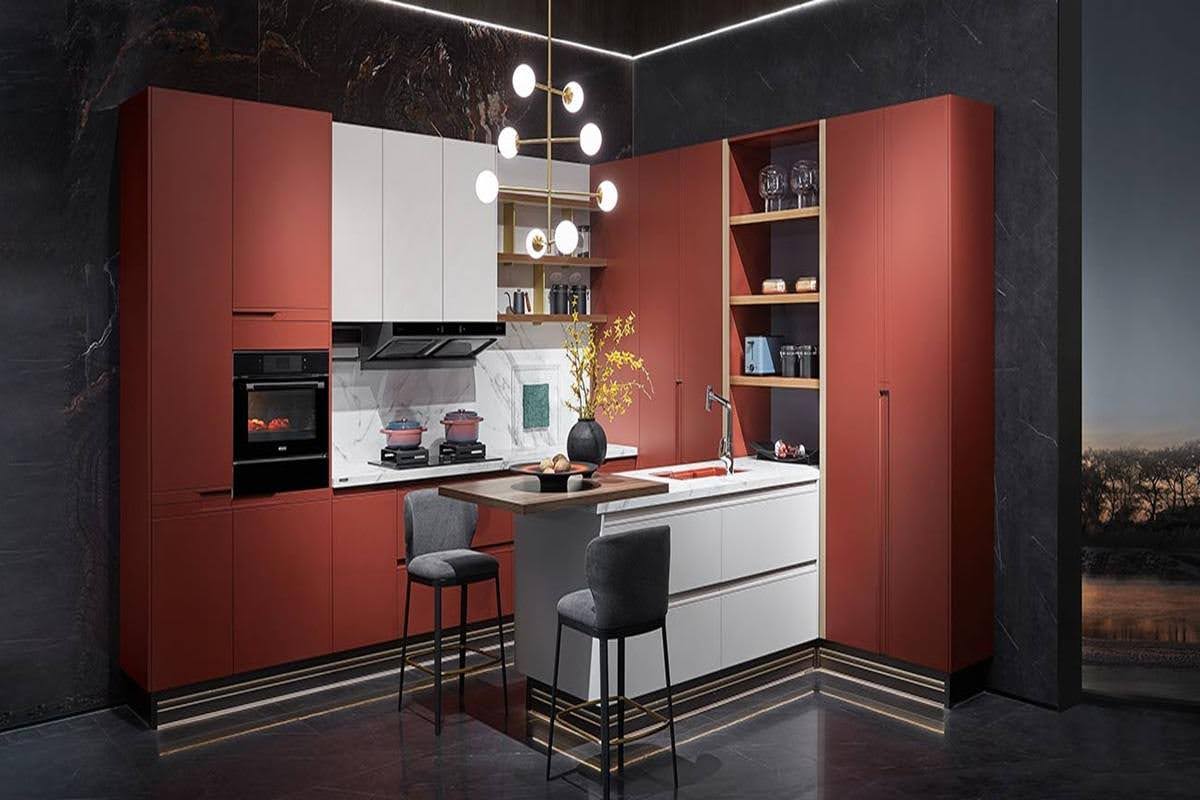
I’ve spent nearly two decades designing kitchens and bathrooms, and if there’s one thing I’ve learned, it’s that cabinets make or break a space. Not just visually—though that’s certainly important—but functionally and durably as well. The difference between exceptional and mediocre cabinetry often comes down to one thing: craftsmanship.
Beyond the Surface: What Craftsmanship Really Means
When most people think about cabinets, they focus on what they can immediately see—door styles, colors, hardware. These elements matter, of course. But true craftsmanship lives in the details most homeowners never think to examine until problems arise.
What often surprises people is how much engineering goes into quality cabinet construction. It’s not just about making something that looks good on installation day. It’s about creating something that will function flawlessly through thousands of open-close cycles, resist moisture damage in humid environments, support substantial weight without sagging, and maintain its beauty despite the inevitable bumps and scrapes of daily life.
I remember visiting a client’s home five years after we installed their kitchen. While chatting over coffee, she mentioned how her friend’s newer, less expensive cabinets were already showing wear—drawers misaligning, doors not closing properly—while hers still functioned like new. That’s craftsmanship paying dividends long after the initial investment.
The Anatomy of Quality Construction
Quality cabinet craftsmanship reveals itself in several key areas:
Joinery Methods: The way cabinet components connect determines their structural integrity. Dovetail joints for drawers, mortise-and-tenon connections for frames, and proper dado joints for shelving create dramatically stronger cabinets than those assembled with just glue and staples. These traditional woodworking methods have endured for centuries because they work.
Material Selection: Craftsman-built cabinets use appropriate materials for each component. Solid hardwoods for frames and doors. Furniture-grade plywood (not particle board) for cabinet boxes. Hardware designed for decades of use rather than mere years.
Finish Application: A proper finish does more than look beautiful—it protects. Quality cabinets receive multiple finish coats, properly sanded between applications, with special attention to moisture-prone areas. The difference between a five-step and two-step finishing process becomes apparent only years later.
Attention to Detail: Consistent reveals between doors. Grain matching across adjacent components. Perfectly smooth drawer operation. These details might seem insignificant individually, but collectively they create the difference between cabinets that feel luxurious versus merely adequate.
The Hidden Cost of Cutting Corners
Inferior cabinet construction isn’t always immediately obvious. The problems emerge gradually—a drawer that begins sticking after a few months, shelves that start to sag under the weight of dishes, a cabinet box that warps slightly when exposed to normal kitchen humidity.
I’ve had clients come to me after living with builder-grade cabinets for just 5-7 years, already needing complete replacement. Meanwhile, I regularly work in homes with 30-year-old custom cabinets that need only minor updates to look current again. The math isn’t complicated—paying twice as much for something that lasts four times as long is simply good economics.
And let’s be honest about something—kitchen and bathroom renovations are disruptive. Living through one renovation instead of three over the same timespan means less inconvenience, less waste, and often lower long-term costs.
The Craftsman Approach vs. Mass Production
There’s been an interesting evolution in the cabinet business over recent decades. Traditional cabinet making was once exclusively the domain of individual craftsmen or small shops, where every piece received personal attention from skilled hands.
The rise of mass production brought cabinets to a broader market—certainly a positive development in many ways. But something was lost in that transition. The knowledge that someone personally inspected and adjusted each drawer, the customization that comes from human judgment rather than programmed specifications.
Today, we’re seeing a hybrid approach emerge. Even larger cabinet franchise operations are finding ways to incorporate craftsman techniques while maintaining production efficiency. CNC machinery provides precision, but skilled craftspeople still handle crucial assembly and finishing steps that machines simply cannot replicate with the same quality.
Come to think of it, this balance between technology and human skill represents the best of both worlds—precision where it matters, but human judgment where it makes a difference.
Recognizing Quality: What to Look For
How can you identify quality craftsmanship when evaluating cabinets? Here are some telltale signs:
- Solid wood drawer boxes with dovetail joinery
- Full-extension, soft-close drawer guides rated for at least 75 pounds
- Face frames made from solid hardwood (in framed cabinets)
- Cabinet boxes constructed of plywood rather than particle board
- Back panels that are fully captured in dados, not simply stapled on
- Doors that feel substantial and close with a solid, satisfying sound
- Consistent gaps between all doors and drawers
- Adjustable hinges that allow for perfect alignment
- Multi-step finish with excellent coverage on all surfaces, even unseen ones
But here’s my favorite test: open a drawer, extend it fully, and examine the inside front corner where the drawer side meets the drawer front. In quality cabinets, this joint is typically dovetailed or lock-mitered—visibly more complex than a simple butt joint held with glue and staples. This one detail often reveals the overall construction philosophy behind the entire cabinet line.
The Business of Craftsmanship
For those in or considering entering the cabinet business, understanding craftsmanship isn’t just about pride in the product—though that certainly matters. It’s also about creating sustainable business practices based on quality rather than volume.
The most successful cabinet makers I know build their reputation on craftsmanship first, recognizing that satisfied clients become their most effective marketing channel. A stunning kitchen with impeccable cabinetry sells itself many times over through referrals and showcases.
The Value Proposition: Worth the Investment?
Quality craftsmanship inevitably commands higher prices. The materials cost more, the construction takes longer, and the skill required demands proper compensation. But is it worth it?
For primary residences where you’ll live for many years, absolutely. The daily pleasure of using beautiful, functional cabinetry combined with the long-term durability makes it a clear yes.
For investment properties or homes you’ll sell quickly, the calculation becomes more nuanced. While quality cabinets can certainly increase resale value, the full premium may not be immediately recoverable. However, even here, the visual impact of quality craftsmanship can significantly influence buyer perception of the entire property.
Final Thoughts
In an era of disposable products and planned obsolescence, quality cabinet craftsmanship stands as a refreshing commitment to lasting value. These aren’t just storage boxes—they’re the backdrop for daily life, the functional framework of our most important spaces, and often the largest single investment in our kitchens and bathrooms.
The cabinets I’m most proud to have specified in clients’ homes aren’t necessarily the most expensive or elaborate. They’re the ones built with integrity from the inside out, designed to serve families beautifully for decades rather than years. That kind of craftsmanship represents not just quality construction, but a philosophy of creating homes meant to endure and improve with age.
Email your news TIPS to Editor@Kahawatungu.com — this is our only official communication channel
