


The Directorate of Criminal Investigations (DCI) operationalised the Counter-Organised Immigration Crime Team (COICT) in a decisive step to strengthen Kenya’s border security and protect citizens from the growing threat of transnational organised crime.
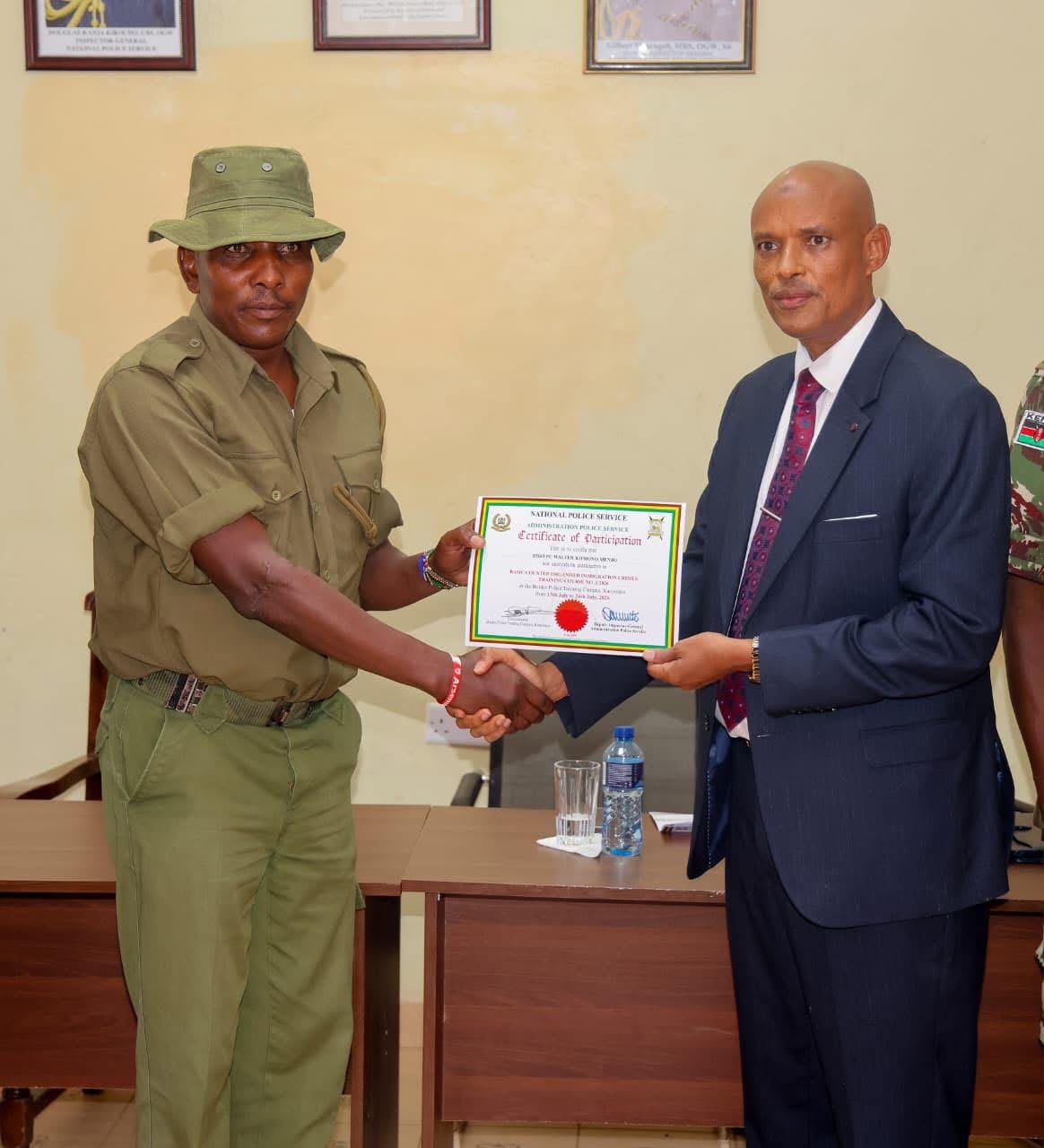
On July 24, 2026, the Director of Criminal Investigations, Mohamed Amin, on behalf of the Inspector General of Police, Douglas Kanja, flagged off the 29-member elite unit at the Border Police Training Campus in Kanyonyoo, Kitui County, following the successful completion of intensive specialised training.
The establishment of the COICT reflects the DCI’s broader commitment to strengthening specialised investigative capacity, enhancing inter-agency collaboration and advancing intelligence-led responses to increasingly complex security threats.
With training complete, the team now transitions from the classroom to the frontline.
Their mission is clear to disrupt criminal networks, dismantle trafficking and smuggling syndicates, prosecute those who exploit the vulnerable, and safeguard the integrity of Kenya’s borders.
The deployment marks a significant milestone in the DCI’s continued efforts to stay ahead of sophisticated criminal networks that exploit borders, immigration systems and vulnerable persons for profit.
Domiciled under the DCI’s Serious Crime Unit, the specialised team will be deployed to key border stations across the country to immediately combat trafficking in persons, migrant smuggling, travel document fraud and other transnational crimes that threaten national security and public safety.
The training was delivered under the East Africa Border Security Programme with funding support from the British High Commission and facilitated by subject-matter experts from the National Police Service in collaboration with partners VALAR and HAART Kenya.
Participants underwent intensive training in intelligence-led investigations, investigative interviewing, trafficking in persons and migrant-smuggling investigations, financial and digital evidence management, crime-scene processing, international cooperation, victim-centred approaches, human rights, professional ethics, joint operations and operational planning.
Addressing the officers, Amin congratulated them on completing the rigorous programme and reminded them that every investigation must be conducted with the highest standards of professionalism, integrity and accountability.
He emphasised that all operational decisions must be intelligence-led, evidence-based and firmly anchored in the Constitution of Kenya, the National Police Service Act and all applicable laws.
He further reminded the officers of their dual responsibility to deny organised criminal networks the opportunity to exploit Kenya’s borders while safeguarding the rights, dignity and welfare of victims with fairness, compassion and respect.
Representing the British High Commission, Ben Fisher described the rapid operationalisation of the COICT as a landmark achievement and the first specialised capability of its kind in East Africa.
He commended the enduring Kenya–United Kingdom security partnership that made the initiative possible.
Speaking on behalf of the Deputy Inspector General of the Administration Police Service, APS Director of Security Operations Jackson Kangani challenged the officers to translate their training into measurable operational results through dismantled criminal syndicates, rescued victims, successful prosecutions and safer communities.

Email your news TIPS to Editor@Kahawatungu.com — this is our only official communication channel
