


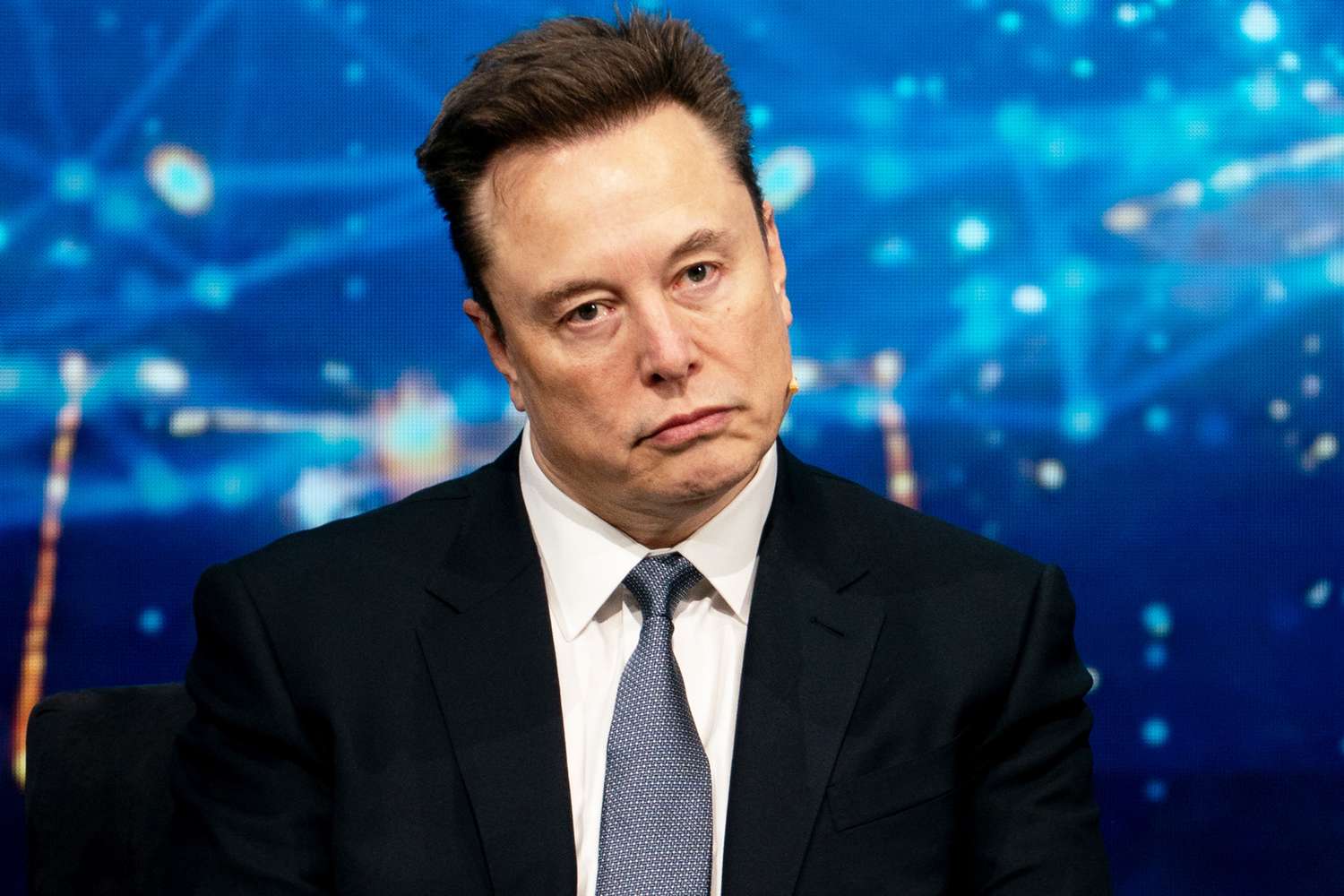
On October 9, 2026, Elon Musk posted a letter on X addressed to “Prime Minister Ambani.” The sarcasm was not subtle. Mukesh Ambani is not India’s Prime Minister. He is the chairman of Reliance Industries, India’s second richest man, and the force behind Reliance Jio, the country’s largest telecom operator. Musk’s message was a direct jab at what he sees as Ambani’s outsized influence over India’s regulatory machinery.
Dear Prime Minister Ambani,
Please accept my humble apologies for not realizing that you are the real boss of India.
Naturally, you would prefer to maintain your monopolistic exploitation of the great people of India, but would you nonetheless consider allowing Starlink to compete?
There are many areas of India, as there are in all countries, with no Internet access, which denies children the opportunity for education and for small businesses the opportunity to sell their goods to a global market. Starlink would change their lives for the better.
Thank you 🙏
— Elon Musk (@elonmusk) October 9, 2026
“Dear Prime Minister Ambani, Please accept my humble apologies for not realizing that you are the real boss of India,” Musk wrote. “Naturally, you would prefer to maintain your monopolistic exploitation of the great people of India, but would you nonetheless consider allowing Starlink to compete?”
The tweet capped a week of escalating frustration from Musk over Starlink’s inability to launch commercial satellite internet services in India, despite holding a valid license for over a year. The post immediately triggered responses from India’s political establishment, a pushback from the Ministry of Communications, and a viral exchange with Rahul Gandhi.
The reality is more technical and less dramatic. Starlink is not being uniquely blocked by a single billionaire. It is stuck in the same regulatory queue as its Indian competitors, waiting for security clearances and a spectrum pricing framework that the government has been slow to finalize.
Starlink received its Global Mobile Personal Communication by Satellite (GMPCS) license from India’s Department of Telecommunications on June 6, 2025. In July 2025, India’s space regulator, the Indian National Space Promotion and Authorisation Centre, approved Starlink’s first generation constellation of 4,408 satellites for broadband services. By September 2025, the company had received provisional spectrum for trials and began testing related to security.
The company has since built 20 gateway sites across India, comprising hundreds of antennas, and says it has established security controls specific to India to keep Indian user data within the country. “We’ve already made the investment and built the existing ground infrastructure here, 20 gateway sites comprising hundreds of antennas, and we’ve established the operations to be ready to serve India,” said Lauren Dreyer, Vice President of Starlink Business Operations, at India Mobile Congress 2026.
What’s missing is security clearance from the Ministry of Home Affairs and final spectrum assignment from the Department of Telecommunications.
The holdup is not a commercial dispute. It is a national security review.
In June 2026, reports emerged that India had frozen final approvals for Starlink after security officials raised concerns about Starlink terminals being used during the Iran conflict. Starlink terminals were reportedly used in Iran despite the service not being licensed there, raising questions about the company’s ability to prevent unauthorized use in conflict zones.
The Indian Army also reportedly recovered a Starlink device alongside weapons during operations in Manipur, further fueling security concerns.
These incidents pushed India’s security establishment to take a harder look at how a satellite network operated by a foreign company could be regulated during geopolitical tensions. Unlike terrestrial telecom networks, satellite internet operates through infrastructure in space that is harder for national authorities to monitor or restrict.
Minister of State for Communications Chandra Sekhar Pemmasani confirmed the bottleneck: “The Department of Telecom has issued licences to all satcom companies as well as provisional spectrum. Now the issue is pending with MHA for security clearance. As soon as it is cleared, they will get it. It has nothing to do with one company.”
Even after security clearance, Starlink cannot launch without spectrum assignment. India decided to assign satellite spectrum administratively rather than through auction, but the pricing framework has not been finalized.
The Telecom Regulatory Authority of India and the Department of Telecommunications have been discussing the pricing regime. Communications Minister Jyotiraditya Scindia said in October 2026 that the government was “close to taking the final decision” on spectrum pricing. Reports indicated the framework would involve a spectrum usage charge of approximately 5% of adjusted gross revenue, with spectrum allocated for five years and an option to extend by two more.
Until that pricing decision is finalized and each operator individually completes its security assessment, no satellite internet company can begin commercial operations.
Musk’s core allegation, that Ambani is personally blocking Starlink to protect a monopoly, does not hold up against the regulatory record.
Three companies hold GMPCS licenses in India: Starlink, Reliance Jio’s satellite venture Jio Satcom, and Eutelsat OneWeb, which is backed by Bharti. All three are at broadly the same regulatory stage, awaiting security clearance and spectrum assignment. Amazon’s Project Kuiper has also expressed interest and will undergo the same process.
“Let me be very clear. India does not allow a monopoly in any sector,” Scindia said at India Mobile Congress 2026. “There is a lot of conversation about a particular party. But there are three parties that have got licenses. There is Reliance Jio, there is OneWeb, and there is Starlink.”
Sunil Mittal, chairman of Bharti Airtel and a major investor in OneWeb, dismissed Musk’s discrimination claims. OneWeb is waiting for the same clearances, he noted.
Reliance Jio is not a passive observer. At IMC 2026, Jio unveiled plans for a “Sovereign Satellite Connectivity” initiative involving approximately 1,600 Low Earth Orbit satellites and 23 ground stations across India, designed to extend coverage to over 600,000 villages, islands, and border outposts. The proposed network would keep the entire value chain, including design, engineering, integration, testing, launch, deployment, and operations, within India.
Jio’s satellite ambitions do not prove it is blocking Starlink, but they do explain why Musk sees a competitive threat. Both companies are racing to capture India’s underserved rural connectivity market.
Musk’s broader argument that India has significant rural connectivity gaps that satellite internet could fill is supported by the data.
As of May 2026, 11,256 listed villages in India still lacked 4G coverage. India had 1.093 billion internet subscriptions in March 2026, but only 440.87 million were rural. Rural internet subscription density stood at 48.31 per 100 people, compared to 126.80 per 100 people in urban India.
BharatNet, the government’s rural broadband programme, has laid over 850,000 route kilometres of optical fibre and made about 221,000 Gram Panchayats service ready. However, operational Points of Presence stood at only 80,472 as of June 2026.
Satellite internet could serve remote villages, mountainous regions, and islands where laying fibre or deploying mobile towers is commercially unviable. Starlink has made this argument repeatedly. The question is whether the government’s regulatory process, not Ambani, is the actual barrier.
The tweet quickly became a political flashpoint. Rahul Gandhi, Leader of the Opposition in the Lok Sabha, responded to Musk’s post with a cryptic message: “Welcome to India, Elon. Wait till you discover the other guy.” Musk replied: “Thank you, Rahul. This is indeed troubling.”
Gandhi later elaborated on his WhatsApp channel, saying India needed an economy where businesses could compete fairly without political patronage.
Telangana Chief Minister Revanth Reddy expressed support for Musk’s position, stating that Congress governments have historically stood for digitization and modernization.
The government, meanwhile, held its line. The Ministry of Communications described Musk’s allegations as “baseless and misconceived” and reiterated that the regulatory framework is “fair and not discriminatory.”
Starlink’s India launch depends on three things: security clearance from the Ministry of Home Affairs, finalization of the spectrum pricing framework by TRAI and DoT, and individual compliance with security conditions by each licensee.
None of these are under Mukesh Ambani’s direct control. But Musk’s public pressure campaign may be designed to accelerate the process by turning regulatory delay into a political issue.
Whether that strategy works remains to be seen. India’s satellite internet market is not blocked by a single oligarch. It is gated by a bureaucracy that moves slowly on matters involving national security, foreign satellite infrastructure, and spectrum pricing. It is also gated by a government that insists it is treating all players equally.
Starlink is not uniquely disadvantaged. It is simply waiting in the same queue as everyone else.

Email your news TIPS to Editor@Kahawatungu.com — this is our only official communication channel
