


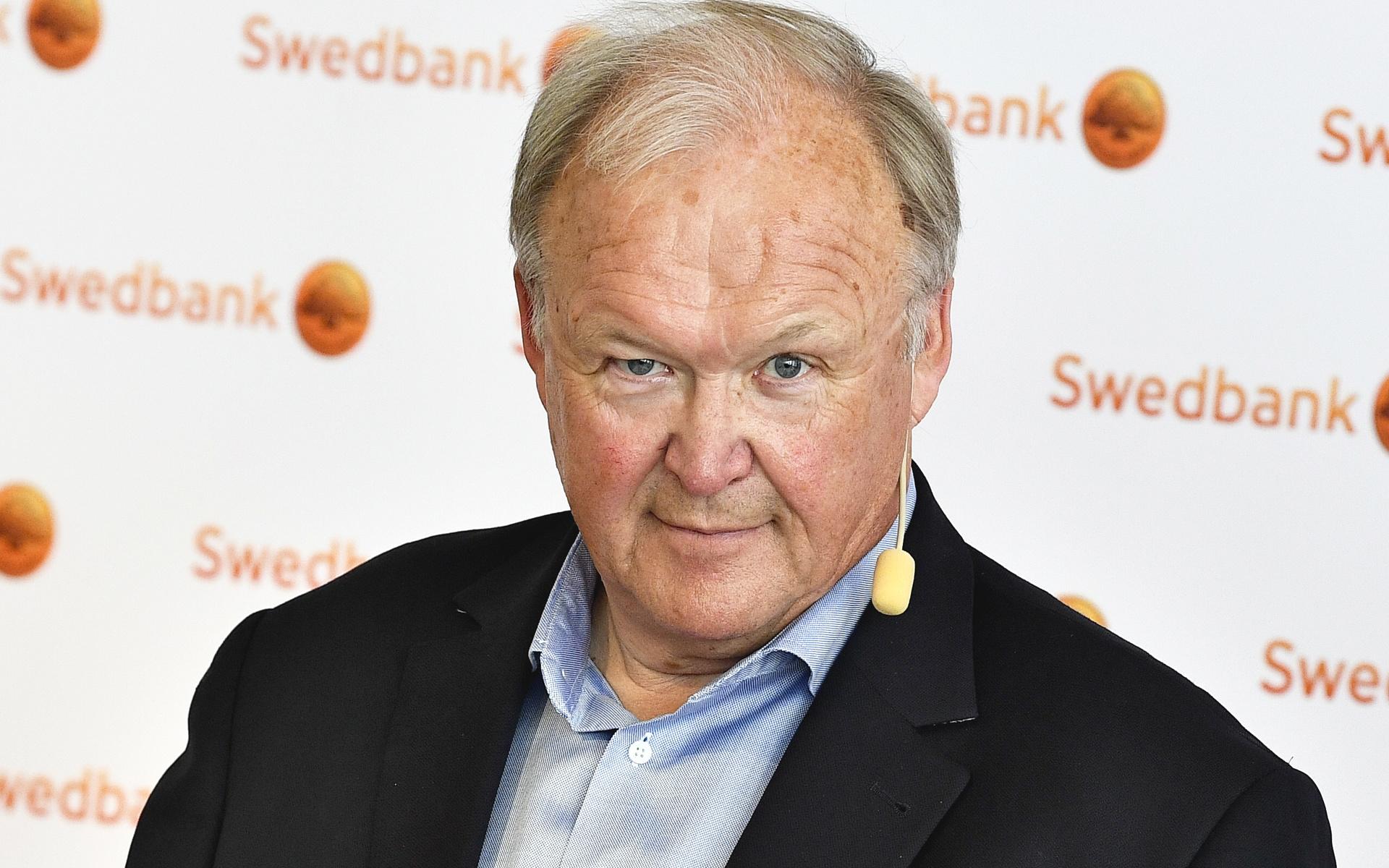
Hans Göran Persson is a Swedish Social Democratic politician who served as Prime Minister of Sweden from 1996 to 2006 and as leader of the Swedish Social Democratic Party from 1996 to 2007.
Born on 20 January 1949 in Vingåker in Södermanland County, he was the son of Thomas (Tomas) Persson, a construction worker, and Karin.
He grew up in a working-class family and studied at the University College of Örebro (now Örebro University) after secondary education focused on chemistry.
He entered politics early through the Social Democratic Youth League and rose through local and national roles before becoming one of Sweden’s longest-serving modern prime ministers.
After leaving politics he has held senior positions in business, including as chairman of the board of Swedbank since 2019.
Siblings
Göran grew up as one of five children.
He had an older sister, Kerstin (born 1943), older twin brothers Jan and Bo (both born 1945), and a younger brother, Bengt (born 1950).
The family lived in modest circumstances in Vingåker, where their father worked in construction and their mother was a homemaker.
Also Read: Olaf Scholz Siblings: Get to Know Jens and Ingo Scholz
Career
Persson became active in the Social Democratic Youth League in his mid-teens and worked in adult education and local party organisations in Södermanland.
After military service he entered municipal politics in Katrineholm, serving as chairman of the education board and later as municipal commissioner (kommunalråd) from 1985 to 1989.
He was elected to the Riksdag in 1979 (serving until 1985 and again from 1991 to 2007).
Under Prime Minister Ingvar Carlsson he served as Minister for Schools and Education from 1989 to 1991.
After the Social Democrats returned to power in 1994 he became Minister for Finance, where he implemented strict fiscal policies that helped stabilise Sweden’s economy following the deep crisis of the early 1990s.
In March 1996 he succeeded Carlsson as party leader and prime minister.
His governments prioritised budget discipline, debt reduction, welfare reforms, and environmental initiatives such as the “Green People’s Home” concept.
He led the party through the 1998 and 2002 elections, remaining in office for more than ten years—the second-longest continuous tenure of any Swedish prime minister after Tage Erlander.
The Social Democrats lost the 2006 election to a centre-right alliance, and Persson stepped down as party leader in 2007.
In subsequent years he has worked as a senior advisor, served on various boards, and since 2019 has been chairman of Swedbank.
Accolades
Persson received H.M. The King’s Medal in the 12th size with chain in 2009, one of Sweden’s highest civilian honours.
He has been awarded foreign decorations including the Grand Cross of the Order of the Star of Romania and the Order of the Cross of Terra Mariana, First Class, from Estonia.
In 2001 he received the Raoul Wallenberg Prize.
He has been granted honorary doctorates and is widely recognised for steering Sweden out of the 1990s economic crisis while maintaining the core of the welfare state.

Email your news TIPS to Editor@Kahawatungu.com — this is our only official communication channel
