


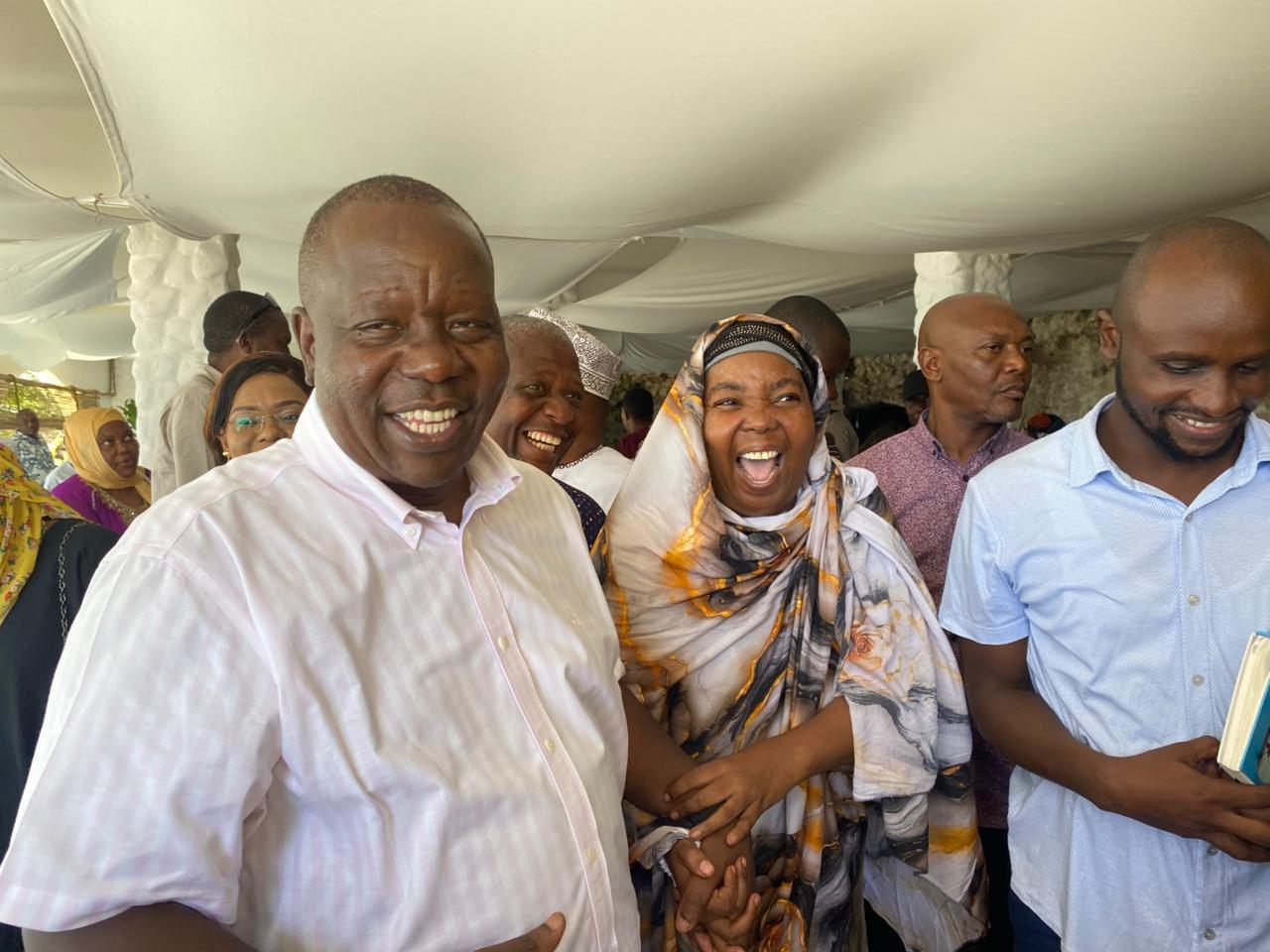
For a man who has seen it all- unparalleled power in the country’s political corridors, one could expect that Dr Fred Matiangi could draw massive popular support from his people.
Not so quick, it has emerged.
Though enjoying greater national fame and considerable national appeal, Matiangi continues to remain relatively shunned by the political class at home.
Not even his local MP from South Mugirango, his original home, feels convinced that he has what it takes to lead the nation.
For one who literally ran the government together with President Kenyatta, Matiang’i is now forced to learn the hard way that past authority does not automatically translate into present political goodwill.
At his Kijauri farm, he often faces journalists, cutting the image of one at pain and struggling to bring together a restive grouping that has already written his bid off.
He once exploded in anger though he responded albeit with contempt and disdain, when a journalist prodded him to explain his current relationship with Kisii Governor Simba Arati.
Arati is among leaders Sylivanus Osoro (South Mugirango), Alfa Miruka (Bomachoge Chache), Zaheer Jhanda (Nyaribari Masaba) and Daniel Manduku (Nyaribari Masaba) from Kisii County who are wary of his presidential bid.
Even the Nyachae family where he honed his political pupilage, nobody has come forth to endorse his appetite to succeed President William Ruto.
In Nyamira, where he has set residence, Matiangi is considered a pariah by a half of the MPs among them Joash Nyamoko (West Mugirango) and Steve Mogaka (North Mugirango).
Women Reps Donya Toto (Kisii ) and her Nyamira counterpart Jerusha Mogaka have since thrashed Dr Matiangi ‘s bid.
Shunned, the State House hopeful, as solace, tug along just three of the 13 member brigade.
They constitute MPs -Clive Gisairo (Kitutu Masaba) , Anthony Kibagendi (Kitutu Chache South) and Patrick Osero (Borabu).
Senator Richard Onyonka who was early seen as a pace setter for the Matiangi presidency had since quietly retreated.
He now joins the mix of Kisii County’s Bonchari centricist legislator Charles Onchoke.
Onyonka did not pick calls when sought for clarification.
As a Cabinet Secretary in the Uhuru Kenyatta regime, Matiang’i undoubtedly cultivated a reputation as a no-nonsense administrator: decisive, efficient and fiercely loyal to the centre of power.
Analysts now weigh in saying this style may had won him praise within government circles but left a trail of strained relationships on the ground.
In private and in public, the local political leaders now openly lament.
Many say he had wielded immense influence but thrust them into the periphery.
More others lament being targeted for sacking, their sin being pro-William Ruto when he was Deputy President.
Among those sacked during the height of his unparalleled power as CS was Daniel Manduku.
Some were low lying parastatal executives that appeared to play ball with Ruto then.
Manduku is the latest to join the bandwagon now going round propagating President William Ruto’s two term push in the region.
In regional politics, such omissions are not easily forgotten inviting reluctantance by the Gusii legislators.
For South Mugirango MP Sylivnus Osoro, aligning with Matiang’i means defending a record still shadowed by controversy from heavy-handed security operations to accusations of administrative overreach.
“His sins are an open book, I would rather work with Ruto who is in power and already benefiting my people than one that was there and did nothing for them,” stated Osoro.
For MPs like Osoro already managing the delicate alliances with Ruto, the political cost of such the association may outweigh the benefits of associating with Matiangi.
There is also the question of political groundwork.
Unlike career politicians who nurture grassroots networks over decades, Matiang’i’s rise was technocratic, not electoral argues the South Mugirango MP.
Matiangi’s s nfluence, adds, Osoro, largely flowed from State House, not from the ballot.
Now that he is outside the government, that power base has since evaporated, exposing the limits of authority built without sustained political investment.
For others close to Matiangi like Ibeno MCA Steve Arika writing the erstwhile powerful CS off would be premature.
Matiang’i retains national name recognition and appeals to voters who equate firm leadership with competence.
But politics is ultimately local. Without visible backing from Gusii MPs, his ambitions risk appearing detached from the very community expected to anchor them.
The message from Gusii leaders is subtle but firm that leadership imposed from above rarely survives at the grassroots.
In Kenyan politics, yesterday’s power offers no guarantees, and the past—especially when unsettled—has a way of resurfacing at the most inconvenient moment.
Email your news TIPS to Editor@Kahawatungu.com — this is our only official communication channel
