


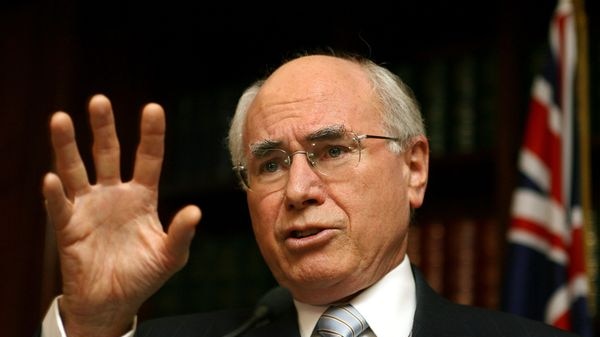
John Winston Howard, born on 26 July 1939 in the Sydney suburb of Earlwood, New South Wales, is an Australian former politician who served as the 25th Prime Minister of Australia from 11 March 1996 to 3 December 2007.
As leader of the Liberal Party of Australia, he held office for nearly 12 years, making him the second-longest-serving prime minister in the nation’s history after Sir Robert Menzies.
Raised in a Methodist family of English, Scottish, and Irish ancestry, Howard was the youngest of four sons of Lyall Howard, an engineer, garage proprietor, and World War I veteran, and Mona Howard.
After attending Canterbury Boys’ High School, he studied law at the University of Sydney, graduating with a Bachelor of Laws in 1961, and practised as a solicitor before entering politics.
Siblings
John grew up as the youngest of four brothers in a close-knit family that valued hard work, cricket, and community involvement.
His eldest brother, Walter, was born in 1926 and later pursued a career in business, following in their father’s footsteps with small-business interests; he passed away in 2019.
Stanley Howard, born in 1930, became a successful corporate lawyer and company director, holding board positions with firms including Oroton, GIO, National Textiles, and The Hills Motorway.
A keen cricketer who served as wicket-keeper in the family’s local Methodist cricket team, Stan remained a strong supporter of his younger brother’s political career until his death in 2014 at the age of 84.
The third brother, Robert Howard, born in 1936, pursued an academic path and became a senior university lecturer; unlike his siblings, he aligned with the Labor Party.
The four brothers shared a strong bond forged through family life in Earlwood, attendance at the same schools, work at the family’s Dulwich Hill petrol stations, and joint participation in cricket.
Career
Howard’s professional path began in the law after his admission as a solicitor of the New South Wales Supreme Court in 1962.
Also Read: David Cameron Siblings: Meet the Siblings Squad Behind the British Politician
He joined the Young Liberals at the age of 18 and rose through the party ranks, serving on the New South Wales State Executive and as State Vice-President.
After an unsuccessful attempt at the state seat of Drummoyne in 1968, he won preselection for the federal Division of Bennelong and entered the House of Representatives at the 1974 election.
Under the Fraser government he was appointed Minister for Business and Consumer Affairs in 1975 and became Treasurer in 1977, a post he held until the Coalition’s defeat in 1983.
He served as Leader of the Opposition from 1985 to 1989 and again from 1995, famously describing a possible return to leadership as resembling “Lazarus with a triple bypass.”
Leading the Liberal–National Coalition to a landslide victory in 1996, he went on to win three further elections in 1998, 2001, and 2004.
His governments introduced major reforms including national gun-control laws after the Port Arthur massacre, the Goods and Services Tax, industrial-relations changes, privatisation of Telstra, and strong support for the United States-led efforts in Afghanistan and Iraq, as well as leadership of the INTERFET force in East Timor.
Howard’s parliamentary career of 33 years ended in 2007 when he lost both government and his own seat of Bennelong.
Accolades
In 2008 Howard was appointed a Companion of the Order of Australia for distinguished service to the Parliament, economic and social policy reform, and the promotion of Australia’s international interests.
Queen Elizabeth II appointed him to the Order of Merit in 2012.
In 2009 he received the United States Presidential Medal of Freedom, the highest civilian award of that nation, from President George W. Bush.
Other distinctions include the Star of the Solomon Islands in 2005, the Grand Cordon of the Order of the Rising Sun from Japan in 2013, the Centenary Medal in 2001, and the Australian Father of the Year award in 1997.
He has also been honoured with the Woodrow Wilson Award and has continued public engagement after leaving office through writing, speaking, and patronage of organisations such as the Sport Australia Hall of Fame.

Email your news TIPS to Editor@Kahawatungu.com — this is our only official communication channel
