


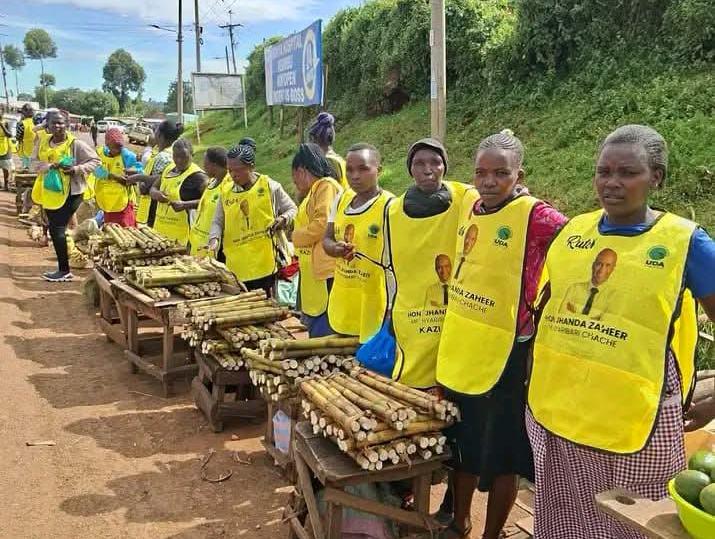
What was once a bustling trading centre in Kisii County has fallen unusually quiet, with traders counting mounting losses as customers shun Keumbu following last week’s deadly attack on the Linda Mwananchi convoy.
Nearly a week after the violence that claimed the life of Vincent Misati, business at the busy market has slowed dramatically, leaving traders struggling to survive amid growing calls for a boycott.
Shops remain open, but many stalls sit idle. Fresh vegetables are rotting under the sun, butcheries report dwindling sales, and boda boda operators spend hours waiting for passengers who never arrive.
One potato vendor said much of the stock has already gone bad after days without buyers.
Many traders say regular customers have accused them of supporting the group of suspected goons who hurled stones at the Linda Mwananchi convoy.
Misati reportedly fell from one of the convoy vehicles during the chaos and later died while receiving treatment at Kisii Teaching and Referral Hospital.
His death sparked widespread outrage, with boycott calls targeting businesses in Keumbu spreading rapidly on social media and through word of mouth.
Some residents, including Thomas Ombuna, say they have chosen to shop in neighbouring markets instead.
The confrontation, in which several people were also injured, prompted a major security operation that has since led to the arrest and arraignment of several suspects.
However, traders say they have become unintended victims of a conflict they neither planned nor participated in.
For many small-scale business owners, each day without customers translates into growing financial hardship. Perishable goods continue to spoil, rent remains unpaid, suppliers are demanding their money, and some traders have already sent workers home to reduce operating costs.
“Our children depend on this market,” said banana vendor Mary Moraa. “If people continue avoiding Keumbu, many families will go hungry. We condemn the violence and ask the public not to punish innocent traders.”
The effects of the boycott are visible throughout the trading centre.
Buses that previously stopped to pick up passengers and allow travellers to shop now speed past, leaving roadside vendors clutching unsold produce.
For Jane Moraa, who has sold fresh vegetables in Keumbu for more than 15 years, the silence has been devastating.
Piles of tomatoes, sukuma wiki and cabbages have begun rotting as customer numbers continue to dwindle.
“I borrowed money to stock my stall because I expected good business this week,” she said, fighting back tears. “Now no one is buying. If this continues, I don’t know how I will repay my loan or even feed my children.”
Nearby, cereals trader Peter Onchoke gazed helplessly at sacks of maize, beans and green grams that have remained untouched since the boycott began.
He estimates his sales have dropped by more than 75 per cent, leaving him unable to meet rent, transport costs and payments to suppliers.
“People think every trader supported the violence, yet many of us are innocent,” he said. “We are being punished for something we had nothing to do with. Every passing day means more debt and more suffering.”
Fruit vendor Eunice Nyaboke is also watching her livelihood disappear.
Bananas, oranges, mangoes and avocados are ripening faster than they can be sold, forcing her to discard part of her stock every evening.
She said the market, which once attracted buyers from across Kisii County, now resembles a ghost town.
“This market is our only source of livelihood,” she said. “We condemn the violence that happened, but we are pleading with customers to return because our families are starving. We are innocent traders paying a very heavy price.”
The economic impact has spread beyond the marketplace.
Public service vehicle operators say passenger numbers have dropped sharply, while hotels, eateries and food kiosks report significantly fewer customers.
Community leaders are urging residents to distinguish between criminal suspects and law-abiding business owners, warning that prolonged economic isolation could devastate hundreds of families who rely on the market.
They have also called on security agencies to intensify patrols and ensure those responsible for the attack are brought to justice.
“The actions of a few criminals should not destroy the livelihoods of an entire community,” one local leader said. “Justice must take its course, but Keumbu’s economy also needs to recover.”
Meanwhile, Kisii Senator Richard Onyonka has criticised the police response, alleging that the suspected attackers were seen at Keumbu Police Station shortly before the convoy was stoned.
“Someone should be held accountable,” he said.
As investigations into Misati’s death continue, Keumbu’s once-vibrant marketplace stands as a stark reminder that beyond the lives lost in violence, innocent families often bear the deepest economic scars.
For now, traders can only hope customers will return and restore life to the market that has sustained generations of families.

Email your news TIPS to Editor@Kahawatungu.com — this is our only official communication channel
