


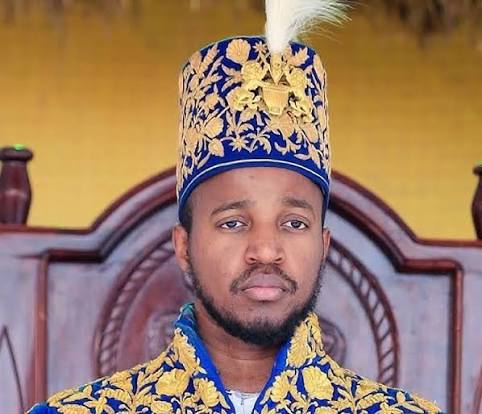
King Oyo Nyimba Kabamba Iguru Rukidi IV of Uganda’s Tooro Kingdom lived a life that sounded like a fairy tale—except it was real. He became a king at three years old, grew up in front of his people, and died still holding the throne. That alone would make him unforgettable. But what made him truly beloved wasn’t the crown. It was the way he wore it.
Oyo was born in 1992 and ascended to the throne in 1995 after his father’s death. Guinness World Records recognized him as the world’s youngest reigning monarch. For the next 31 years, he ruled over more than two million people—first through regents, then in his own right as a university graduate and advocate for youth, education, and health. He was a UN Goodwill Ambassador, a UNAIDS champion for young people in Eastern and Southern Africa, and the force behind a campaign to plant over ten million trees. He also founded a scholarship program for underprivileged youth. And yes, he was a passionate Arsenal fan who loved the Uganda Cranes. People loved him because he never seemed to pretend to be anything other than what he was: a quiet, respectful man who happened to be a king.
When he died on August 27, 2026, at age 34 after a battle with cancer, the kingdom mourned. Uganda’s Parliament called him a developmental monarch who symbolized unity. His sister said he never completely lost the young boy who loved to have fun. That authenticity—the boy king who grew into a humble leader—was his superpower.
But his death opened a door that nobody was ready for. Because Oyo was not officially married and had no publicly recognized heir, the succession turned messy fast. The Babiito royal clan chose his 56-year-old cousin, Edward Rukidi Nyabongo I, a former television journalist. The Ugandan government backed the choice. But Oyo’s mother and sister cried foul, claiming the late king left a will naming his young son as the rightful heir. Suddenly, the throne wasn’t just a symbol of unity—it was a battleground.
Edward was crowned on September 29, 2026. Almost immediately, people started drawing comparisons. And the first one stung. Instead of the quiet, traditional communication style of Oyo’s reign, Edward’s coronation involved a highly publicized online fundraising drive with a target of Shs925 million (roughly $250,000). Critics pounced. Some asked publicly whether he was “a Blogger or King” for making fundraising adverts. The contrast was impossible to ignore: Oyo, the boy who became a global symbol of dignity, versus Edward, the cousin whose first big move felt like a crowdfunding campaign.
To his credit, Edward has vowed to continue Oyo’s legacy. He’s placed scholarships and development partnerships at the center of his agenda. He says he wants to build on what Oyo started. But intentions don’t erase the bitterness of a contested succession. Oyo’s family still insists the rightful heir is a child. The kingdom is split. And the new king is learning that following a beloved figure isn’t just hard—it’s brutal.
So why was Oyo always loved? Because he never had to prove he belonged on the throne. He was born to it, crowned as a toddler, and died still wearing the crown. His life was the proof. Edward, by contrast, has to earn every ounce of respect. That’s the difference between a story that writes itself and one that has to be fought for.
The boy king is gone. The cousin is trying. And the kingdom is watching every move.

Email your news TIPS to Editor@Kahawatungu.com — this is our only official communication channel
