


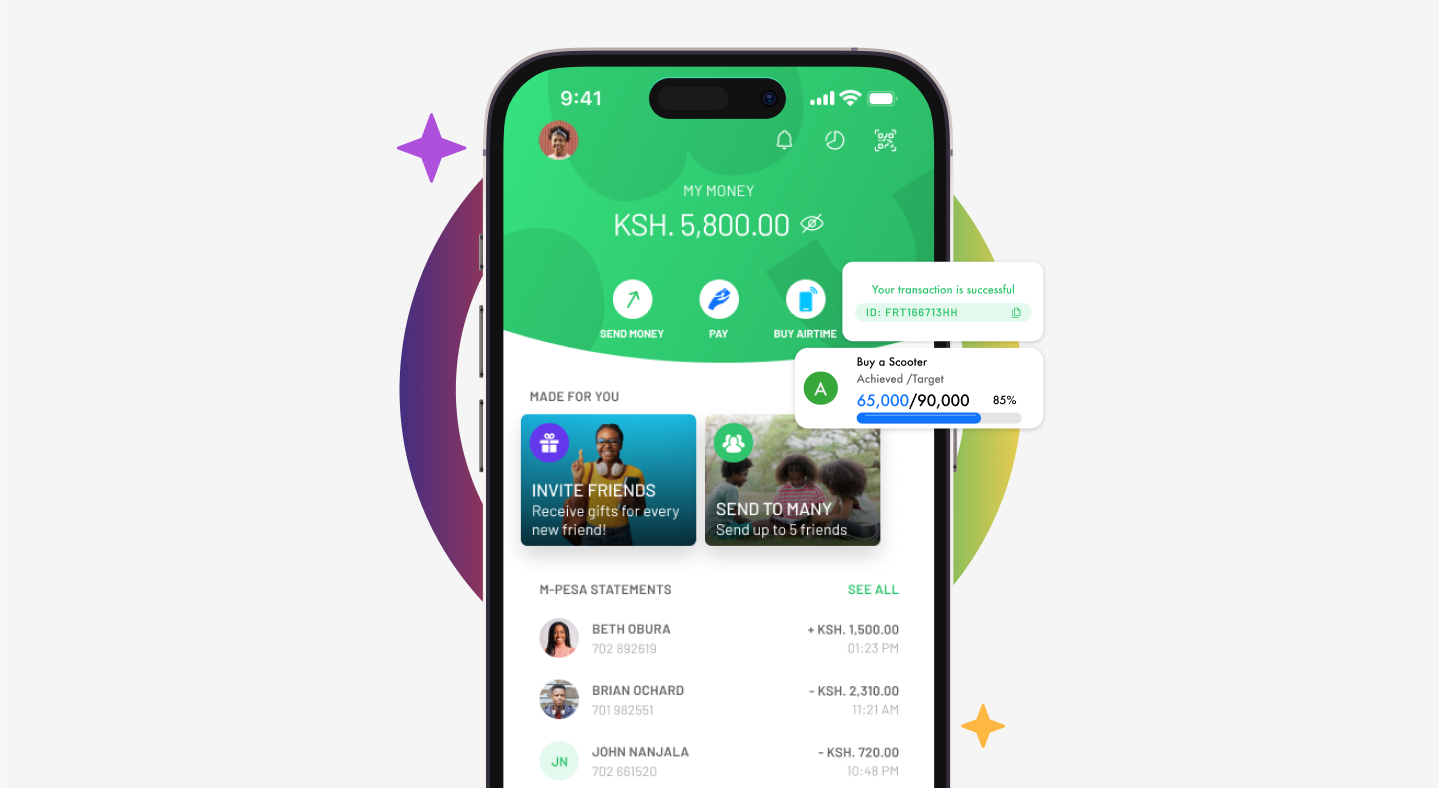
Kenya’s mobile money ecosystem has become one of the world’s most successful digital payment networks, processing billions of shillings every day.
Yet as more businesses embrace cashless payments, fraudsters continue searching for the weakest point in every transaction, not the technology, but the person using it.
For years, fake M-Pesa payment confirmations were one of the most common scams targeting small businesses. Criminals relied on forged SMS messages and convincing stories to trick traders into releasing goods or sending refunds for payments that had never been made.
Today, that particular scam is becoming harder to pull off.
Industry observers attribute the decline not to a single technological breakthrough but to a combination of stronger security features, customer awareness campaigns and changing business habits.
Many traders who once relied solely on SMS notifications now insist on checking their M-Pesa balance, merchant portal or business app before completing a sale. Verification, rather than trust, is increasingly becoming the standard operating procedure.
The shift reflects a broader evolution in digital fraud.
Unlike cyberattacks that exploit software vulnerabilities, many mobile money scams depend on manipulating human judgement. Fraudsters create urgency, exploit distraction and impersonate trusted institutions, hoping victims will act before verifying the facts.
That makes education just as important as technology.
Safaricom has continued investing in customer awareness by reminding users that its staff never request PINs, passwords or transaction reversals through unsolicited phone calls. Customers are also encouraged to report suspicious SMS messages and calls, allowing fraudulent numbers to be identified and blocked more quickly.
Security features such as transaction verification tools have also reduced accidental transfers while making impersonation more difficult.
But experts caution that fraud rarely disappears, it evolves.
As fake payment confirmations become easier to detect, criminals are increasingly shifting towards scams involving SIM swaps, phishing links, fake investment schemes, social media impersonation and fraudulent customer support calls.
The common thread remains social engineering: persuading victims to willingly authorize transactions or disclose sensitive information.
For businesses, this changing threat landscape requires a different mindset.
Security is no longer only the responsibility of mobile money providers. Every employee who accepts payments, every cashier handling customer transactions and every entrepreneur running a small business has become part of the first line of defence.
Simple habits; verifying payments independently, refusing to act under pressure, confirming customer identities where necessary and reporting suspicious activity immediately, are proving more effective than many realize.
Kenya’s experience offers an important lesson for other countries expanding digital financial services.
Building a secure mobile money ecosystem is not only about stronger encryption or smarter fraud detection systems. It is equally about creating users who are difficult to deceive.
The future of digital payments will be shaped as much by informed customers as by technological innovation. As fraudsters continue adapting, the greatest advantage belongs to those who make verification a routine rather than an afterthought.

Email your news TIPS to Editor@Kahawatungu.com — this is our only official communication channel
