


A large share of Kenya’s steel production capacity remains idle despite rising demand driven by infrastructure projects and the government’s affordable housing programme, with manufacturers blaming high production costs, cheap imports and inconsistent tax policies.
The Kenya Association of Manufacturers (KAM) says local steel mills are operating at only 36 percent of their installed production capacity of 4.2 million tonnes, leaving nearly two-thirds of the country’s manufacturing potential unused.
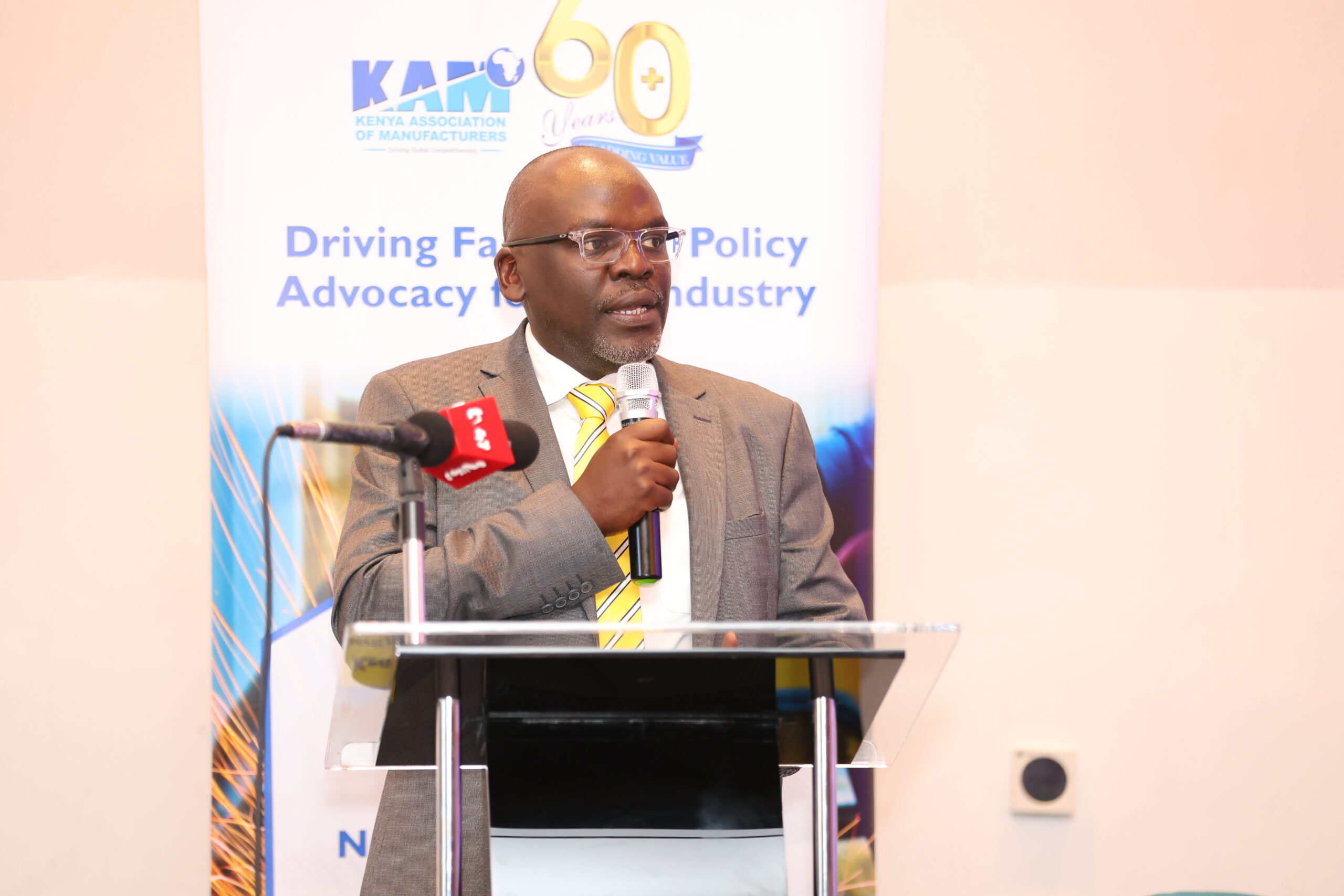
Speaking during the opening of the East African Steel Summit in Nairobi, KAM Chief Executive Officer Tobias Alando said Kenya’s steel industry has expanded significantly over the years, evolving from producing basic steel products to manufacturing hot and cold rolled steel, wire products, tubes and pipes, fabricated steel and aluminium products.
However, he noted that the sector continues to operate well below its full capacity.
“The industry accounts for about 13 percent of Kenya’s manufacturing sector and contributes approximately Sh34 billion in taxes annually. However, much of the country’s steel production capacity remains unused. The sector has an installed capacity of 4.2 million tonnes but currently operates at only 36 percent of that capacity,” Alando said.
Manufacturers attributed the low utilisation to a combination of high production costs, expensive raw materials, competition from low-cost imports, declining export markets and unpredictable tax policies.
They urged the government to introduce measures that would improve the competitiveness of locally manufactured steel and encourage greater investment in the sector.
The concerns come despite the industry benefiting from government trade protection measures aimed at promoting local manufacturing.
Kenya currently imposes a 35 percent import duty on finished iron and steel products, which is higher than the 25 percent rate provided under the East African Community Common External Tariff.
The government also charges a 17.5 percent Export and Investment Promotion Levy on selected imported steel products to encourage local production and value addition.
According to KAM, increasing domestic steel production would enable Kenya to meet growing demand from affordable housing, roads, railways, ports and energy projects while reducing reliance on imported steel products.
The government has identified steel manufacturing as a strategic sector under the Bottom-Up Economic Transformation Agenda (BETA) and plans to establish an integrated iron and steel mill estimated to cost Sh220 billion over five years.
KAM Metal and Allied Sector Chairman Bobby Johnson said the steel industry remains critical to East Africa’s infrastructure development and called on governments across the region to strengthen enforcement against substandard imports.
He also urged East African countries to harmonise product standards to create a level playing field for manufacturers and enhance the competitiveness of locally produced steel.

Email your news TIPS to Editor@Kahawatungu.com — this is our only official communication channel
