


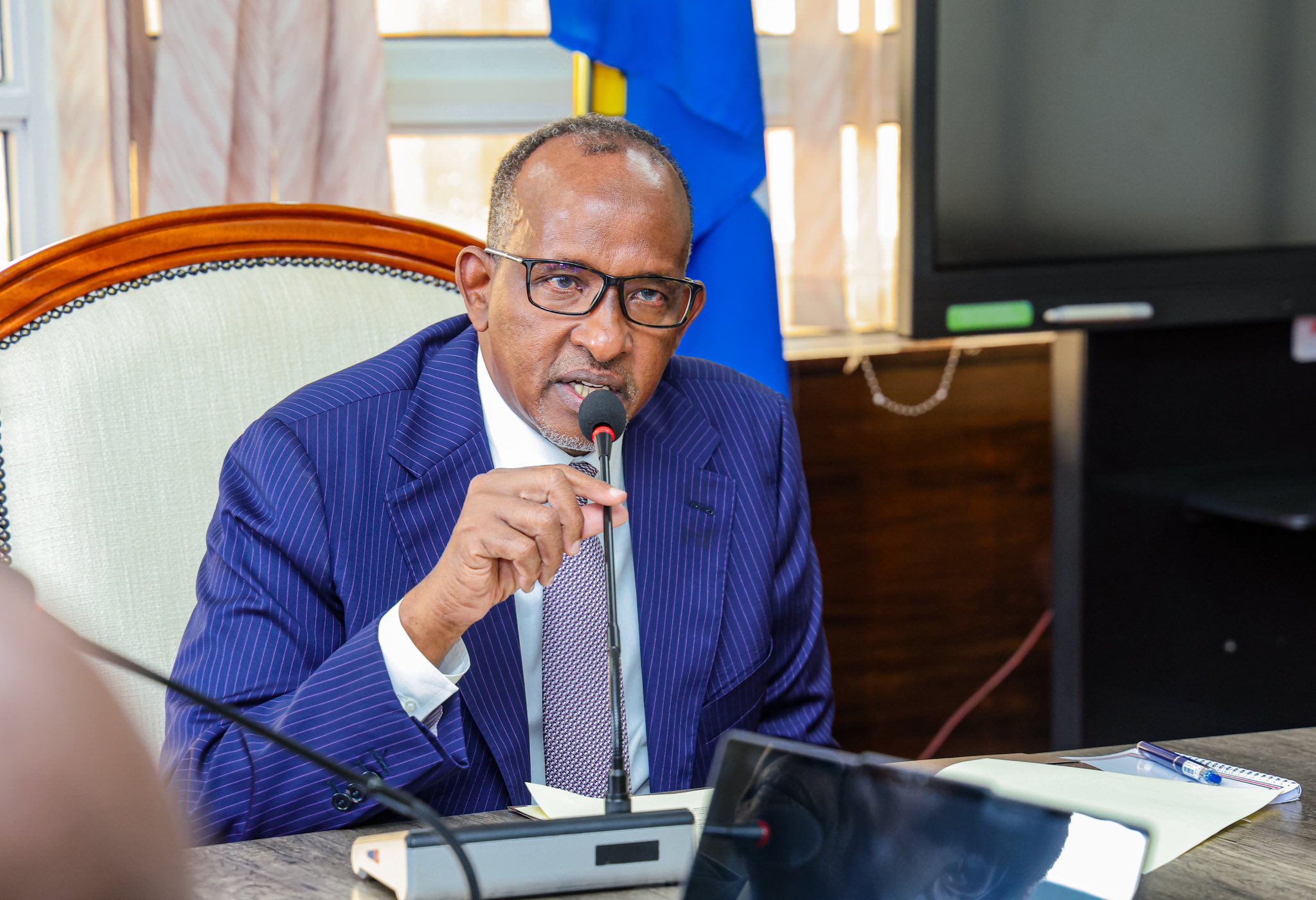
Health Cabinet Secretary Aden Duale has said Kenya has identified 57 contacts linked to the country’s first imported Ebola Virus Disease case as the government intensifies contact tracing and surveillance.
Duale said those already traced are under appropriate monitoring and quarantine, while response teams are continuing efforts to locate the remaining contacts.
He met ambassador and high commissioners in Kenya in Nairobi to brief them on the issue.
The CS said the patient, whose case was confirmed two days ago, has since died and was accorded a safe and dignified burial in line with public health protocols.
He assured Kenyans and the international community that the imported case does not, by itself, indicate widespread transmission of Ebola in the country.
“Kenya remains safe, open and vigilant,” Duale said, adding that the government was responding based on verified epidemiological information and established public health protocols.
The national Incident Management System has been active since May 2026, while enhanced surveillance is being conducted at both health facilities and community level.
According to Duale, 4,971 health workers have been trained on Ebola preparedness and response, while screening continues at 15 points of entry.
More than 652,000 travellers have been screened cumulatively, while surveillance teams have investigated 263 alerts from 17 counties.
Kenya has also tested 268 samples, with only one confirmed positive case so far.
Five designated laboratories, including mobile laboratory capacity, are supporting the response, with a national testing turnaround time of between six and 12 hours.
The government has designated isolation, treatment and quarantine facilities at Kenyatta National Hospital, Moi Teaching and Referral Hospital, National Police Service Hospital, Port Reitz Hospital and The Nairobi Hospital, with a combined capacity of 241 beds.
Additional facilities are being operationalised in Busia County and other priority areas as required.
Duale said the government had also mobilised personal protective equipment for frontline health workers, with the WHO providing 1,000 PPE sets and the Government of India donating 6,000 sets.
He appealed to international partners to support field operations, logistics, commodity distribution, surge capacity, community engagement, patient referrals and dedicated transport systems.
The CS also sought to reassure the international community that Kenya remains open to tourism, trade and investment, warning against disproportionate travel and trade restrictions.
“I therefore urge the international community to base its decisions on verified epidemiological information, science and established international public health principles,” Duale said.
He said unnecessary restrictions could cause significant social and economic disruption without necessarily providing additional public health protection.
Duale urged airlines to continue operating, tourists to visit Kenya and businesses to maintain their operations as the government continues with intensified surveillance and contact tracing.
He said Kenya’s response strategy was centred on five actions: early detection, safe isolation, rapid testing, comprehensive contact tracing and decisive response.
“Kenya remains open. Kenya remains vigilant,” Duale said.

Email your news TIPS to Editor@Kahawatungu.com — this is our only official communication channel
