


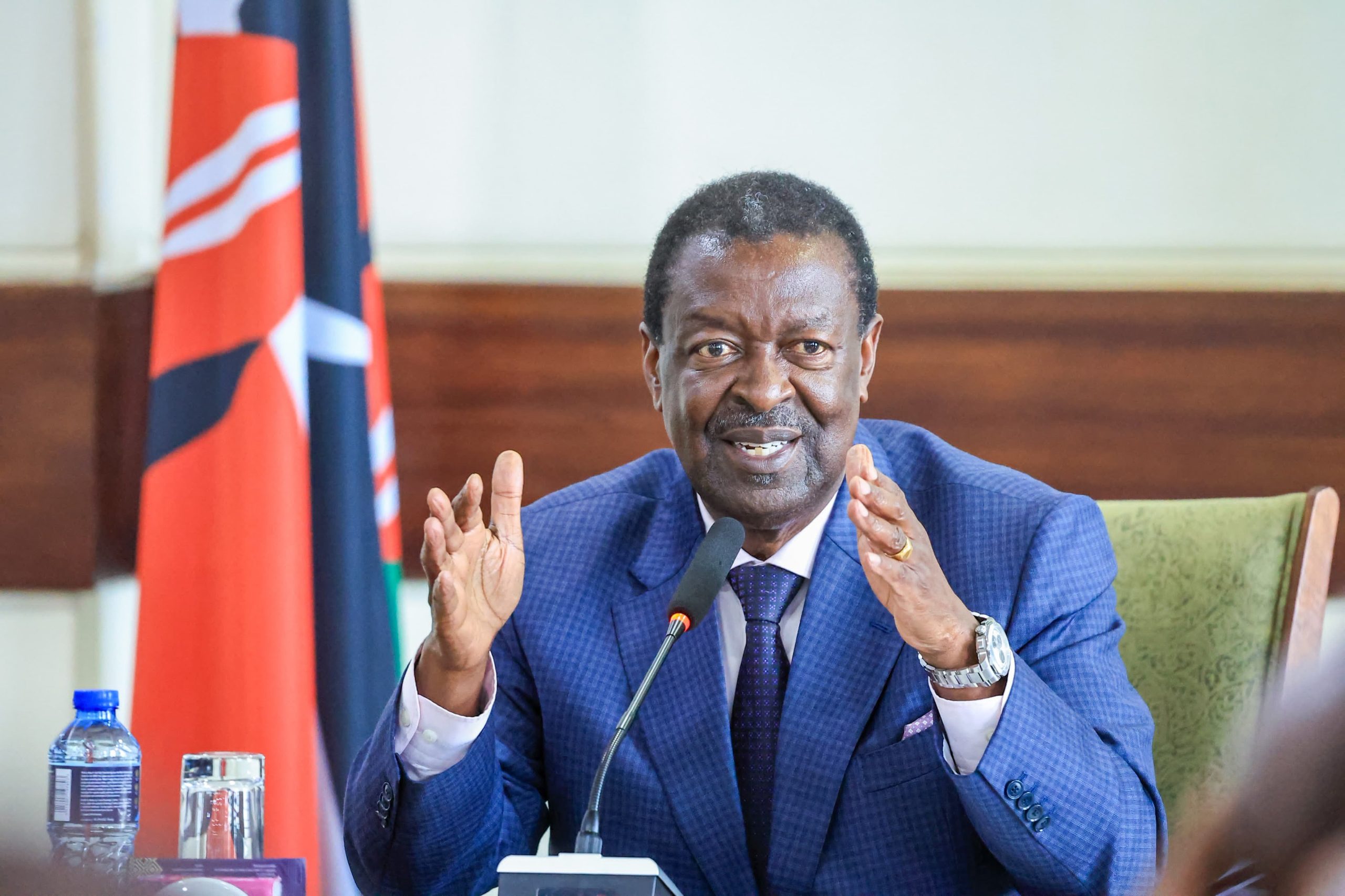
Prime Cabinet Secretary Musalia Mudavadi has raised alarm over what he termed the growing “privatisation of peace,” warning that Africa faces a dangerous shift in how security and diplomacy are being managed globally.
Speaking at the 3rd Mashariki Cooperation Conference in Diani, Mudavadi said weakening multilateral systems are giving rise to transactional approaches to peace and security, where diplomacy is increasingly treated as a business rather than a public good.
“In some quarters, foreign policy increasingly treats diplomacy as a transaction and sovereignty as a negotiable property,” he said.
He cautioned that the trend is evident in the growing use of private military and security companies, as well as mercenaries, across the continent—raising concerns over the outsourcing of core state security functions.
“There is a growing trend towards outsourcing of security interventions,” Mudavadi noted, warning that such developments could undermine state authority and accountability.
The Prime Cabinet Secretary said Africa is simultaneously grappling with a convergence of complex threats, including high-intensity conflicts, terrorism, unconstitutional changes of government, environmental degradation, and geopolitical competition over natural resources.
He also cited emerging risks such as the misuse of artificial intelligence, demographic pressures, and migration, all of which are straining the continent’s security architecture.
Against this backdrop, Mudavadi urged African nations to rethink their approach to security, emphasizing the need for collective, intelligence-led responses.
“No single nation can fully address these challenges in isolation,” he said. “We must strengthen coordination across borders, institutions, and partnerships.”
He called on African states to move beyond dialogue and prioritise actionable intelligence-sharing and policy coordination through platforms such as the Mashariki Cooperation Conference.
Mudavadi stressed that teamwork and collaboration remain critical in building resilient institutions capable of anticipating and responding to emerging threats.
“We must anticipate risks, strengthen cooperation, and support the development of resilient institutions,” he said.
While warning of the shifting global order, Mudavadi urged the continent to remain anchored in principles of justice and human dignity, noting that Africa’s security must be collective, proactive, and preventive.
The high-level forum brought together key leaders and policymakers, including Interior Cabinet Secretary Kipchumba Murkomen, former Nigerian President Olusegun Obasanjo, Attorney General Dorcas Oduor, and National Assembly Defence Committee Chairperson Nelson Koech.
Others in attendance included Senate Security Committee Chair Fatuma Dullo, Supreme Court Judge William Ouko, and National Intelligence Service Director General Noordin Haji, alongside ambassadors and senior government officials.
Email your news TIPS to Editor@Kahawatungu.com — this is our only official communication channel
