


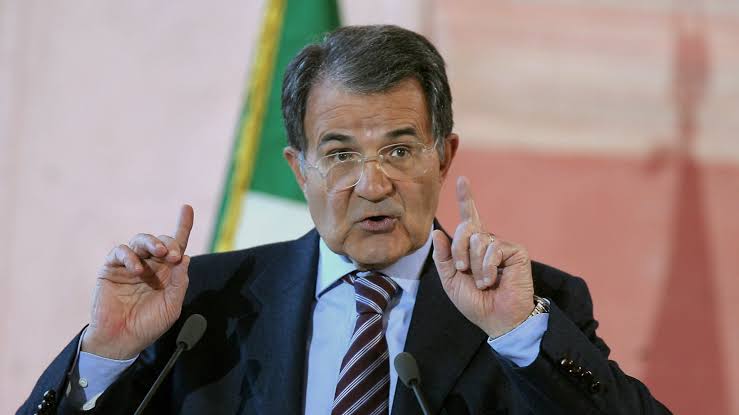
Romano Prodi is an Italian economist, academic, and politician born on 9 August 1939 in Scandiano, in the province of Reggio Emilia, Emilia-Romagna.
After classical studies at the Liceo Ariosto in Reggio Emilia, he graduated with distinction in law from the Catholic University of Milan in 1961, specializing further at the London School of Economics under industrial economist Basil Yamey.
He pursued an academic career as professor of industrial economics and industrial policy at the University of Bologna from the 1960s until 1999, with visiting roles at institutions including Harvard and Stanford.
In 1969 he married Flavia Franzoni, an economist and university lecturer who died in June 2023; the couple had two sons, Giorgio and Antonio.
Siblings
Romano belongs to a notably large and accomplished family of nine siblings, most of whom pursued academic or professional careers of distinction, particularly in the sciences, humanities, medicine, and architecture.
The brothers and sisters include Giovanni Prodi, a mathematician specializing in mathematical analysis who served as rector of the Scuola Normale Superiore in Pisa; Giorgio Prodi, an oncologist, pathologist, and writer who died in 1987; Paolo Prodi, a historian of the modern era and the Church who died in 2016; Vittorio Prodi, a physicist who taught at the University of Bologna, held research roles, served as president of Catholic Action in Bologna, and later became a Member of the European Parliament, dying in July 2023 at age 86; Franco Prodi, a specialist in atmospheric physics; Quintilio Prodi, an architect and cellist based in Reggio Emilia who died in March 2023 shortly before his 88th birthday; Maria Pia Prodi, a neuropsychiatrist and one of the early women practitioners in the field in Italy, who died in August 2026 at the age of 100; and Fosca Prodi, the other sister, who remains among the surviving members of the original group.
The family maintained strong bonds, including joint ownership of a restored castle at Bebbio in the Reggio Emilia Apennines that served as a gathering place.
Career
Prodi combined university teaching and research – focusing on industrial districts, small and medium enterprises, antitrust policy, privatization, and the relationship between state and market – with public service.
Also Read: Mariano Rajoy Siblings: Meet the Siblings Squad Behind the Spanish Politician
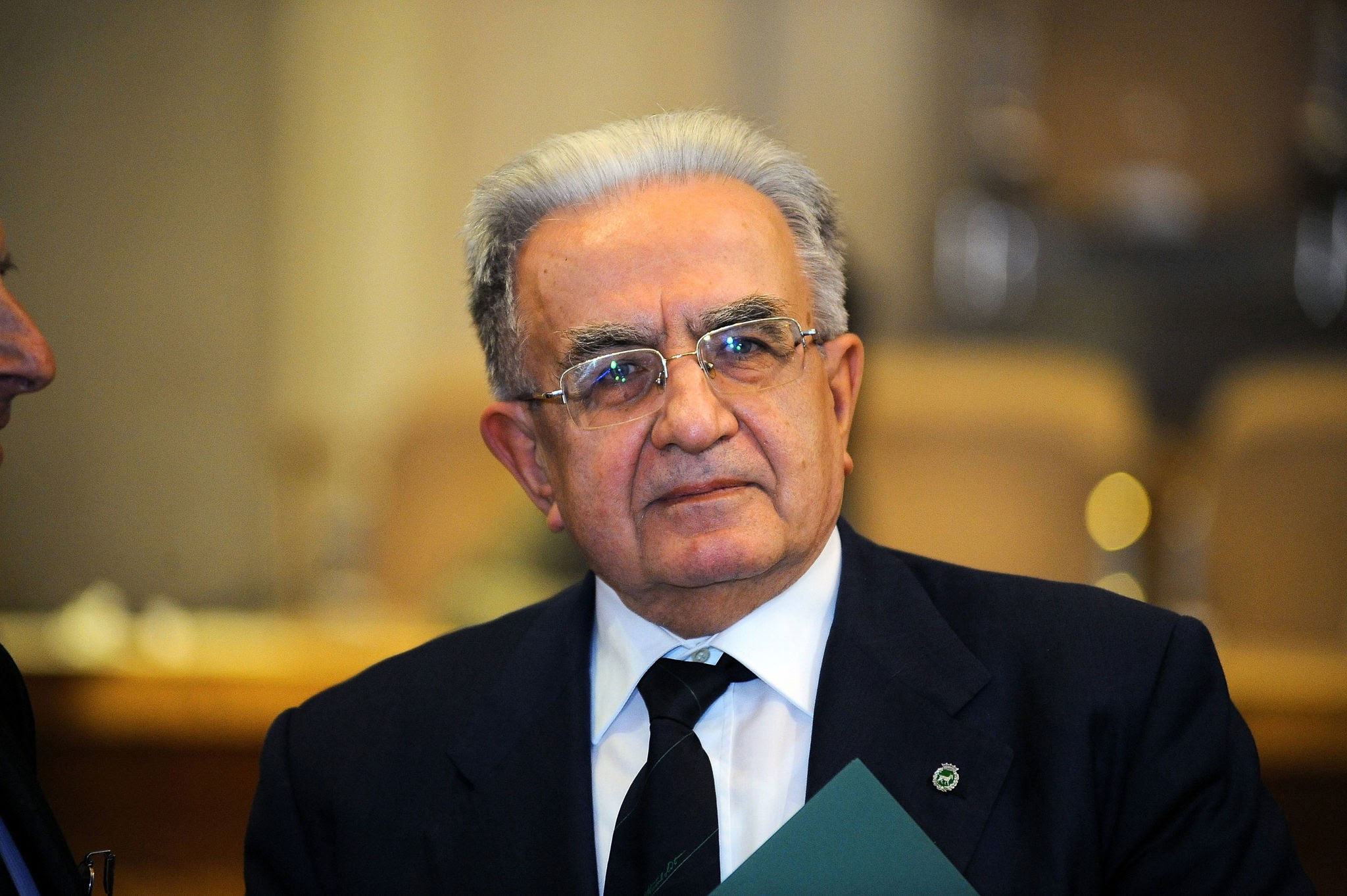
He briefly served as Minister of Industry in the Andreotti government from November 1978 to March 1979.
In the 1980s and again in the early 1990s he led the Institute for Industrial Reconstruction (IRI), Italy’s large state-holding company, achieving notable financial improvements.
He founded the economic research institute Nomisma in 1981 and engaged in publishing and broadcasting on economic themes.
Entering national politics more fully in the mid-1990s, he founded the centre-left Olive Tree (L’Ulivo) coalition and led it to victory in the 1996 general election, serving as Prime Minister from May 1996 to October 1998.
During that term his government pursued fiscal consolidation that enabled Italy to join the first wave of euro-adopting countries.
After a period in opposition he was appointed President of the European Commission, serving from 1999 to 2004; his tenure oversaw the introduction of the euro notes and coins and the major enlargement of the European Union to include ten new member states in 2004.
Returning to Italian politics, he headed the broader Union coalition to a narrow victory in 2006 and served a second term as Prime Minister from May 2006 until May 2008, when his government lost a confidence vote.
Subsequent roles have included United Nations assignments related to African peacekeeping and the Sahel, as well as academic appointments such as professor-at-large at Brown University.
Accolades
Prodi was named Knight Grand Cross of the Order of Merit of the Italian Republic in 1993.
Foreign honours include the Grand Cross of the Order of Merit of the Republic of Poland, the Grand Cross of the Order of Isabella the Catholic from Spain, the Knight Grand Cross of the Order of the Star of Romania, the Commander Grand Cross of the Order of the Three Stars of Latvia, the Grand Cordon of the Order of the Rising Sun of Japan, and the Grand Cross of the Legion of Honour of France, among others.
He is an honorary member of the London School of Economics and Political Science and of the Real Academia de Ciencias Morales y Políticas of Madrid, and he received the Schumpeter Prize for Economics from the Schumpeter Society of Vienna.
Prodi has been awarded approximately forty honorary degrees from universities worldwide, including institutions in India, Bulgaria, Spain, the United States, Romania, Belgium, Canada, and Italy.
Additional recognitions include the Archiginnasio d’oro of the City of Bologna and other civic and academic prizes reflecting his contributions to economics, European integration, and public life.

Email your news TIPS to Editor@Kahawatungu.com — this is our only official communication channel
