


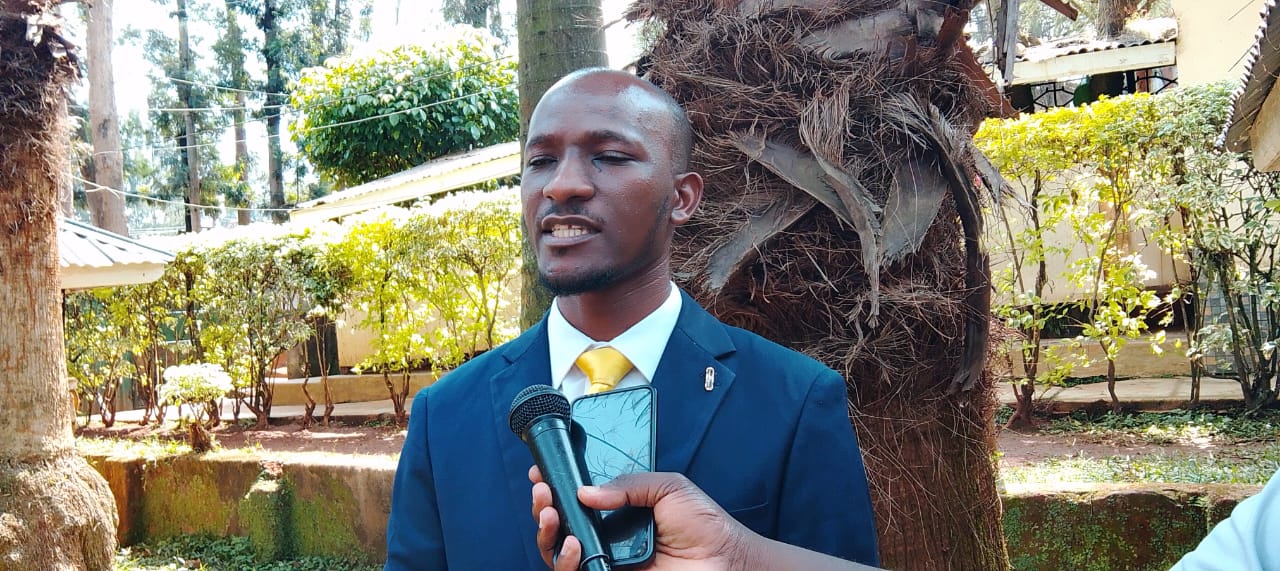
The ruling United Democratic Alliance (UDA) has unveiled an ambitious political strategy to field candidates for every elective seat in Kisii County during the 2027 General Election. This move is poised to test the durability of the broad-based political cooperation between President William Ruto and the Orange Democratic Movement (ODM).
The declaration, made Thursday by UDA Kisii County branch Administrator Caleb Ondieki, signals the party’s determination to entrench its presence in one of the country’s most politically competitive counties despite the growing partnership between the Kenya Kwanza administration and senior ODM leaders.
Speaking during a brief to journalists, Ondieki said UDA had opened its doors to individuals seeking to contest for the positions of Governor, Senator, Woman Representative, Member of Parliament and Member of County Assembly under the party ticket.
“Contrary to early speculations, we now bring to attention of all apirants that we are very much open to undertake registrations ahead of the polls,” Ondieki said during the briefing at Storm Hotel.
The exercise, he said ,forms part of a broader strategy to strengthen UDA’s grassroots structures and ensure the party has candidates in every elective race when Kenyans head to the polls in 2027.
The announcement, however, appear to raise political questions over the future of the UDA-ODM relationship in Kisii.
At the centre of the debate is Governor Simba Arati, an ODM governor who has in recent months become one of President Ruto’s closest allies following the formation of the broad-based government.
Arati has frequently accompanied the President during development tours and has defended cooperation between ODM leaders and the Kenya Kwanza administration.
He has especially tapped signficant resources from the head of state to bankroll a number of projects across the county.
Should UDA proceed to nominate a gubernatorial candidate against Arati, it would place the party in direct competition with one of the broad-based government’s most visible county leaders, exposing the delicate balance between national political cooperation and local electoral rivalry.
Ondieki said negotiations the party still enjoys some considerable grassroot support and an failure to field candidates would affect it’s popularity.
“There may negotiations but we may not negotiate as underdogs lying down but as equal partners. We cannot negotiate as a weak partner in the eventuality that another dialogue would be needed,” he told Kahawa Tungu.
Political observers argue that while parties may share common interests in government, elections ultimately compel them to compete for influence, political survival and control of county leadership.
The decision to recruit aspirants across all elective positions also signals that UDA is unwilling to cede political ground in Kisii, a county where ODM and other opposition parties have traditionally enjoyed strong support according to Dr Eric Onsongo, a political analyst.
The move by UDA appears to bring into rest the speculation that has long persisted over whether the broad-based political arrangement could translate into negotiated electoral deals in some regions.
He said UDA’s latest declaration suggests that, at least in Kisii, the party is preparing for a full-scale contest rather than a political accommodation.
“With more than a year before campaigns officially begin, the battle lines are already taking shape. Whether UDA ultimately settles on a candidate to challenge Arati for the county’s top seat will be watched closely, not only by voters in Kisii but also by political strategists seeking clues on how far the Ruto-ODM partnership can survive the realities of competitive politics” Onsongo stated
For now, UDA’s message is clear: despite the handshake at the national level, the race for Kisii has begun.

Email your news TIPS to Editor@Kahawatungu.com — this is our only official communication channel
