


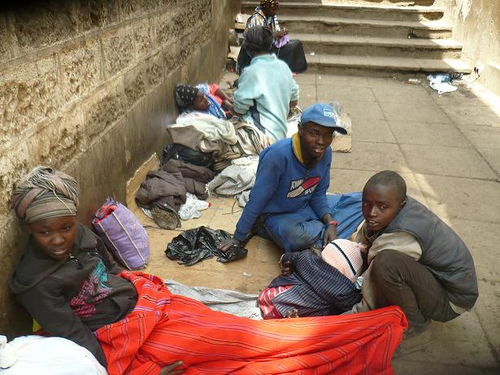
The search for employment is the leading factor pushing people into street life in Kenya, according to the 2025 National Census for Street Families Report.
The report shows that 32 per cent of street persons cited the search for employment as the main reason for moving to the streets, followed by economic hardship at 21.5 per cent. Other key factors included mistreatment at home (11.5 per cent) and peer influence (10.8 per cent).
The overall national unemployment rate in Kenya hovers between 12.7% and 17.7%, though labor authorities report a youth unemployment rate of 67% for individuals between the ages of 15 and 34. Formal wage job creation has slowed down, making the informal sector (Jua Kali) the primary source of livelihood for most of the working population.
According to the findings, many of those who migrated in search of work ended up in informal and low-paying activities, with 37.7 per cent engaging in waste picking and 37.5 per cent relying on casual labour.
The report further indicates that street persons largely depend on insecure and informal sources of income.
“Over half (52.0%) depended on casual labour, followed by waste picking (43.5%) and begging (33.4%),” the report states.
The findings reveal significant gender disparities in livelihoods. Men were more likely to engage in casual labour and waste picking, while 40.3 per cent of women relied on begging for survival. Additionally, 9.5 per cent of female street dwellers reported engaging in commercial sex work, highlighting heightened economic vulnerability among women.
Children living on the streets were found to be particularly dependent on begging. More than 70 per cent of children aged between five and 14 years relied on begging as their primary source of livelihood, raising concerns over child labour and exploitation.
The report also paints a grim picture of food security among street families.
While 64.7 per cent of respondents said they purchased food, many depended on alternative means to survive, including begging (34.8 per cent), scavenging (28.9 per cent) and assistance from well-wishers (30.6 per cent).
Females and children were found to be more vulnerable, with limited ability to purchase food and a greater dependence on charity and begging.
Children aged between 10 and 14 years recorded the highest reliance on begging for food, with 67.7 per cent depending on it to meet their daily nutritional needs.
The census further found that 33.5 per cent of street persons sleep on the streets all the time, while only 23.6 per cent consistently return home.
Males and younger age groups were more likely to spend nights on the streets permanently. The report notes that 61.5 per cent of children aged between zero and four years were reported to be living entirely on the streets.
Most street dwellers had lived in conventional housing before ending up on the streets. According to the report, 61.6 per cent previously lived in their own homes, while 26.3 per cent came from rented houses.
Another 9.3 per cent were born on the streets, while 1.4 per cent had previously lived in children’s homes.
Males were more likely to have originated from their own homes, at 64.2 per cent, compared to 52.2 per cent of females. Women, however, recorded a higher proportion of individuals born on the streets, at 14.6 per cent.
The report reveals that long-term exposure to street life is widespread across the country.
Among Kenyan street persons, 8.6 per cent were born in Nairobi County, while 7.6 per cent originated from Nakuru County.
Notably, 62 per cent of respondents said they had lived on the streets for 10 years or more, with slightly higher proportions recorded among females than males.
The census also highlights significant educational challenges among street populations.
Among street persons aged three years and above, 13.3 per cent had never attended school. Non-attendance was higher among females at 18.7 per cent compared to 11.8 per cent among males.
Despite the challenges, the report indicates that a majority of street children aged between six and 17 years had attended school at some point before dropping out, underscoring the need for targeted interventions to keep vulnerable children in the education system.
Email your news TIPS to Editor@Kahawatungu.com — this is our only official communication channel
