


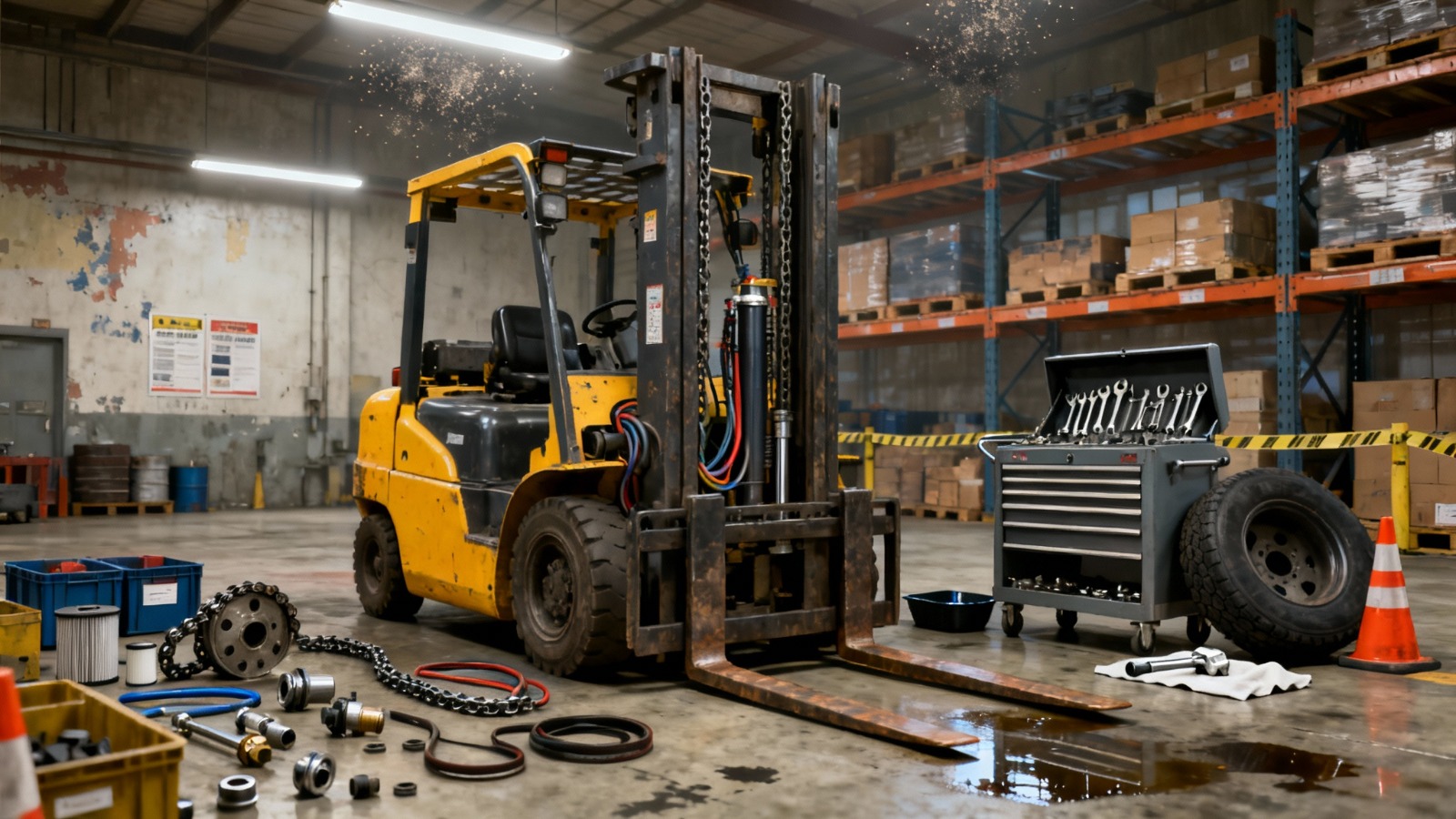
Forklifts are the workhorses of warehouses, distribution centers, and manufacturing facilities worldwide. Like any complex piece of machinery, they rely on numerous interconnected parts working in harmony to safely lift, transport, and position heavy loads. Understanding these components is crucial for operators, maintenance personnel, and fleet managers who want to maximize equipment performance and longevity.
The Power Train Components
At the heart of every forklift lies its power system. Electric forklifts depend on battery packs, typically heavy-duty lead-acid or increasingly popular lithium-ion batteries, along with battery chargers and connectors. Internal combustion forklifts run on engines powered by propane, diesel, or gasoline, requiring fuel systems, air filters, and exhaust components. The transmission system, whether automatic or manual, transfers power from the engine or motor to the drive wheels, working in conjunction with the drive axle and differential to provide smooth movement and turning capability.
The Mast and Lifting Assembly
The mast is perhaps the most distinctive feature of any forklift. This vertical assembly consists of interlocking rails that allow the carriage to move up and down. Masts come in various configurations including simplex, duplex, triplex, and quad designs, each offering different lifting heights and collapsed heights to suit specific applications. The lift cylinders, powered by hydraulic fluid, provide the force needed to raise loads, while lift chains connect the carriage to the lifting mechanism. The carriage itself serves as the mounting point for the forks and must be robust enough to handle the rated load capacity.
Hydraulic System Essentials
The hydraulic system provides the muscle for lifting operations. The hydraulic pump, driven by the engine or electric motor, pressurizes fluid that flows through hoses and valves to the lift cylinders and tilt cylinders. Control valves allow the operator to precisely manage lifting, lowering, and tilting movements. Hydraulic filters keep the fluid clean and protect system components from contamination, while the hydraulic fluid reservoir stores the oil needed for operation. Regular maintenance of hydraulic components prevents leaks and ensures consistent performance.
Forks and Attachments
The forks themselves are critical load-bearing components, typically made from high-strength steel and available in various lengths and thicknesses to suit different applications. Fork positioning can be adjusted using a fork positioner attachment or manually along the carriage. Beyond standard forks, numerous attachments expand forklift versatility including side shifters, fork extensions, clamps, rotators, and specialized handlers for drums, bales, or specific products.
Safety and Control Systems
Modern forklifts incorporate extensive safety features. The overhead guard protects the operator from falling objects, while the backrest prevents loads from sliding backward. Seat belts keep operators secure during movement. The operator compartment contains the steering wheel, control levers for hydraulic functions, pedals for acceleration and braking, and an instrument panel displaying vital information. Warning lights, backup alarms, and strobe lights enhance visibility and alert nearby workers to the forklift’s presence.
Tires and Undercarriage
Forklift tires come in three main types. Pneumatic tires, similar to car tires, provide cushioning for outdoor use on rough surfaces. Solid pneumatic tires offer puncture resistance while maintaining some shock absorption. Cushion tires, made from solid rubber pressed onto the wheel, work best for indoor use on smooth concrete. The choice depends on the operating environment and application requirements. The undercarriage also includes the steer axle, brake system components, and the counterweight—a heavy mass at the rear that balances the load being lifted.
Electrical Components
Even internal combustion forklifts rely on electrical systems for starting and operation. The battery (separate from the traction battery in electric models) powers the starter motor, lights, and instruments. The alternator or generator recharges this battery during operation. Wiring harnesses distribute power throughout the machine, connecting to switches, sensors, relays, and fuses that protect circuits from overload. Electric forklifts have more extensive electrical systems including motor controllers and regenerative braking systems.
Maintenance and Replacement Considerations
Regular inspection and timely replacement of worn parts prevent breakdowns and accidents. High-wear items like tires, forks, chains, and brake components require frequent monitoring. Filters, fluids, and belts need regular service intervals. Keeping detailed maintenance records helps predict when components will need replacement and prevents unexpected failures during critical operations.
Understanding forklift parts empowers better decision-making about purchases, maintenance schedules, and repair priorities. Whether managing a single forklift or an entire fleet, knowledge of these components translates directly into improved safety, reduced downtime, and lower total cost of ownership. When parts do need replacement, always specify OEM or high-quality aftermarket forklift parts that meet or exceed original specifications to maintain safety and performance standards.
Email your news TIPS to Editor@Kahawatungu.com — this is our only official communication channel
