
Close Menu
    Facebook X (Twitter) Instagram
    Facebook X (Twitter) Instagram
    KahawatunguKahawatungu
    Button
    • NEWS
    • BUSINESS
    • KNOW YOUR CELEBRITY
    • POLITICS
    • TECHNOLOGY
    • SPORTS
    • HOW-TO
    • WORLD NEWS
    KahawatunguKahawatungu
    NEWS

    Ruto mourns death of Prof Ngugi wa Thiong’o

    KahawaTungu ReporterBy KahawaTungu ReporterMay 29, 2025No Comments6 Mins Read
    Facebook Twitter WhatsApp Telegram Email
    Share
    Facebook Twitter WhatsApp Telegram Pinterest Email Copy Link

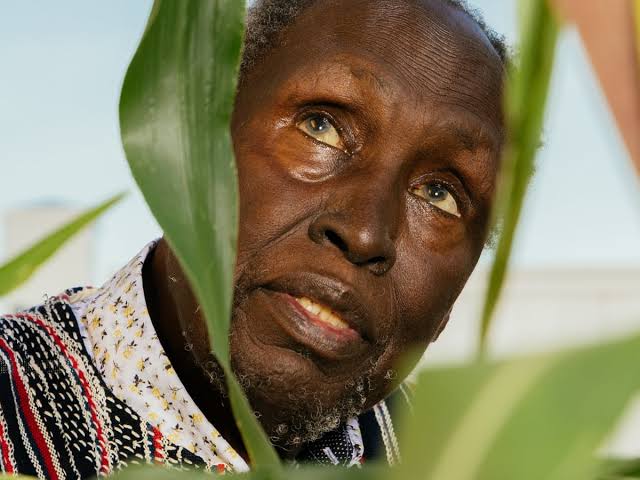
    President William Ruto joined those mourning the death of teacher, writer, playwright, and public intellectual, Prof Ngugi wa Thiong’o.

    He said Thursday the towering giant of Kenyan letters has put down his pen for the final time.

    “Always courageous, he made an indelible impact on how we think about our independence, social justice as well as the uses and abuses of political and economic power.”

    “In his bold and creative career, Prof Thiong’o showed us how to make contributions that cannot be ignored and speak in ways that both supporters and opponents cannot ignore,” said Ruto.

    He added his patriotism is undeniable, and even those who disagree with him will admit that Prof Thiong’o’s discourse always sprang forth from a deep and earnest quest for truth and understanding, devoid of malice, hatred or contempt.

    “Many Kenyans cannot remember a time when we were not united in the hope that Prof Thiong’o would finally receive the Nobel Prize for Literature, which we all felt he more than deserved.”

    “Be that as it may, he will always remain the champion of literary emancipation and innovation in our hearts and minds,” he said.

    Former Deputy President Rigathi Gachagua the passing on of Prof. Thiong’o has orphaned Africa, the students of literature, have borne it all.

    “Prof. Ngùgì was one in many a mentor, a teacher, a prolific writer, a poet, an honest man, and a great political animal. Ngùgì’s great works of literature among them; The River Between, Weep Not Child, A Grain of Wheat, I Will Marry When I Want, Devil on the Cross, Decolonizing the Mind, Wizard of the Crow, Matigari, Dreams in the Time of War, among others have created an original African desire, identity and the African literary philosophy.”

    He said if a literary genius ever lived who has inspired my world of literary language and communication, may it be the use of symbolism, figurative language, metaphors, metonymy, poetry, that genius is Prof. Ngùgì Wa Thiong’o.

    “The African literary champion never shied from writing in his native language and his quest to tell the African story through the African lens. This inspiration lives on through works like Matigari, Ngahìka Ndeenda, Caitaani Mutharaba-Inì among others, true to African heroism,” he said.

    Gachagua said his inspiration to him went beyond the classroom into his political world when he left office late last year,

    “I read and re-read his book, ‘A Grain of Wheat’. His Words, “…then nobody noticed it; but looking back, we can see that waiyaki’s blood contained within it a seed, a grain, which gave birth to a movement…”

    Ngugi died at the age of 87 on Wednesday, his daughter announced on Facebook.

    Widely regarded as East Africa’s most influential writer, Ngugi sought to forge a body of literature reflecting the land and people from which he came, and not follow in the footsteps of Western tradition.

    “I believe so much in equality of languages. I am completely horrified by the hierarchy of languages,” he said in an interview in 2022 from California, where he lived in self-imposed exile.

    His decision in the 1970s to abandon English in favour of his native Kikuyu, as well as Kenya’s national language Swahili, was met with widespread incomprehension at first.

    “We all thought he was mad… and brave at the same time,” said Kenyan writer David Maillu. “We asked ourselves who would buy the books.”

    Yet the bold choice built his reputation and turned him into an African literary landmark.

    The softly-spoken writer also lived a life as dramatic as his novels. His criticism of post-colonial Kenya — describing the violence of the political class and the newly rich as “the death of hopes, the death of dreams and the death of beauty” — brought him into frequent conflict with the authorities.

    – ‘Decolonising the mind’ –

    Born James Ngugi into a large peasant family in Kenya’s central Limuru region on January 5, 1938, he spent the first 25 years of his life in what was then a British settler colony.

    His early works were heavily influenced by his country’s battle against colonial rule and the brutal Mau Mau war of 1952-1960.

    In his first collection of essays, “Homecoming”, he described himself as a “stranger in his home country”. But his anger would later extend to the inequalities of post-colonial Kenyan society, incurring the wrath of the government.

    In 1977, Ngugi and fellow writer Ngugi wa Mirii were jailed without charge after the staging of their play “Ngaahika Ndeenda” (“I Will Marry When I Want”).

    It was then that he decided to write his first novel in Kikuyu, “Devil on the Cross”, which was published in 1980. He had already abandoned his “English” name to become Ngugi wa Thiong’o.

    “I wrote it on the only paper available to me, which was toilet paper,” he told US radio broadcaster NPR.

    Amnesty International named him a prisoner of conscience, before a global campaign secured his release from Kamiti Maximum Security Prison in December 1978.

    As early as 1965, Ngugi’s novel “The River Between” embarked on a critical examination of the role of Christianity in an African setting.

    “If the white man’s religion made you abandon a custom and then did not give you something else of equal value, you became lost,” he wrote.

    He went into self-imposed exile in 1982 after a ban on theatre groups in Kenya, moving first to Britain then to the United States.

    In 1986, he published one of his best-known works, “Decolonising the Mind”, a collection of essays about the role of language in forging national culture, history and identity.

    – ‘A Kenyan Tolstoy’ –

    When Ngugi returned home on a visit in 2004, he was mobbed by supporters at Nairobi’s airport.

    “I have come back with an open mind, an open heart and open arms,” he declared.

    Days later, he and his wife were attacked by armed men: she was raped and he was beaten up. It was not clear whether robbery was the sole motive or whether the assault was politically motivated.

    Margaretta wa Gacheru, a sociologist and former student of Ngugi, described him as a national icon.

    “To me he’s like a Kenyan Tolstoy, in the sense of being a storyteller, in the sense of his love of the language and panoramic view of society, his description of the landscape of social relations, of class and class struggles,” she said.

    In addition to fiction, the father-of-three, who became a professor of comparative literature at the University of California Irvine, also published essays and three memoirs.

    His most recent book was the genre-defying novel-in-verse “The Perfect Nine”, which he translated into English in 2020.

    It recounted the founding of the Kikuyu people, blending folklore and allegory. From widening economic inequality to the lingering trauma of racism, the issues raised in the play still persist in Kenya and beyond, a fact not lost on its creator.

    Email your news TIPS to Editor@Kahawatungu.com — this is our only official communication channel

    Ngugi wa Thiong'o President William Ruto
    Follow on Facebook Follow on X (Twitter)
    Share. Facebook Twitter WhatsApp LinkedIn Telegram Email
    KahawaTungu Reporter
    • Website

    Email: Editor@Kahawatungu.com

    Related Posts

    A man was shot dead in the early hours of Tuesday morning following a violent confrontation between police officers and armed suspects in Modika area along the Modika–Dadaab road in Garissa County. According to police the incident occurred at around 2:00 a.m. when officers on patrol intercepted a Toyota Probox suspected to be ferrying uncustomised goods. The driver of the vehicle was arrested and was being interrogated when the situation escalated. Garissa police commander John Nzioka said the incident is under probe. He said they had invited the Independent Policing Oversight Authority to investigate the matter. “We will give IPOA all the support they need to investigate this matter,” he said. This followed a protest in the area by locals who demanded justice for the shooting. The locals said the victim was innocent and demanded action to ensure accountability. Police said after a driver was stopped, a second Toyota Probox carrying about nine occupants approached the scene. The group, reportedly armed with a rifle and machetes, attacked the officers, prompting them to fire warning shots in the air as they withdrew from the scene. A follow-up visit by senior officers and crime scene investigators confirmed that one man, identified as Adan Mohamed Hassan, aged approximately 32, had sustained a gunshot wound to the head and died at the scene. The body was moved to Garissa County Referral Hospital Mortuary awaiting a post-mortem examination. The news spread prompting the protests. Meanwhile, police in Marsabit County launched investigations into the fatal shooting of a 35-year-old man during a robbery incident at Merille market in Laisamis Sub-county. According to police, the incident occurred at around 4:00 a.m. on April 21, 2026. The deceased, identified as Elius Iribae, had travelled from Nairobi in the company of another individual to purchase goats at the market. Police said the pair had just alighted from a lorry at Merille market when a gunman armed with a rifle shot Iribae in the back. He collapsed and died on the spot due to excessive bleeding. The attacker reportedly stole an unspecified amount of money during the incident. However, officers later recovered Sh298,300 in cash believed to be linked to the robbery, as well as a Tecno smartphone. The body of the deceased was moved to Laisamis Sub-County Hospital Mortuary awaiting a post-mortem examination. The scene was visited by detectives from the Directorate of Criminal Investigations (DCI) Marsabit South, officers from the General Service Unit (GSU) based in Merille, and personnel from Merille Police Post. Authorities are pursuing the armed suspect as investigations into the killing continue.

    April 22, 2026

    Njugush announces separation from Celestine Ndinda

    April 22, 2026

    Parliament tells police to secure country ahead of 2027 polls

    April 22, 2026

    Comments are closed.

    Latest Posts

    Sheila Cherfilus-McCormick resigns from Congress after campaign finance charges

    April 22, 2026

    A man was shot dead in the early hours of Tuesday morning following a violent confrontation between police officers and armed suspects in Modika area along the Modika–Dadaab road in Garissa County. According to police the incident occurred at around 2:00 a.m. when officers on patrol intercepted a Toyota Probox suspected to be ferrying uncustomised goods. The driver of the vehicle was arrested and was being interrogated when the situation escalated. Garissa police commander John Nzioka said the incident is under probe. He said they had invited the Independent Policing Oversight Authority to investigate the matter. “We will give IPOA all the support they need to investigate this matter,” he said. This followed a protest in the area by locals who demanded justice for the shooting. The locals said the victim was innocent and demanded action to ensure accountability. Police said after a driver was stopped, a second Toyota Probox carrying about nine occupants approached the scene. The group, reportedly armed with a rifle and machetes, attacked the officers, prompting them to fire warning shots in the air as they withdrew from the scene. A follow-up visit by senior officers and crime scene investigators confirmed that one man, identified as Adan Mohamed Hassan, aged approximately 32, had sustained a gunshot wound to the head and died at the scene. The body was moved to Garissa County Referral Hospital Mortuary awaiting a post-mortem examination. The news spread prompting the protests. Meanwhile, police in Marsabit County launched investigations into the fatal shooting of a 35-year-old man during a robbery incident at Merille market in Laisamis Sub-county. According to police, the incident occurred at around 4:00 a.m. on April 21, 2026. The deceased, identified as Elius Iribae, had travelled from Nairobi in the company of another individual to purchase goats at the market. Police said the pair had just alighted from a lorry at Merille market when a gunman armed with a rifle shot Iribae in the back. He collapsed and died on the spot due to excessive bleeding. The attacker reportedly stole an unspecified amount of money during the incident. However, officers later recovered Sh298,300 in cash believed to be linked to the robbery, as well as a Tecno smartphone. The body of the deceased was moved to Laisamis Sub-County Hospital Mortuary awaiting a post-mortem examination. The scene was visited by detectives from the Directorate of Criminal Investigations (DCI) Marsabit South, officers from the General Service Unit (GSU) based in Merille, and personnel from Merille Police Post. Authorities are pursuing the armed suspect as investigations into the killing continue.

    April 22, 2026

    Njugush announces separation from Celestine Ndinda

    April 22, 2026

    Parliament tells police to secure country ahead of 2027 polls

    April 22, 2026

    Everyday Innovation in East Africa: Tech Adoption Has Moved From Startup Hype to Household Habit

    April 22, 2026

    Kindiki says opposition have nothing to offer

    April 21, 2026

    Met warns of heavy rainfall in Coastal, North Eastern regions from Wednesday

    April 21, 2026

    Arrests in Nigeria after abduction of local monarch ‘held for ransom’

    April 21, 2026
    Facebook X (Twitter) Instagram Pinterest
    © 2026 Kahawatungu.com. Designed by Okii.

    Type above and press Enter to search. Press Esc to cancel.