


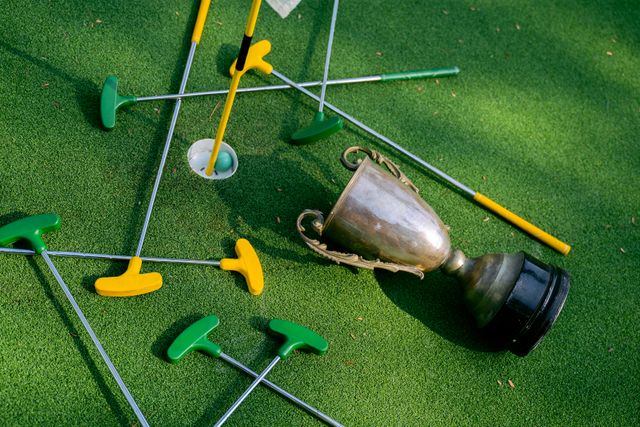
The Open Championship is golf’s oldest major and one of the sport’s most respected events. First played in 1860, it is held on some of the best links courses across Britain and Northern Ireland. The 154th edition returns to Royal Birkdale, where Scottie Scheffler begins the week as the defending champion after winning at Royal Portrush in 2025.
Royal Birkdale presents a different challenge from its last Open in 2017. Course updates and unusually dry conditions have created firmer, faster fairways and greens that reward precision over power. Players who control their ball well and adapt to links conditions will have the best chance to compete for the Claret Jug.
A Championship Shaped by Links Golf
The Open follows a 72-hole format across four rounds, and the winner earns the title of Champion Golfer of the Year and takes possession of the Claret Jug. Links golf adds another layer because firm ground can redirect even a well-struck shot. Changing wind also forces players to reassess their preferred lines throughout the day. As a result, one group’s score may not reflect the same challenge faced by another.
A quiet morning can give way to stronger gusts that make several holes play much longer. The Open golf odds present the early market view of which competitors are most likely to manage those conditions. That picture often develops as weather patterns become clearer and players reveal how well their games suit the course. An accurate approach play and reliable recovery shots remain essential once conditions become difficult.
Royal Birkdale Has Changed
Royal Birkdale is hosting The Open for the eleventh time, with five holes updated before the 2026 championship. The fifth is now a shorter par four, while the seventh features a raised green beside its famous doughnut bunker. The new fifteenth is a 241-yard par three, and the eighteenth tee has moved left to create a tighter finish.
The course measures 7,223 yards, but firm conditions mean it plays differently than it did in 2017. Drives can travel farther across the hard fairways, although the extra bounce may carry shots into bunkers or run-offs. These changes place greater value on careful club selection and precise approach play, especially across the closing holes.
The Players Who Set the Standard
Scottie Scheffler began his title defence alongside Bryson DeChambeau and Tyrrell Hatton. Scheffler arrived as world number one after his commanding victory at Royal Portrush in 2025. He also faced a major historical test, since no player has won consecutive Opens since Padraig Harrington in 2008. His precise iron play made him the main benchmark for the rest of the field.
Rory McIlroy joined Xander Schauffele and Matt Fitzpatrick in another high-profile group. McIlroy entered after winning the 2026 Masters and was seeking his second Open title. Tommy Fleetwood brought valuable local knowledge from growing up near Southport, while Jordan Spieth returned as the 2017 Royal Birkdale champion. Their presence showed how current form and proven links experience could both shape the championship.
Qualification Keeps the Field Broad
The Open field is shaped by more than a single ranking list. Recent major winners receive exemptions, while leading players from recognised world rankings also earn places. The Open Qualifying Series then creates additional routes through selected events in several regions. This structure gives established names direct access while still leaving room for players who perform well close to the championship.
Final Qualifying added 20 players in late June after demanding 36-hole events across four venues. A new Last-Chance Qualifier then offered one final place at Royal Birkdale on 13 July. Joe Dean secured it with a two-under-par 68, earning his third Open appearance. His result completed the 156-player field and showed how the championship still rewards timely form rather than reputation alone.
The Open Rota Keeps the Test Moving
The Open is played at different links courses, so the challenge changes each year. Royal Birkdale features narrow fairways lined by sand dunes that reward accurate shots. St Andrews, the host in 2027, offers wide fairways and large double greens, placing more importance on smart angles and distance control.
Royal Lytham and St Annes will follow in 2028 for its twelfth Open. Its compact layout sits slightly inland and relies heavily on strategic bunkering to protect scoring areas. This rotation prevents one style of links golf from defining the championship. Course knowledge still matters, but players must keep adapting as each venue demands a different type of control.
The Links Always Add Another Layer
The Open is known for its world-class field, but the links course is often the biggest challenge. Changing winds, deep bunkers, and firm fairways test a player’s skill, patience, and decision-making. Royal Birkdale’s updated layout adds new challenges while keeping the course’s classic character.
Success at The Open depends on adapting to the conditions, not just hitting the ball farther than everyone else. Even the world’s best golfers must adjust their strategy as the course changes throughout the week. That ability to adapt is what makes The Open one of golf’s most unique and demanding championships.

Email your news TIPS to Editor@Kahawatungu.com — this is our only official communication channel
