


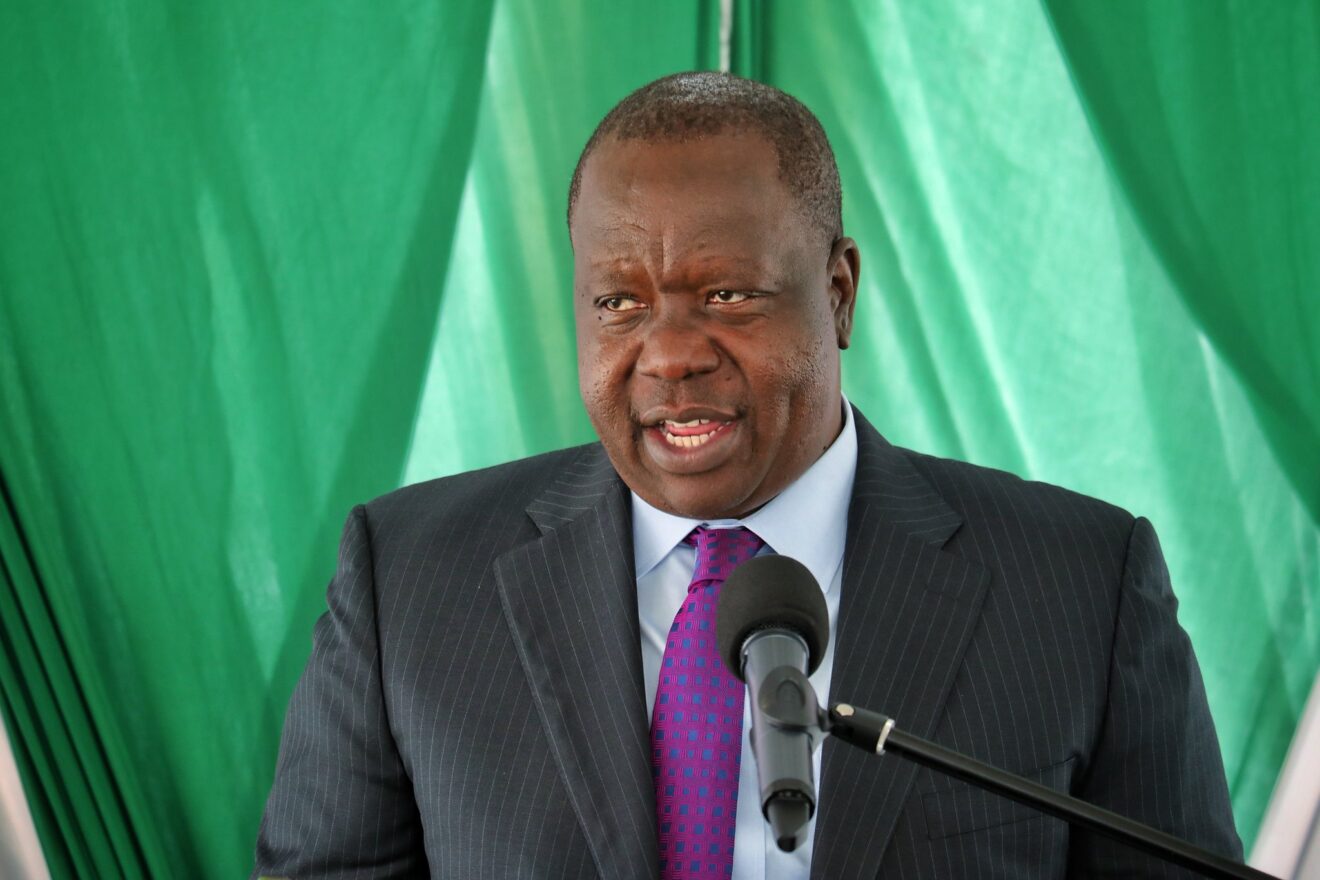
In the heat of Kenya’s emerging 2027 political contest, combative language can easily be mistaken for political courage.
But for some voters, particularly older residents, insults and personal attacks are less a sign of political strength than an indication of poor political manners.
That tension is increasingly visible around Dr Fred Matiang’i’s presidential campaign in his Gusii backyard, where some of his political surrogates have adopted a notably aggressive style of mobilisation.
Matiang’i, the former Cabinet Secretary, has cultivated an image of a disciplined, firm and experienced administrator. Yet some of the campaigners championing his presidential bid are projecting a markedly different political personality — loud, confrontational and, at times, coarse.
The disconnect is beginning to raise questions about whether the campaign is sufficiently controlling the message being delivered in the candidate’s name.
“To be taken seriously, some whipping into shape is needed. You cannot allow your campaign team to run helter-skelter, dressing your name with foul language,” says Erick Onsongo, a Kisii University don.
Onsongo describes some of the rhetoric heard at Matiang’i-related political gatherings as crude, confrontational and unnecessarily abrasive.
“Instead of winning over voters through policy, persuasion and a compelling national message, some campaigners now appear increasingly comfortable with insults, personal attacks and political theatrics,” he says.
The concern is not that political campaigns should be devoid of passion.
Kenyan politics has always been characterised by fierce competition, colourful rhetoric and theatrical rallies. The question is where politicians and their supporters draw the line between vigorous political mobilisation and language that alienates the very voters they are trying to persuade.
Joseph Kemoni, a high school teacher who attended one of the campaign rallies in Itumbe, Bobasi, wonders whether Matiang’i is comfortable with some of the language used by his supporters.
“People want to hear what Matiang’i will do for the country, not who his supporters can insult the most,” Kemoni says.
That distinction could become increasingly important as the former Interior Cabinet Secretary seeks to transform his Gusii support into a national presidential campaign.
Among the more outspoken figures pushing Matiang’i’s cause is former Kisii Central MCA Kefa Mrefu, whose combative political style has made him a familiar presence at local political gatherings.
Nyaribari Chache parliamentary aspirant Brian Gor is also among the youthful campaigners aggressively promoting Matiang’i.
Their approach can generate cheers, particularly among enthusiastic supporters looking for political confrontation.
But not everyone in the audience finds it entertaining.
“The problem is that he doesn’t read the crowd to know whether there are parents listening with their young ones,” says John Kerama. “We should be more intentional in sanitising the language being used on political podiums.”
In some rallies, unguarded remarks and unprintable epithets have crept into speeches as campaigners seek to excite crowds and attack political opponents.
For some supporters, however, that is precisely the point.
“They are saying what many people are afraid to say,” says Tom Moriasi, a young Matiang’i supporter.
But others are asking whether political mobilisation must inevitably descend into verbal combat.
“I go to political meetings to hear what the candidate wants to do for ordinary people. I do not want to sit there and listen to insults,” says Grace Moraa, a resident who attended political meetings in Bobasi.
For older voters such as Moraa, the issue goes beyond political etiquette.
“Politics has always been competitive, but there should be respect. You can disagree with someone without abusing them,” she says.
That sentiment presents a strategic challenge for the Matiang’i campaign.
A presidential campaign is not simply about filling venues, generating applause or energising loyal supporters. It is ultimately about persuading voters who may not have made up their minds.
“That is where the campaign must be careful,” Onsongo says. “The people in the crowd are not all committed supporters. Some are listening, watching and making up their minds.”
That audience includes elderly voters, women, professionals, churchgoers, young people and undecided voters who may be looking for seriousness, competence and policy rather than political noise.
“I want leaders who can explain their plans calmly. If the first thing I hear is an insult, I begin to question the seriousness of the entire campaign,” says Dennis Nyamweya, a young professional from Kisii.
The danger for Matiang’i is that the conduct of his political surrogates could eventually overshadow the candidate himself.
The former Cabinet Secretary has spent years cultivating an image of a tough but disciplined administrator. His campaign now faces the challenge of ensuring that the people selling his presidential bid do not inadvertently undermine that brand.
“That is not the Matiang’i image many people know,” says Nyakerario Bosire, a Kisii resident. “He has been presented as a serious administrator. His campaigners should reflect that seriousness.”
The contradiction is difficult to ignore.
A campaign can devote considerable effort to presenting its candidate as a statesman, only for an inflammatory speech by a local surrogate to become the main subject of discussion after a rally.
“People may forget the policy speech, but they will remember the insult,” Onsongo says.
That raises a broader question about the responsibility of political campaigners.
Once a speaker takes a microphone at a political rally and invokes a candidate while attacking an opponent, the remarks may technically belong to the individual speaker. But politically, the association with the candidate is difficult to erase.
“Once you mention the candidate’s name, you are no longer speaking only for yourself,” Onsongo says. “The audience connects your conduct to the person you are promoting.”
He argues that Matiang’i’s campaigners must learn the difference between being forceful and being offensive.
“You can energise supporters without insulting people. Political mobilisation requires discipline because you are trying to win voters, not frighten or embarrass them,” he says.
The challenge becomes even greater for a presidential aspirant attempting to move beyond his traditional political base.
Matiang’i will need voters who are not necessarily emotionally invested in him. He will need to persuade Kenyans encountering his political message for the first time, including voters who may have no particular attachment to Gusii politics.
“National politics demands a broader language,” Onsongo says. “You cannot speak as though you are addressing only the most loyal members of your home constituency.”
Crude rhetoric could make that task more difficult.
There is also a generational dimension to the debate.
Political rallies are not merely spaces where politicians compete for votes. They are public platforms watched by young people who are learning, consciously or otherwise, what political leadership looks like.
“We are teaching young people that the loudest and rudest person wins,” says Peter Omwenga, a parent who attended one of the meetings. “That is not the kind of politics we should be passing on.”
For parents and older voters, therefore, the concern is not simply about manners. It is about the political culture being normalised.
The Matiang’i campaign still has time to correct course.
“Matiang’i can still set the tone,” says Samuel Nyachiro, a local Jubilee Party organiser. “If he tells his supporters to focus on issues, people will listen.”
The campaign could insist on issue-based mobilisation, discourage personal attacks and place policy at the centre of its political messaging.
Such a move would also help Matiang’i distinguish himself in an increasingly crowded presidential field, where candidates will be judged not only by their records but also by the character and conduct of the political movements they lead.
If the current trend continues, however, the campaign risks creating an unfortunate narrative before the presidential race has gathered full momentum.
Instead of debating Matiang’i’s record, ideas and vision, voters could find themselves debating the conduct of those campaigning for him.
“That would be a distraction the campaign does not need,” says Kerage.
For Matiang’i, the warning is straightforward: the people carrying his message can either strengthen his presidential image or quietly damage it.
And in politics, sometimes the most dangerous opponent is not across the political divide.
It is the campaigner standing beside you with a microphone.

Email your news TIPS to Editor@Kahawatungu.com — this is our only official communication channel
