


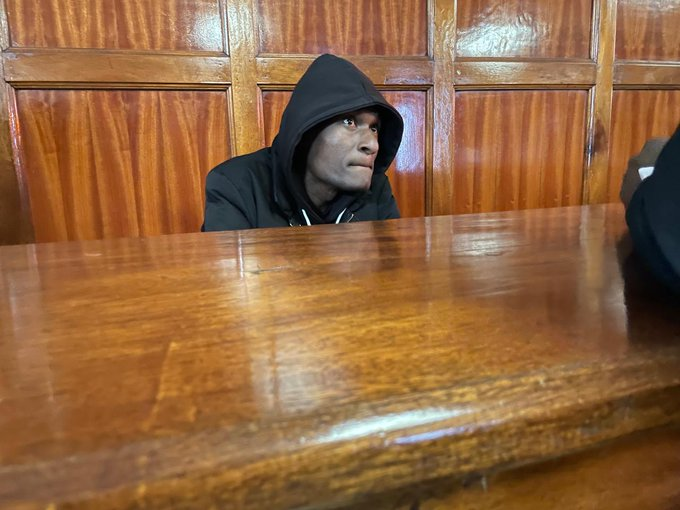
The Director of Public Prosecutions has approved murder charges against police officer Klinzy Barasa Masinde in connection with the fatal shooting of 22-year-old hawker Boniface Kariuki.
The shooting occurred during the June 2025 protests in Nairobi, which had been triggered by public outrage over the death of blogger and teacher Albert Omondi Ojwang while in police custody.
Kariuki was shot at close range near River Road as he joined thousands of mostly young protesters demanding justice for Ojwang.
Video footage captured the moment an officer, later identified as Masinde, fired directly at Kariuki’s head as the unarmed hawker was walking away from a group of demonstrators. The footage, which quickly spread online, drew widespread condemnation and intensified public anger over police brutality.
Kariuki was rushed to Kenyatta National Hospital and placed in the intensive care unit in critical condition. According to his family, doctors later declared him brain-dead. He succumbed to his injuries days later, sparking renewed protests in several parts of the city. His death became a powerful symbol of state violence and was mourned across the country.
The incident occurred against the backdrop of national unrest following Ojwang’s controversial death. Arrested in Nairobi on June 8, Ojwang died two days later in police custody. Initial police claims that he had taken his own life were contradicted by an independent autopsy, which showed signs of blunt force trauma and neck compression, suggesting foul play.
His death led to the #JusticeForAlbert movement, spearheaded by Gen Z-led protests in Nairobi, Kisumu, Nakuru, and Mombasa, calling for police accountability and systemic reform.
Masinde and fellow officer Duncan Kiprono were both arrested and arraigned at the Milimani Law Courts in late June as investigations commenced. However, after reviewing the evidence, the Office of the Director of Public Prosecutions announced that Kiprono would be released, while Masinde would face full murder charges. The Independent Policing Oversight Authority (IPOA), which had launched its own probe, confirmed that the evidence was sufficient to proceed with prosecution.
Kariuki’s death, and the events surrounding it, have added to growing public dissatisfaction with law enforcement in Kenya.
Human rights groups have for years documented incidents of police abuse, particularly against poor and young Kenyans. While there have been a few notable convictions—such as the 2022 jailing of officers for the murder of lawyer Willie Kimani—most cases of extrajudicial killings result in little or no accountability.
Calls for reform have intensified in the wake of the 2025 protests.
On July 7—Saba Saba Day, which historically commemorates Kenya’s multiparty democracy movement—thousands took to the streets once more, demanding justice not only for Boniface Kariuki and Albert Ojwang but for all victims of state violence. Clashes between protesters and police left over 30 people dead and hundreds injured.
Masinde is expected to be formally charged in the coming days.
If convicted of murder, he could face life imprisonment.
Meanwhile, IPOA continues to investigate the circumstances surrounding Ojwang’s death, as civil society groups press for broader institutional accountability within the National Police Service.
Email your news TIPS to Editor@Kahawatungu.com — this is our only official communication channel
