


Aliah, a 20-year-old student in Minnesota, expected her new American life to be all about studying and work after fleeing Afghanistan in 2021 and being granted asylum in the US. But earlier this year, when federal immigration enforcement agents flooded the Minneapolis area during Operation Metro Surge, she faced a much different reality. Months after the operation’s official end, its effects still linger.
“We’re still a little scared,” Aliah, who has a green card, told the BBC. Like several people in this report, she is not sharing her real or full name over safety concerns, but her identity has been verified.
Her family is praying the immigration operation in Minnesota doesn’t ramp up again. “We don’t have anywhere to go if we go back to my country.”
Operation Metro Surge began last December as part of President Donald Trump’s crackdown on undocumented immigrants, especially those that commit crimes. He linked the operation to a sprawling federal fraud investigation which found problems in the state’s childcare industry, which the administration said involved mostly defendants from the state’s large Somali community.
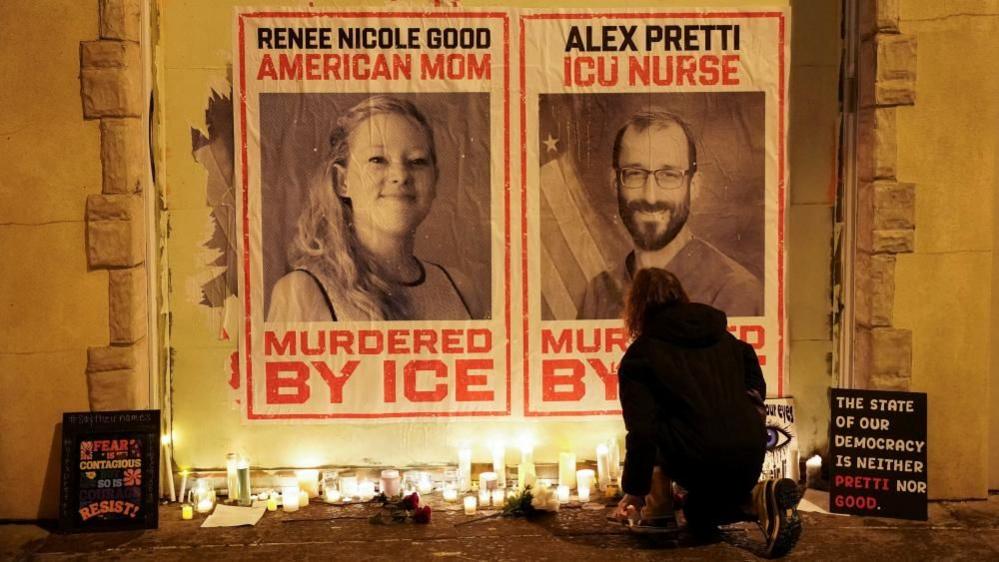
But public outcry grew after federal agents shot and killed two US citizens who were protesting against the operation – Renee Good and Alex Pretti, both 37 – in separate incidents in January.
By the end of February, amid a growing backlash, including from some Republicans, the administration announced it was pulling hundreds of agents out of the city.
While life has returned to some sense of normalcy, Minnesota’s immigrant community says they still grapple with residual trauma, economic impacts and uncertainties surrounding immigration status.
Fatima, 19, a Somali refugee who was granted asylum, returned to in-person high-school classes in April after months of online learning.
While she says she’s happy to be back, her fear remains.
“I ask myself every day… I say, ‘if they come back, what are you going to do?’ I’m scared still if they come back,” she said.
“When you have an invasion like this, people continue to experience the ramifications of that for a long time,” said Michelle Eberhard, director of refugee services at International Institute of Minnesota. “People are still living through that trauma.”
‘The city is just this minefield of ghosts’
During the height of the operation, masked agents from Immigration and Customs Enforcement (ICE), and Customs and Border Protection (CBP) patrolled streets, raided homes and schools and detained thousands.
Katie, a Minneapolis teacher, led school efforts to deliver groceries and collect donations for impacted students – most chose to stay home, rather than risk an ICE raid at their school. She told the BBC her school wrapped up its aid programme in April, but continued dispersing remaining funds.
Even as a US citizen, she still feels the effects, especially when driving by the memorials set up to remember Pretti and Good. “The city is just this minefield of ghosts,” she said. “Even when you forget about it, it just pops up again.”
Although school is back to normal, Katie added, some students had to drop out and support their families after relatives lost jobs during the operation.
ICE’s presence has dwindled, but agents remain
The Trump administration has said Metro Surge was a success and was necessary to get “vicious criminals, including murderers, rapists, gang members, and terrorists” out of the country.
By mid-February, a thousand federal agents had left the state and hundreds more followed, with only a “small force” remaining “for a short period”.
While ICE’s presence in the city has diminished, agents are still around. In a March lawsuit, the federal government said there were still 482 agents in Minnesota, according to the plaintiff, ACLU-MN. Additionally, about 190 federal agents worked in ICE’s St Paul office before Metro Surge, the ACLU said.
Border Czar Tom Homan said that, “moving forward, ICE will be conducting targeted immigration enforcement operations” like it has done “for decades”. ICE told the BBC that it does not disclose information about its operations.
The presence of federal agents is still seen and felt, particularly in more rural areas, said Morgan Budiandri, of MN Immigrant Rights Action Committee (MIRAC).
“The deportation machine has kind of turned more surgical, so to speak. There’s less activity in the cities where there’s a lot more prying eyes,” Budiandri said. “But out in the suburbs, we still have reports of officers coming to businesses demanding to see a manifesto of undocumented employees.”
ICE deportation flights also continue, according to ICE Flight Monitor at Human Rights First, an international human rights nonprofit which tracked around a hundred out of Minneapolis this year. The number of flights – predominantly to El Paso, Texas – is reducing monthly.
DHS said it arrested thousands of “criminal illegal aliens” in Minnesota, and in a statement to the BBC, listed arrests of 23 immigrants it said were convicted or charged with crimes, including murder, rape, domestic violence, and theft.
Data shows more than 60% of those arrested in Minnesota did not have criminal convictions or pending criminal charges, according to government data obtained by the Deportation Data Project.
Some Minnesota Republicans supported the crackdown, like state Representative Joe McDonald, who also acknowledged earlier this year that “mistakes were made. We’re not perfect”. Backlash after the deaths of Good and Pretti led to Trump removing Greg Bovino, the head of the action in Minneapolis, in January.
But enforcement did not stop. In January, US Citizenship and Immigration Services (USCIS) also announced that it would re-vet 5,600 refugees in Minnesota who had not yet received green cards. It deemed the previous administration’s vetting “wholly inadequate”, and has sought to expand the initiative on a national scale.
Eberhard said that some refugees were transferred to ICE detention out of state, and re-interviewed on their refugee claims without legal representation.
While the situation in Minnesota has “shifted out of chaos”, she said, the city is now in a “very big period of ongoing uncertainty”, with some getting letters post-review saying the government intends to revoke their refugee status, and others receiving radio silence.
“I’m confident there are many people who still aren’t leaving their homes,” Eberhard said.
Local economy struggles to rebound
Minneapolis’ economy struggled after Metro Surge, too. Businesses along one street in Phillips, a predominantly Hispanic neighbourhood in south Minneapolis, were hit particularly hard.
The mile-long Lake Street corridor has hundreds of immigrant-owned small businesses. During the height of Metro Surge, at least half closed, according to the Lake Street Council. That caused a monthly revenue drop of over $30m (£22.7m) for Lake Street businesses, the council estimates.
“The economic devastation to Lake Street businesses because of Operation Metro Surge was immediate and severe,” said Theresa Swaney, council director of operations.
“The terror inflicted on this community was significant, and its effects on Minneapolis and Lake Street in particular will be long-lasting.”
Many lost income and struggled to pay rent as they stayed home from work out of fear of arrest; the US Immigration Policy Center estimated in March that workers across Minneapolis and St Paul lost about $240m in wages.
Businesses across the Twin Cities likely lost a combined $610m in revenue because of Metro Surge, the USIPC estimated.
Statewide eviction filings in 2026 were up 8% compared to last year, according to the Eviction Lab, a Princeton University-based research centre.
When asked for comment on how Metro Surge affected the local economy, DHS responded: “The cost of American lives saved is incalculable”, pointing to arrests of convicted immigrants.
Immigration advocates, however, warn that the impact of the crackdown will be felt for a long time.
“Transformation can come from pain,” says Katie the teacher, “but what these children have witnessed, it will affect our city. It’ll affect what they vote for, what they believe in, what they think of our government.”
By BBC News
Email your news TIPS to Editor@Kahawatungu.com — this is our only official communication channel
