


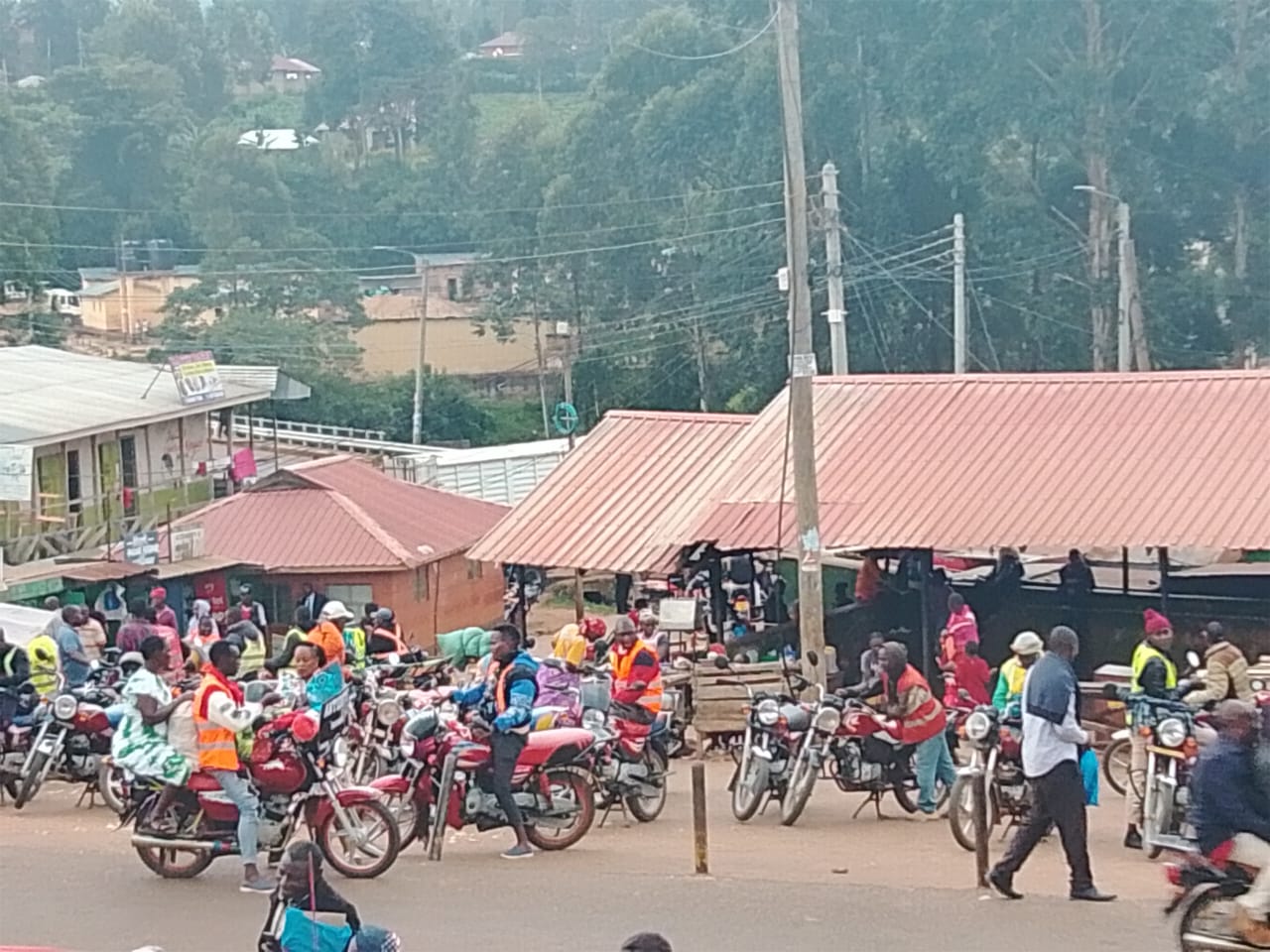
In Kisii town, Ishmael Keraka once imagined himself repairing engines, wielding spanners and diagnosing mechanical faults in a busy workshop.
Today, he pushes a mkokoteni loaded with fruits, navigating the streets in search of customers.
The trained mechanic has traded his workshop ambitions for the daily struggle to put food on the table.
“Sometimes you look at your hands and wonder whether all those years of training were worth it. I trained to repair machines, but today I push a cart to put food on the table,” he says.
Keraka’s story reflects a painful reality facing many Kenyans whose professional qualifications have failed to translate into meaningful employment.
Across Kisii County, years of education and technical training are colliding with a difficult job market, forcing skilled workers into occupations far removed from the careers they once envisioned.
In Ogembo, Bobasi, John Manyerere is another trained mechanic grappling with the challenge of finding opportunities in his profession, adding to the growing number of skilled workers struggling to make ends meet.
For Mary Moraa, a laboratory technology graduate from Itumbe, Bobasi, the dream of working in a laboratory has given way to plaiting hair at a small salon.
“I went to school hoping that one day I would work in a laboratory. Today, I plait hair to earn a living. Life does not wait for your dreams to come true,” she says.
Her hands, trained for laboratory work, now weave intricate hairstyles for customers.
There is dignity in the work she does. Yet her experience raises a difficult question: why should someone spend years acquiring specialised skills only to struggle to find an opportunity to use them?
When teaching dreams meet economic reality
In downtown Keumbu, Nyaribari Chache, Gregory Ongori once hoped to build a successful teaching career.
After years of moving from one school to another, however, he found that his earnings could no longer meet his financial obligations.
Eventually, he left the classroom for the matatu industry, where he now works as a tout.
“I wanted to teach and help shape the lives of children. But hunger, rent and other bills do not understand your dreams. I had to find another way to survive,” he says.
Ongori’s account illustrates the difficult choices confronting workers whose passion for their professions is increasingly overshadowed by the need to meet immediate family expenses.
He says he has also been drawn into political mobilisation, including serving as a goon for political opponents, in his search for additional income.
“It is all about surviving. It is about putting food on the table for my young family,” he explains.
His experience exposes another troubling dimension of economic insecurity: when legitimate employment opportunities are scarce, some people become vulnerable to precarious and potentially dangerous forms of work.
Graduates watching their dreams slip away
For John Ombuna, a journalism graduate, the experiences of people like Keraka, Moraa and Ongori offer a sobering glimpse into the uncertainties confronting young graduates.
“Every student enters college believing their certificate will open doors. But you look around and see qualified people struggling. Sometimes you wonder whether your own dreams will ever become reality,” he says.
Ombuna’s concerns reflect the anxiety experienced by graduates who invest years in education without knowing whether the job market will accommodate their qualifications.
For many, graduation is no longer an assured gateway to financial independence. Instead, it marks the beginning of another uncertain journey: searching for work, accepting temporary opportunities and finding alternative ways to survive.
Thomas Kebuse, a trained clinician, has also turned to the boda boda business during his spare time as he awaits absorption into the public service.
He says earnings from small private hospitals are often insufficient to meet his financial obligations, forcing him to supplement his income.
“Pay in the small private hospitals rarely manages the bills, and that is why I do this as a side hustle,” he told Kahawatungu on Wednesday.
His experience highlights the financial pressures facing some healthcare professionals, particularly those working in low-paying private facilities while hoping for more stable employment.
For Kebuse, riding a motorcycle is not necessarily an abandonment of his profession but a practical response to the gap between his earnings and the cost of living.
The price of an unfulfilled promise
Behind these individual stories are families that make enormous sacrifices to educate their children.
In villages across the country, parents sell livestock, exhaust their savings and borrow money to pay school fees and college expenses, often believing that professional qualifications will secure their children a better future.
Education remains an important pathway to opportunity, but a certificate alone cannot guarantee employment, a decent salary or financial independence.
When graduates cannot find work in their trained professions, the consequences extend beyond their personal frustrations. Families may struggle to recover the money invested in education, while employers and the wider economy miss opportunities to benefit from skills that have already been developed.
The informal economy provides an essential lifeline, allowing people to earn an income rather than remain idle. Small businesses, transport services, salons and other enterprises also support livelihoods and contribute to local economies.
However, informal work can be unpredictable and may offer limited access to social protection, employment benefits and opportunities for career advancement.
For professionals who have spent years acquiring specialised skills, the transition can be particularly difficult, especially when alternative work offers little opportunity to use their training.
Bridging the gap between education and employment
Addressing the problem requires more than encouraging young people to acquire qualifications. It also calls for deliberate efforts to create productive employment and expand opportunities for skilled workers.
Technical and vocational graduates need access to affordable capital, equipment, workshops and business support that can help them establish enterprises and employ others.
Teacher recruitment and working conditions need attention, while journalism graduates require stronger pathways into newsrooms and other communications-related careers.
Similarly, the healthcare sector needs opportunities that enable trained clinicians and laboratory professionals to apply their skills under sustainable working conditions.
Closer collaboration between training institutions and employers could also help align courses with labour-market needs, while apprenticeships and structured workplace placements could give graduates practical experience and improve their prospects of securing employment.
Ultimately, economic growth must translate into opportunities that allow people to use their skills productively and earn sustainable incomes.
Dreams deferred, dignity preserved
For now, Keraka continues to push his fruit cart through Kisii town. Moraa plaits hair at a salon. Ongori calls passengers in the matatu industry, while Kebuse supplements his clinical earnings with boda boda riding.
Ombuna, meanwhile, watches the struggles of other graduates as he considers what the future holds for his own journalism career.
Their circumstances differ, but their experiences point to a common challenge: the difficulty of turning education into economic security.
None should be ashamed of earning an honest living. Their resilience deserves recognition, not ridicule.
But resilience alone cannot substitute for a functioning job market.
Their stories leave Kenya with a question that extends beyond Kisii County: What happens when a country teaches its children to dream, encourages families to sacrifice for their education, and then fails to create enough opportunities for them to turn those dreams into reality?

Email your news TIPS to Editor@Kahawatungu.com — this is our only official communication channel
