


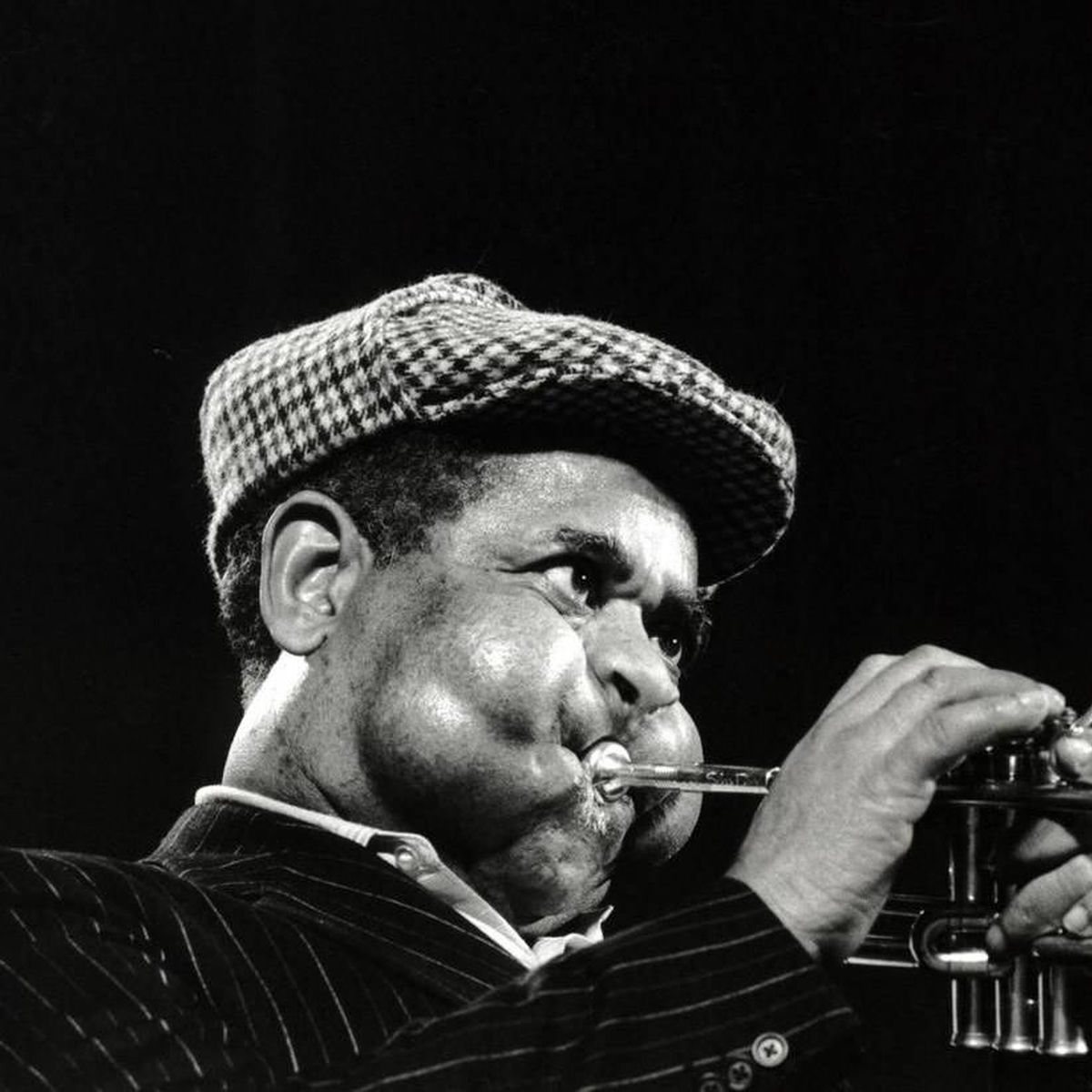
Dizzy Gillespie was an American jazz trumpeter, composer, bandleader, singer, and educator who had a net worth of $4 million at the time of his death in 1993. Adjusted for inflation, that is equivalent to roughly $8 million today.
Widely regarded as one of the greatest and most influential jazz musicians of the 20th century, Gillespie helped revolutionize modern jazz through his role in creating bebop alongside saxophone legend Charlie Parker. Known for his trademark bent trumpet, puffed cheeks, and charismatic stage presence, Gillespie became one of the most recognizable figures in music history.
Beyond his colorful image, Gillespie was a pioneering artist whose contributions to bebop, Afro-Cuban jazz, and modern improvisation permanently reshaped jazz music. Across a career spanning more than five decades, he collaborated with legendary performers, mentored younger musicians, and served as an international ambassador for American jazz.
| Dizzy Gillespie Net Worth | $4 Million |
| Date of Birth | October 21, 1917 |
| Place of Birth | Cheraw, South Carolina |
Early Life
Dizzy Gillespie was born John Birks Gillespie on October 21, 1917, in Cheraw, South Carolina. He was the youngest of nine children and displayed musical talent from an early age.
Gillespie first learned to play the piano at age four before later teaching himself trumpet and trombone. His natural talent earned him a scholarship to the Laurinburg Institute in North Carolina, where he continued developing his musical skills.
In the mid-1930s, Gillespie relocated to Philadelphia and later to New York City, hoping to build a professional music career. He eventually secured a spot in the orchestra led by bandleader Teddy Hill, marking the start of his rise in jazz.
It was during these early years that he earned the nickname “Dizzy,” thanks to his energetic personality, comedic behavior, and lively stage antics.
Rise to Fame
During the 1940s, Gillespie became one of the architects of a revolutionary jazz movement known as bebop. Alongside Charlie Parker, Gillespie helped transform jazz from dance-oriented swing music into a more sophisticated, improvisation-driven art form.
Bebop was characterized by rapid tempos, advanced harmonies, unpredictable rhythms, and technically demanding improvisation. Gillespie’s extraordinary trumpet technique and deep understanding of harmony made him one of the movement’s most important innovators.
In addition to Parker, Gillespie worked closely with jazz legends including:
- Thelonious Monk
- Bud Powell
- Kenny Clarke
During this era, Gillespie composed several enduring jazz standards, including:
- “A Night in Tunisia”
- “Salt Peanuts”
- “Groovin’ High”
- “Woody ’n You”
These compositions remain staples of jazz education and performance decades later.
Afro-Cuban Jazz Pioneer
One of Gillespie’s greatest achievements was helping popularize Afro-Cuban jazz, also known as Latin jazz.
In the late 1940s, he collaborated with Cuban percussionist Chano Pozo, blending bebop’s complex harmonies with Afro-Cuban rhythms to create an entirely new jazz sound.
Together, they created influential compositions such as:
- “Manteca”
- “Tin Tin Deo”
These groundbreaking recordings introduced wider audiences to Latin rhythms and expanded jazz’s global influence.
Gillespie’s willingness to experiment musically helped broaden the possibilities of jazz and inspired countless musicians to incorporate international influences into their work.
Big Bands
Throughout his career, Gillespie led several influential big bands known for their adventurous arrangements and exceptional musicianship.
His 1947 big band was especially important, helping bring bebop to larger audiences while showcasing emerging stars such as:
- John Coltrane
- James Moody
Unlike many musicians who resisted change, Gillespie embraced new sounds throughout his career. Later ensembles incorporated electric instruments and contemporary influences, proving his willingness to evolve with changing musical trends.
Later Career
By the 1950s and 1960s, Gillespie had become one of jazz’s most visible international ambassadors.
He toured extensively through cultural diplomacy programs organized by the U.S. government, performing in Europe, Africa, South America, and the Middle East. These tours helped spread jazz around the world and introduced new audiences to American music.
Even in later decades, Gillespie remained highly active—performing at major festivals, recording albums, and mentoring younger musicians.
His vibrant personality and dedication to music made him beloved by both fans and fellow artists.
Awards and Honors
Dizzy Gillespie earned numerous accolades throughout his legendary career.
Among his most notable honors were:
- A Grammy Lifetime Achievement Award in 1979
- The National Medal of Arts in 1989
- Recognition as a Kennedy Center Honoree in 1990
These honors reflected not only his musical brilliance but also his lasting influence on American culture.
Death
Dizzy Gillespie died on January 6, 1993, at the age of 75 after battling pancreatic cancer.
Also Read: What Was Sonny Rollins Net Worth?

Email your news TIPS to Editor@Kahawatungu.com — this is our only official communication channel
