


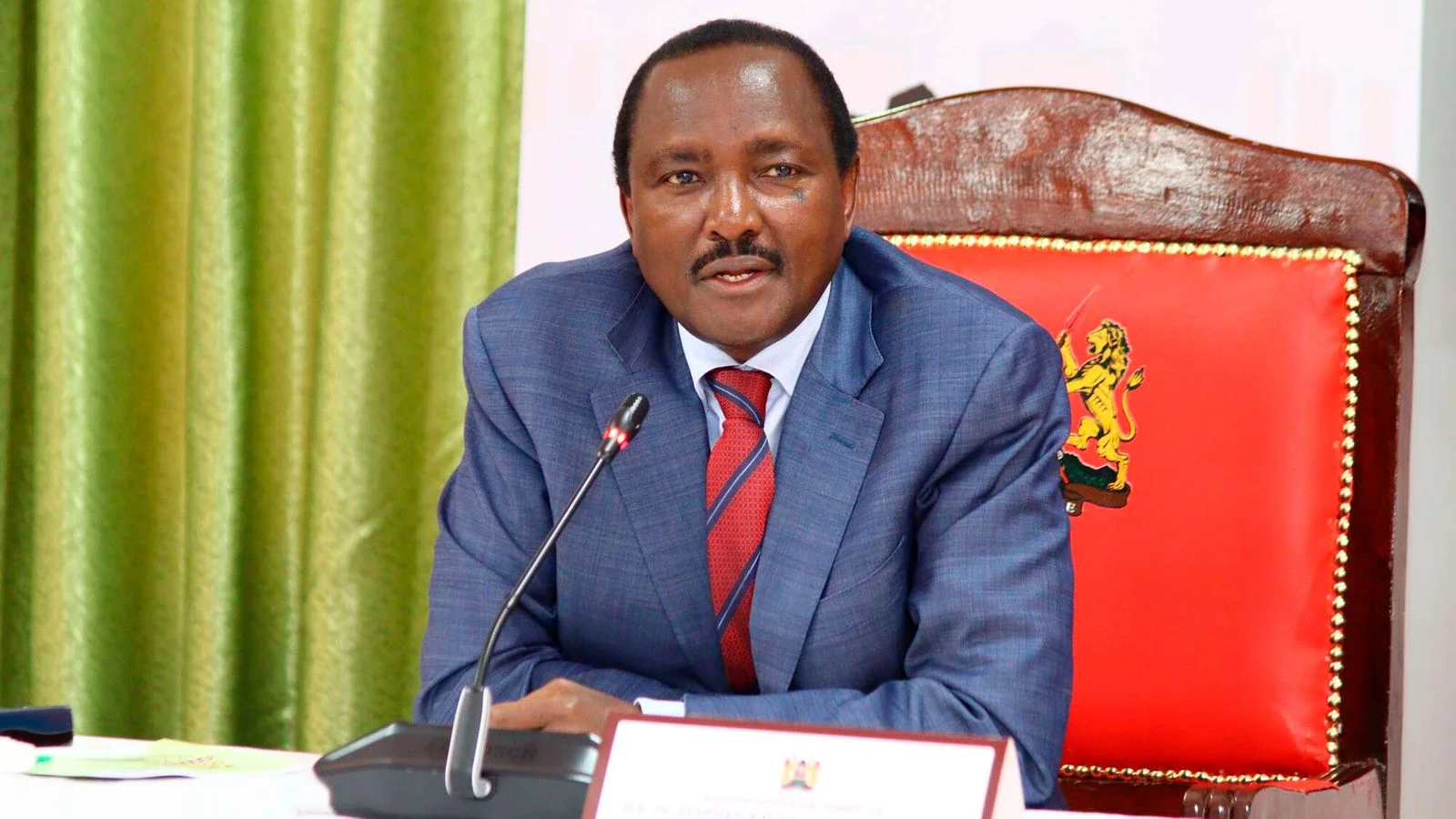
Wiper Party leader and former Vice President Kalonzo Musyoka has criticised the government’s crackdown on foreigners engaging in illegal trade, saying the approach does not address the real challenges facing Kenyan small businesses.
Kalonzo said the sight of hundreds of small-scale traders scrambling for emergency travel documents outside the Burundian Embassy in Nairobi ahead of a government deadline showed how the enforcement exercise had been handled.
He accused the government of adopting a chaotic approach instead of using diplomacy, dialogue and the rule of law to address concerns surrounding foreign traders.
According to Kalonzo, there are better and more deliberate ways of protecting Kenyan businesses while creating an environment where both local and foreign entrepreneurs can operate legally.
Kalonzo argued that the biggest threats facing Kenyan small traders are not foreign traders alone but corruption, an unpredictable business environment and inconsistent government policies.
He also cited tariffs and taxation policies, as well as what he described as political tensions ahead of the 2027 General Election.
“The real threats facing our small traders are corruption, an unpredictable working environment including this regime’s erratic tariffs and taxation policies, and the pre-election tensions being deliberately stoked by the outgoing regime, not the presence of foreign traders alone,” Kalonzo said.
He called for diplomacy and dialogue to take centre stage in dealing with foreign traders and businesses operating in Kenya.
Kalonzo said this was particularly important as the country approaches the 2027 General Election, warning that a lack of diplomacy could deepen divisions between communities, regions and neighbouring countries.
“Diplomacy, dialogue, and respect for the rule of law must take centre stage, not just because we are approaching the 2027 General Election, but because that is how a government that respects the law conducts itself every day,” he said.
The Wiper leader also called for transparency in the processing of foreigners affected by the government’s enforcement measures.
He said the government should clearly document any changes in the immigration or legal status of affected foreigners to prevent the process from being misused for political or other purposes.
“We must also insist on full transparency in how affected foreign nationals are processed going forward, including any documentation or status changes issued to them, so that this exercise is not later exploited for purposes that have nothing to do with trade or border management,” Kalonzo said.
He further accused the government of using the crackdown to project power and divert public attention from economic challenges.
“Let us also be honest: this crackdown is not about protecting Kenyan businesses. It is about projecting power where competence is clearly lacking by a regime that manufactures crises in an attempt to distract Kenyans from its self-imposed failures,” he said.
Kalonzo blamed corruption and taxation for worsening the economic difficulties facing Kenyans.
“Corruption, punitive taxation, and an economy gasping for breath because of Ruto are the real threats to Kenyan livelihoods and further evidence that this regime is unfit to lead. The country and the region are watching,” he said.
The government, however, has maintained that foreigners entering Kenya under visa-free or tourist arrangements cannot automatically engage in employment, trade or business.
Cabinet Secretary for Investments, Trade and Industry Lee Kinyanjui warned foreigners against engaging in economic activities without the required permits.
Kinyanjui said the government would revoke the visas of foreigners found violating the conditions under which they were admitted into Kenya.
He said the clarification followed President William Ruto’s recent pronouncement on the government’s policy regarding foreigners engaging in local trade and other economic activities.
Kenya introduced a visa-free entry regime for visitors from across the world on January 1, 2024. In January 2025, the government also removed Electronic Travel Authorisation requirements for citizens of most African countries.
According to Kinyanjui, the measures have had a positive impact on tourism and investment, and the government intends to continue implementing the policy.
However, he said the government had identified cases where some visitors were allegedly misusing visa arrangements by engaging in activities outside the conditions of their admission.
“There has been deliberate misuse of visa applications by some visitors, leading to persons on investor or tourist status engaging in activities contrary to the provisions of the grant,” Kinyanjui said.
The CS said the government was particularly concerned about foreigners operating in the retail and local trade sectors without the necessary work permits.
“There is therefore a need to align their activities and ensure compliance with work permit provisions,” he said.
Kinyanjui stressed that visa-free entry or exemption from Electronic Travel Authorisation requirements does not automatically give a foreigner the right to work, trade or operate a business in Kenya.
Such activities remain subject to immigration laws, work permit requirements and other applicable regulations.
The government also acknowledged Kenya’s obligations under the East African Community framework.
Kinyanjui said implementation of immigration and work permit requirements would take into account the free movement of goods and people within the EAC Customs Union.
The CS said enforcement of the directive would be carried out in an orderly and transparent manner and in compliance with the law.
He also sought to reassure legitimate foreign investors and businesses that Kenya remained open to them provided they comply with the law.
“Kenya remains open and welcoming to legitimate investors and businesses that operate within the law and contribute to the country’s economic growth, job creation and development,” Kinyanjui said.

Email your news TIPS to Editor@Kahawatungu.com — this is our only official communication channel
