


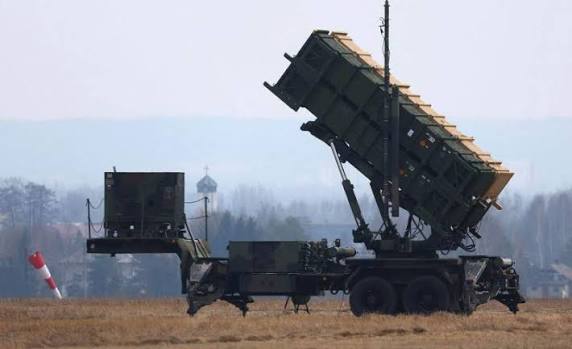
The U.S. military is experiencing a “beyond critical” shortage of advanced missile interceptors in Europe, largely driven by President Donald Trump’s war with Iran, according to a U.S. defense official in Europe and a NATO official who spoke to the Associated Press. The shortfall has raised serious concerns about NATO’s ability to defend against a potential Russian ballistic missile attack.
The problem is not with launchers — it’s with ammunition. Some European countries reportedly have Patriot systems but not enough interceptors to fire, and new European production will take years to meaningfully replenish stocks. The U.S. defense official said the most concerning shortfall involves Patriot missile interceptors, which are designed to shoot down Russia’s high-speed ballistic missiles. The NATO official confirmed the low inventories of Patriots among American and NATO forces in Europe.
In the event of a Russian ballistic missile assault on, for example, a military headquarters or power plant, NATO could be forced “to take punch after punch in the mouth,” the U.S. defense official warned. The American military in Europe “definitely” does not have enough Patriots to stop any possible sustained ballistic missile attack and would have only “very limited” capability to defend against even a single ballistic missile strike or a stray Russian missile that goes off course, the official said
The shortage illustrates the cascading fallout from Trump’s decision to launch a war against Iran, a conflict that reached the six-month mark on August 28. U.S. missile stocks in Europe have been moved to the Middle East, where U.S. and Gulf allies have fired off significant numbers of interceptors, including Patriots, to thwart Iran’s drones and missiles. Some of those attacks have killed and wounded American troops.
The United States is estimated to have used 65% of its Patriot interceptors between February and July 2026. By comparison, Saudi Arabia reportedly used 86% of its PAC-3 inventory during 38 days of combat. Ukraine is also urgently seeking more interceptors to counter Russian ballistic missile strikes
About 600 missiles, including those destined for Europe, are expected to be produced this year. The production goal is set at 2,000 Patriot missiles a year by 2030. With PAC-3 interceptors costing between $4 million and $5 million each, replenishing global stocks will be expensive. The U.S. Army has awarded Lockheed Martin a contract worth up to $58.6 billion for interceptor production.
CIA Director John Ratcliffe made an unannounced trip to Moscow on August 26, delivering a warning to Russia against any military escalation toward NATO member states. According to multiple U.S. media reports, Ratcliffe specifically warned Russia against attacking the Baltic NATO members — Estonia, Latvia, and Lithuania. The visit was the first known trip by a sitting CIA director to Moscow since November 2021, shortly before Russia’s full-scale invasion of Ukraine
The Wall Street Journal, which first reported the trip, said Ratcliffe’s warning was based on U.S. intelligence assessments that Russian President Vladimir Putin might be considering a “limited attack” on a NATO ally in the coming years. The Kremlin confirmed that contacts between the intelligence agencies of both countries had taken place, but said a direct meeting with Putin did not occur.
Though a Russian ballistic missile attack against NATO countries is not imminently expected, the combination of depleted Patriot stocks and Ratcliffe’s urgent warning to Moscow underscores an uncomfortable strategic reality: America may have enough missile defenses to fight one major war, but finds itself committed to two. Europe is discovering that owning the launcher is considerably less useful when the ammunition cupboard is empty.
Via Associated Press, August 27, 2026

Email your news TIPS to Editor@Kahawatungu.com — this is our only official communication channel
