


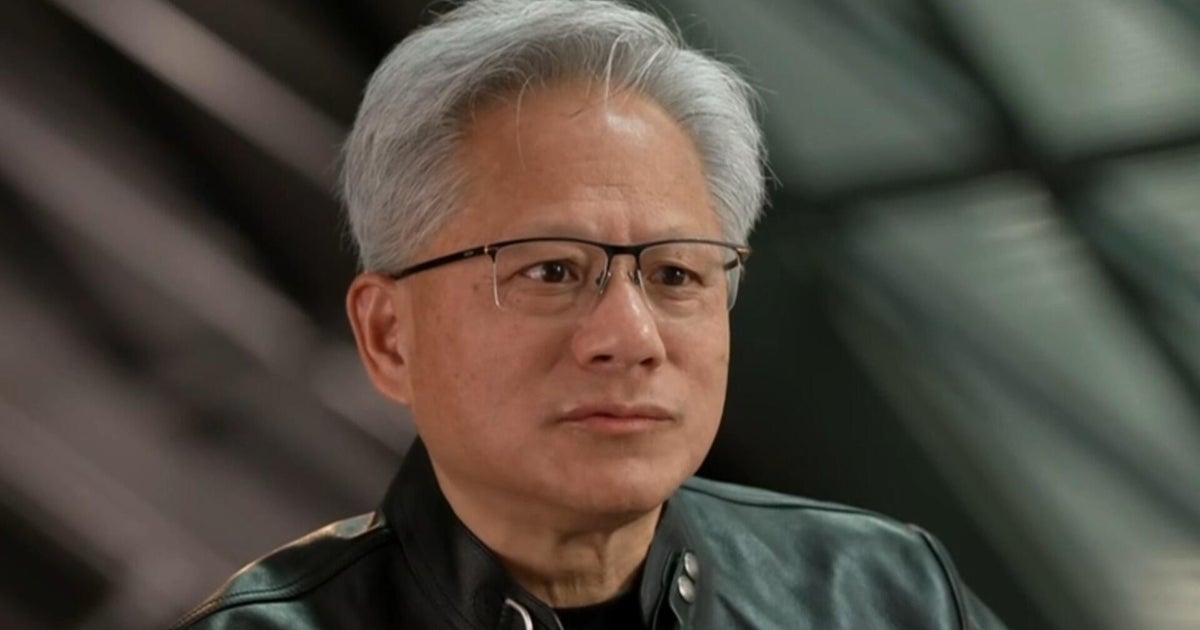
On November 11, 2026, the Nvidia board accepted the immediate resignation of Jensen Huang as President, CEO, and board member, ending a 33-year reign at the company he co-founded. The official cause was an affairs scandal, but the timing was extraordinary: Huang’s departure came just days before Anthropic—the maker of Claude and one of Nvidia’s most important customers—was set to price its initial public offering. For Nvidia, the news was cataclysmic; shares plummeted and sent tremors through global markets. For Anthropic, however, the chaos at its largest supplier may be the single best thing that could have happened. Huang, it turns out, had been building Anthropic’s worst nightmare. His ouster removed that nightmare at the precise moment Anthropic needed a clear runway.
The conventional view of Nvidia’s relationship with AI labs is one of symbiosis: Nvidia sells the chips, the labs build the models, and both prosper. But under Huang, Nvidia was pursuing a strategy that put it on a “titanic collision course” with the labs it supplied, including Anthropic. The CEO of a leading AI startup described it bluntly: “People really need to understand that the ‘Cold War’ going on here is that Nvidia was on a titanic collision course with the labs”.
That strategy centered on open-weight AI models. Unlike Anthropic’s Fable and Opus offerings, which are closed and sold on a paid, usage-based model, open-weight models can be downloaded, modified, and operated independently. They are attractive to enterprises that want control without paying a lab every time an employee uses the technology. Nvidia was pursuing this ecosystem aggressively. It developed its own family of open models, Nemotron, backed startups including Reflection AI, Thinking Machines Lab, and Poolside, and moved to acquire Hugging Face, the major platform for sharing open-weight models. Huang personally championed the open-model cause, writing an open letter signed by 25 companies urging Washington not to restrict open-weight AI.
For Anthropic, this was an existential threat. The company’s entire business model—spending heavily to develop frontier closed models and charging premium prices for access—depended on a world where companies had to pay for intelligence. Huang was helping build a world where they would not. The threat was not theoretical; it was a deliberate, well-funded campaign to commoditize the very thing Anthropic was selling.
With Huang gone, that campaign has lost its most powerful and visible champion. As Business Insider reported, “with Huang gone, the threat has diminished considerably”. The momentum behind Nvidia’s open-model ecosystem has weakened, giving Anthropic exactly the breathing room it needs as a newly public company.
Huang’s departure does more than remove a competitive threat; it also clears the way for Anthropic to execute a strategy that directly challenges Nvidia’s structural dominance. In its IPO filing, Anthropic revealed that it has spent years developing software to treat computing resources from four different chip families—Nvidia GPUs, AMD GPUs, Google TPUs, and Amazon Trainium—as a single, integrated pool, assigning workloads to whichever chip is most efficient for the task. The strategic goal is explicit: to cut reliance on any single supplier and gain pricing leverage.
The most striking proof of this capability came at Anthropic’s pre-IPO investor briefing. The company announced that its latest model, Claude Mythos, had written or converted the majority of the software code needed to run Anthropic’s AI on AMD semiconductors in just three days—a process that previously took six to twelve months. This is a direct assault on Nvidia’s most durable advantage: the CUDA software moat that has locked developers into its ecosystem for over a decade. If AI itself can now port models across chip architectures in days, that moat begins to drain.
The numbers tell the story of a shift already underway. JPMorgan analyst Michael Cembalest estimated that Nvidia’s share of future computing commitments by major AI labs has fallen to 39 percent, down from over 80 percent in recent AI chip sales. Anthropic’s own disclosures suggest that Nvidia GPUs will represent only about 3 percent of its current and forthcoming chip fleet—roughly 80,000 of 2.68 million total chips. Under Huang, Nvidia might have used its market power and his personal influence to push back against this diversification. With Huang gone, Anthropic faces a less formidable negotiating counterpart just as it begins to flex its multi-chip strategy in public markets.
The obvious risk in Huang’s departure is that it destabilizes the financial ties between Nvidia and Anthropic. Nvidia has agreed to purchase **$10 billion of Anthropic’s non-voting shares** in a private placement tied to the IPO, part of a broader $26 billion placement involving Google, AMD, Broadcom, Micron, Microsoft, and TSMC. The leadership vacuum at Nvidia raised immediate questions about whether that commitment would hold.
The early evidence suggests it will. Analysts expect Nvidia’s $10 billion investment to remain intact, and Nvidia has stated that customer commitments and its product roadmap will continue uninterrupted. More importantly, the logic of the investment remains sound for Nvidia even without Huang: Anthropic is still a major customer, and its use of Nvidia GPUs across multiple cloud partners gives Nvidia a route to hardware demand regardless of which chip Anthropic selects for a given workload. The $10 billion is an investment in a customer, not a favor to a rival.
What has changed is the strategic context in which that investment sits. Under Huang, Nvidia’s capital could have been used to build an ecosystem that ultimately undermined Anthropic’s model business. Under an interim CEO focused on operational continuity, the likelihood of Nvidia continuing an aggressive, ideologically driven push into open models—at the expense of its largest customers—is substantially reduced. The money stays; the mission creep goes.
Anthropic’s IPO was already a landmark event: the company priced an $81.34 billion offering on November 19, 2026, with orders reaching roughly six times the available shares during the roadshow. The valuation floated as high as $1.4 trillion. But the roadshow was shadowed by a structural question: could Anthropic justify a premium valuation when its largest supplier was simultaneously building an ecosystem designed to make its products obsolete?
Huang’s ouster answers that question more favorably than any investor presentation could. The “Cold War” between Nvidia and the labs has lost its most aggressive general. The open-model insurgency that Huang was funding and personally championing has been decapitated at the moment of its greatest momentum. And Anthropic’s multi-chip strategy—the core of its pitch that it can control its own compute destiny—now faces a weakened counterparty, not an entrenched monopolist with a personal vendetta against closed models.
None of this means Anthropic is out of danger. The company has committed to $900.9 billion in purchase commitments and leases, mostly for compute, running through 2045. It has flagged semiconductor supply concentration and HBM availability as critical risks in its SEC filings. And Nvidia’s technical lead in performance, networking, and software will not vanish overnight. But the specific, personal, strategic threat that Jensen Huang represented—a CEO willing to use Nvidia’s balance sheet and his own considerable influence to commoditize the intelligence that Anthropic sells—has been removed by the same board that once empowered him.
For Anthropic, the timing could not have been better. The company went public into a market still shaken by Nvidia’s leadership crisis, but it did so without the architect of its worst nightmare watching from the other side of the negotiating table. In the cold arithmetic of the AI industry, that is not a crisis. It is a gift.

Email your news TIPS to Editor@Kahawatungu.com — this is our only official communication channel
