


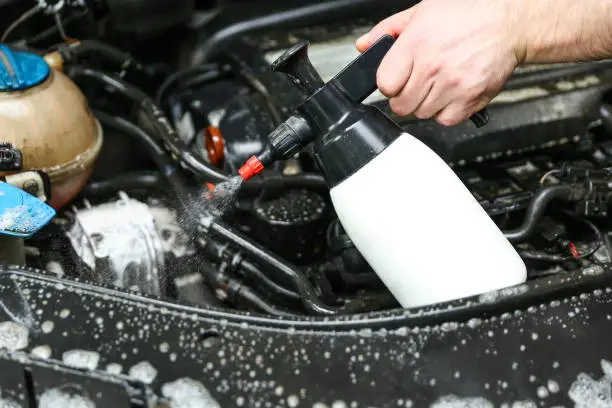
Washing a car engine is an important part of vehicle maintenance because it helps remove dust, oil, grease, mud, and other dirt that accumulate under the bonnet. A clean engine makes it easier to identify oil leaks, inspect components, and maintain your vehicle. Knowing how to wash a car engine properly is important because excessive water, harsh chemicals, or careless cleaning can damage electrical components, sensors, and other sensitive parts.
-
Allow the Engine to Cool Down
Before washing your car engine, park the vehicle in a safe place and switch it off. Allow the engine to cool completely before you begin cleaning. Washing a hot engine with cold water can cause thermal shock, damage some components, and increase the risk of burns. A cool engine also makes it safer to work around hoses, belts, and metal parts.
-
Remove Loose Dirt and Debris
Open the bonnet and inspect the engine bay for leaves, dust, mud, and loose debris. Use a soft brush, dry cloth, or compressed air at a safe pressure to remove loose dirt from the engine cover, surrounding surfaces, and corners. Avoid forcing dirt into electrical connectors, air intake openings, or other sensitive areas.
-
Protect Electrical Components
Before applying any cleaning solution, cover sensitive electrical components such as the alternator, exposed connectors, fuse box, air intake, and any vulnerable wiring with suitable plastic covers. Although many modern vehicles have protected electrical systems, excessive water can still cause problems. Ensure the covers are secure and do not obstruct moving parts.
-
Apply an Engine Degreaser
Use a car engine degreaser designed for engine bays. Spray it lightly over dirty areas, particularly sections with oil stains, grease, and accumulated grime. Follow the manufacturer’s instructions regarding application and waiting time. Avoid spraying directly into electrical connectors, the alternator, sensors, or air intake openings. Do not use strong household detergents that may damage rubber, plastic, or painted surfaces.
-
Scrub the Engine Gently
Use a soft detailing brush, microfiber cloth, or suitable engine-cleaning brush to loosen stubborn dirt. Work on different sections of the engine gradually, paying attention to areas around the engine cover, metal surfaces, and accessible parts with grease buildup. Use a smaller brush to reach tight corners, but avoid disturbing wiring, hoses, or delicate components.
-
Rinse the Engine Carefully
Rinse away the degreaser using a gentle flow of water or a damp microfiber cloth. Avoid using a high-pressure washer directly on the engine because strong water pressure can force moisture into electrical connections, sensors, seals, and other vulnerable components. Use as little water as necessary to remove the cleaning solution and loosened dirt.
-
Dry the Engine Bay Thoroughly
After rinsing, use clean microfiber towels to wipe water from accessible surfaces. You can also use a blower at a gentle setting to remove water from difficult-to-reach areas, provided it does not force water into electrical components. Leave the bonnet open for a while in a well-ventilated area to allow remaining moisture to evaporate.
-
Remove Protective Covers and Inspect the Engine
Once the engine bay is reasonably dry, remove the plastic covers used to protect electrical components. Check that no cleaning materials, loose cloths, or debris remain inside the engine bay. Inspect hoses, wiring, belts, and connectors to ensure everything is properly positioned and secure.
-
Apply an Engine Bay Dressing (Optional)
If you want your engine bay to look neat and polished, apply a suitable water-based engine dressing to compatible plastic and rubber surfaces. Use a small amount and wipe off excess product to prevent a greasy finish. Avoid applying dressing to belts, pulleys, electrical connectors, hot surfaces, or components where a slippery coating could cause problems.
Also Read: How to Wash Meat Before Cooking

Email your news TIPS to Editor@Kahawatungu.com — this is our only official communication channel
