


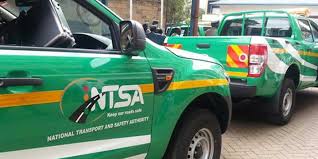
The High Court in Kiambu has suspended the implementation of the National Transport and Safety Authority’s (NTSA) new mandatory annual vehicle inspection regime for private non-commercial vehicles, just hours before the regulations were due to take effect.
Justice Francis Nyungu Kyambia issued conservatory orders on Wednesday following a constitutional petition filed by lawyer Wilberforce Akello, temporarily halting the enforcement of key provisions of the Traffic (Motor Vehicle Inspection) Rules, 2026 (Legal Notice No. 13 of 2026), pending the hearing of the case.
The court suspended Rule 3(1), which required all privately owned motor vehicles older than four years to undergo mandatory annual inspections.
It also suspended Rule 12(2), which empowered inspectors to permanently deregister Category A salvage vehicles without providing owners with a right of appeal, Rule 30(1)(d), which criminalised acts intended to circumvent the regulations, and the First Schedule prescribing booking and inspection fees.
Justice Kyambia further suspended NTSA’s public notice issued on June 26, directing private vehicle owners to book inspections through the eCitizen platform.
The petitioner argues that the inspection regulations were enacted without complying with the mandatory requirements of the Statutory Instruments Act, 2013, including public participation, preparation of a Regulatory Impact Statement, publication requirements, and parliamentary oversight.
According to court documents, the new inspection regime would affect the majority of Kenya’s more than six million registered motor vehicles, most of which are imported second-hand vehicles older than four years.
The petition estimates that motorists would collectively shoulder compliance costs of about sh12 billion annually through booking fees, inspection charges, repairs, and related expenses.
Akello further contends that using vehicle age alone as the trigger for mandatory inspections is irrational and discriminatory, arguing that it disproportionately affects lower and middle-income Kenyans who are more likely to own older vehicles while exempting newer vehicles regardless of their condition.
The petition also challenges Rule 12(2), arguing that allowing a single inspector to permanently deregister a vehicle without notice, a hearing or a right of appeal violates constitutional protections on property rights and fair administrative action.
Another contested provision is Rule 30(1)(d), which creates criminal liability for anyone who performs an act intended to circumvent the rules.
The petitioner argued that the provision is vague and could expose motorists to arbitrary prosecution, carrying penalties of up to sh20,000 in fines or six months’ imprisonment.
The petition further argued that the booking fees imposed under the regulations amount to an unlawful tax introduced through subsidiary legislation rather than an Act of Parliament, contrary to Article 210 of the Constitution.
Akello also pointed to NTSA’s own public notice issued days before the regulations were to take effect, in which the authority directed traffic officers not to enforce the mandatory inspection requirement against private motorists pending further communication.
The petition argued that the notice effectively acknowledged that the inspection regime was not operationally ready while creating uncertainty by purporting to suspend a gazetted legal instrument without following the prescribed legal process.
In the petition, Akello sought declarations that the regulations are unconstitutional and void, together with orders of certiorari quashing the impugned provisions and orders prohibiting NTSA from enforcing them.
Justice Kyambia directed the petitioner to serve the court orders and pleadings upon the respondents within seven days.
The respondents have been granted 14 days after service to file their responses.
The conservatory orders will remain in force pending an inter partes hearing scheduled for July 22, 2026.
The case is one of several legal challenges facing NTSA over its recent regulatory reforms.
The Law Society of Kenya has also filed a separate petition challenging the annual inspection rules on similar constitutional grounds.
Email your news TIPS to Editor@Kahawatungu.com — this is our only official communication channel
