


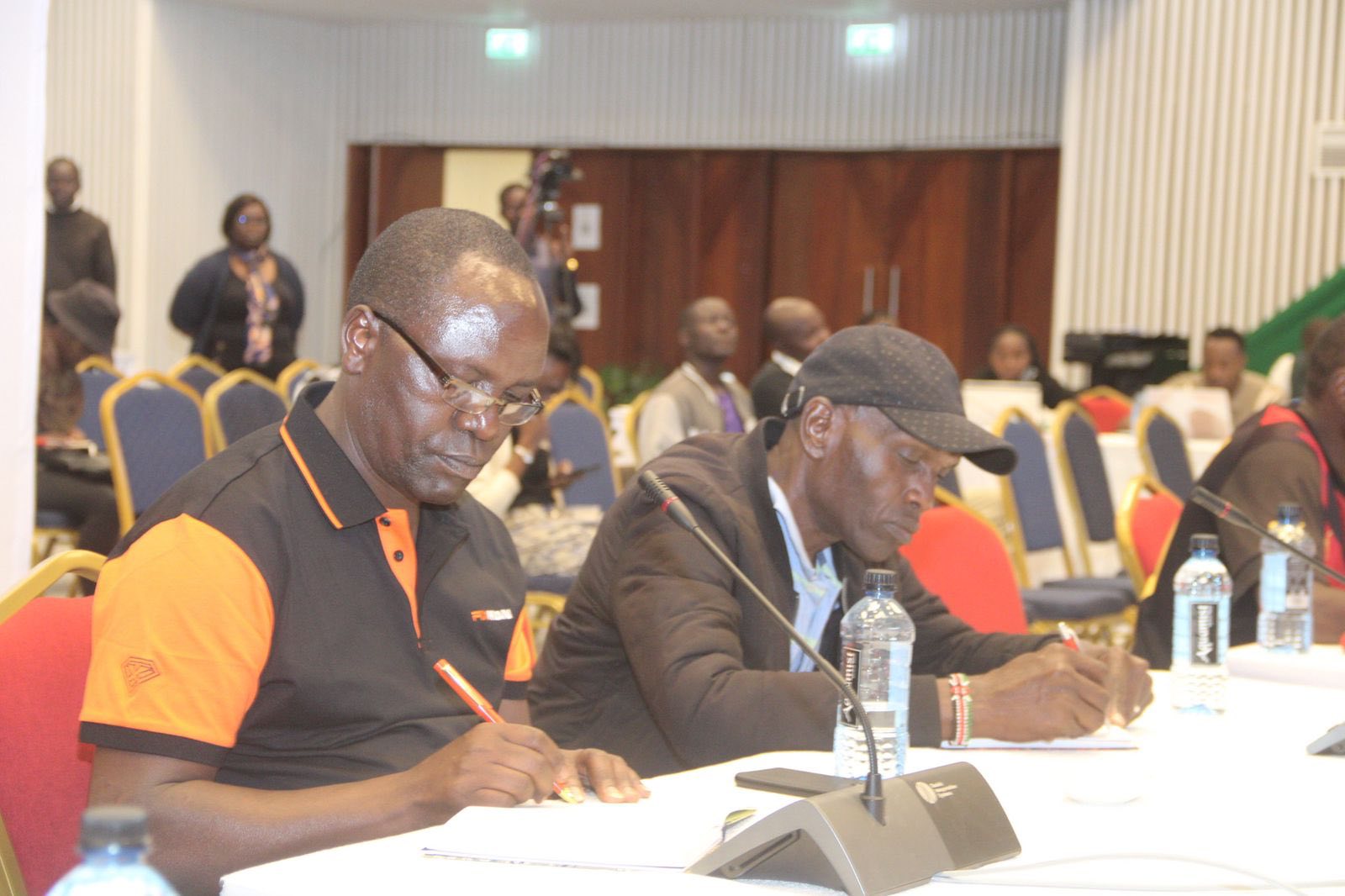
The Departmental Committee on Finance and National Planning has launched public hearings on the proposed Finance Bill, 2025, with a strong message to Kenyans: your views will shape the final law.
The hearings kicked off in Nairobi County at the Edge Convention Centre, led by Committee Vice Chair Benjamin Langat, who emphasized that public participation is a critical part of the legislative process.
“This is not just a formality. It’s a crucial exercise. The Finance Bill is a proposal to the National Assembly, and it cannot become law without public input,” said Langat.
Langat urged Kenyans to look at the Finance Bill alongside the national Budget Estimates. He explained that many of the public’s requests—like hiring more Junior Secondary School (JSS) teachers or nurses—require funding, which must come from somewhere.
“This Bill is the tool we use to raise the money needed for services you ask for,” he said.
Kesses MP Julius Rutto, also present at the session, reminded the public that the goal of public participation is to make laws better. He noted that many good ideas included in last year’s Finance Bill were dropped due to misinformation and public backlash.
“Some of the things we removed were exactly what the public wanted, but unfortunately, those changes were lost in the noise,” Rutto explained.
Several groups and individuals from Nairobi used the opportunity to present their proposals on the Bill. The International Institute for Legislative Affairs (IILA), a non-profit focused on people-first policies, called for new taxes targeting harmful products such as tobacco, alcohol, and sugar-sweetened drinks.
“These products are linked to rising cases of non-communicable diseases (NCDs) like cancer and diabetes, which are straining our health system,” said IILA CEO Celine Awuor. “Taxing them more can help reduce consumption and boost government revenue.”
IILA pointed out that tobacco causes more than 8,000 deaths in Kenya each year and that current tax levels fall below international standards set by the World Health Organization. They proposed higher taxes on tobacco, electronic cigarettes, and oral nicotine products, which they say are aggressively marketed to youth.
On sugary drinks, the institute recommended raising excise tax by at least 10% and urged the government to adopt a sugar-based tax. They also called for clear labeling and campaigns to promote healthier diets.
For alcohol, the IILA proposed increasing excise duty on beer from Sh22.50 to Sh33 per centiliter of pure alcohol, saying this would reduce youth drinking and increase tax revenue.
Young people also had their say. The Kenya Youth Climate Advisory Council (KYCAC) submitted a memorandum objecting to a proposed 25% excise duty or Sh200 per kilogram on imported plastic films, arguing it would hurt youth-led businesses offering eco-friendly packaging.
They proposed a lower rate—either 5% or Sh50 per kilogram—for biodegradable plastic film imported by youth-owned enterprises, to support sustainability and youth innovation.
Local resident Leonard Kahuthu urged lawmakers to empower the digital economy to help tackle youth unemployment. “Create friendly laws that allow young people to earn a living through digital platforms. That’s where the jobs are,” he said.
Lilian Mutunda from Kiambu raised concern over the short time available for people to submit feedback on the Bill, especially given its technical nature. She praised the National Assembly for publishing a simplified guide—called “The Explainer”—but called for an even more digestible version in future.
“The Explainer helped, but it’s still too complex for many people. This may be why many youth feel left out,” she said.
The Committee will continue with public hearings in Migori and Trans Nzoia counties on Tuesday. The process is expected to gather opinions from across the country before final changes are made and the Bill is debated in Parliament.
Email your news TIPS to Editor@Kahawatungu.com — this is our only official communication channel
