


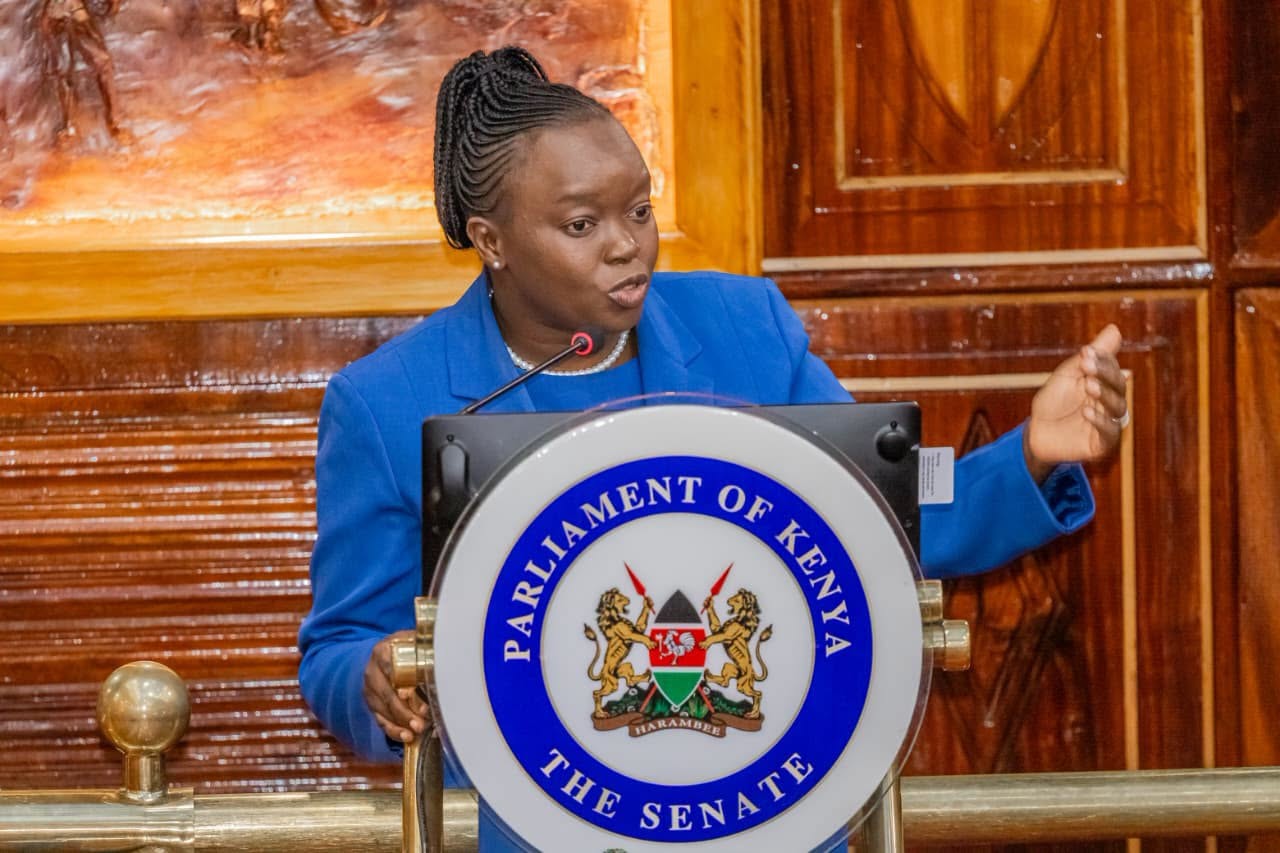
Senators have criticised the Ministry of Environment, Climate Change and Forestry for what they described as weak enforcement of environmental laws, accusing it of failing to translate policies into meaningful action to curb pollution across the country.
The concerns were raised during Wednesday morning’s Senate plenary as Environment Cabinet Secretary Dr. Deborah Mulongo responded to questions on the Government’s efforts to combat industrial pollution, hazardous waste and toxic exposure.
The legislators argued that although Kenya has an elaborate legal and policy framework to address environmental degradation, implementation remains inadequate, leaving communities exposed to hazardous industrial emissions, toxic waste, electronic waste and contaminated water sources.
They also criticised the National Environment Management Authority (NEMA), saying the agency had failed to effectively discharge its mandate of protecting the environment.
The debate followed a question by Nominated Senator Hamida Kibwana, who sought details on measures the Ministry has put in place to prevent industrial pollution, unsafe handling of electronic waste, toxic dumping and other practices exposing Kenyans to hazardous substances.
She also sought clarification on coordination between the Ministry, NEMA, county governments and other regulatory agencies, whether the Government had undertaken a national assessment of environmental health risks, and the reforms being implemented to strengthen pollution control.
In her response, Dr. Mulongo said Kenya already has a robust legal framework to tackle environmental pollution, including the Environmental Management and Coordination Act (EMCA), the Sustainable Waste Management Act, 2022, and several regulations gazetted in 2024 covering air quality, water quality, hazardous chemicals, waste management and Extended Producer Responsibility (EPR).
She said the laws empower NEMA to inspect facilities, issue improvement notices, order environmental restoration, close non-compliant industries and prosecute offenders.
According to the Cabinet Secretary, NEMA intensified enforcement activities during the last financial year through inspections and environmental compliance programmes.
She told senators that inspectors conducted enforcement operations at 101 facilities within the Nairobi Metropolitan Area to curb illegal discharge of industrial effluent into rivers and waterways.
The Authority has also launched an operation to identify and shut down 400 illegal discharge points along the Athi-Galana-Sabaki River system.
The Ministry said environmental audits remain a key compliance tool.
According to Dr. Mulongo, 6,673 environmental audits were submitted during the 2024/25 financial year, while nearly 9,800 audits have already been reviewed in the current financial year.
She said the audits resulted in improvement notices and corrective directives being issued to facilities found to have violated environmental standards.
The Ministry also conducted specialised compliance audits targeting hospitals, agrochemical firms, mining operations, renewable energy projects and asbestos disposal facilities.
Dr. Mulongo said industries found violating environmental regulations face improvement orders, environmental restoration directives, closure notices and criminal prosecution where necessary.
She disclosed that two facilities had already been shut down over environmental violations, while five individuals were arrested and prosecuted for illegally discharging industrial effluent during the previous financial year.
The Cabinet Secretary defended the implementation of the Extended Producer Responsibility framework, saying manufacturers are now legally required to take responsibility for waste generated by their products after consumption.
She said four Producer Responsibility Organisations are currently operational and managing hazardous waste, electronic waste and other waste streams.
According to the Ministry, 296 producers whose waste was found polluting rivers have been compelled to undertake clean-up exercises and manage waste generated by their products.
Dr. Mulongo also announced that NEMA recently facilitated an agreement to improve hazardous waste collection by increasing payments to waste handlers.
Under the arrangement reached on July 10, 2026, hazardous waste collectors will receive Sh20 per kilogramme of waste collected, while aggregators and transporters will also receive agreed payments to support safe waste collection and disposal.
The Cabinet Secretary informed senators that the Government had completed a comprehensive national assessment of environmental health risks under the Africa Environmental Health and Pollution Management Programme, implemented between 2020 and 2025 with support from the World Bank and the Global Environment Facility.
The assessment covered all 47 counties and produced a national inventory on electronic waste as well as an analysis of pollution hotspots.
Among the findings were widespread open burning of mixed waste and electronic waste, exposure of informal electronic waste recyclers to toxic substances such as lead and mercury, weak waste collection systems, limited formal recycling infrastructure and inadequate public awareness.
She acknowledged shortcomings in laboratory capacity for analysing soil and air pollution but said the findings had informed new regulations on waste management, hazardous chemicals and producer responsibility.
Despite the Ministry’s response, senators maintained that Kenya’s challenge is not the absence of laws but weak implementation.
Several lawmakers questioned why rivers continue to suffer from industrial pollution despite repeated inspections and environmental audits.
Others argued that communities continue to face exposure to hazardous substances with little evidence of sustained enforcement against polluters.
Much of the criticism focused on NEMA, with senators calling for stronger enforcement and closer monitoring of industries found violating environmental standards.
The legislators said the Ministry should focus on implementing existing laws rather than relying on policy frameworks that have yet to produce meaningful improvements.
In her closing remarks, Dr. Mulongo assured the House that the Government remains committed to strengthening enforcement, improving collaboration among regulatory agencies and adopting international best practices to protect Kenyans from industrial pollution and hazardous waste.

Email your news TIPS to Editor@Kahawatungu.com — this is our only official communication channel
