


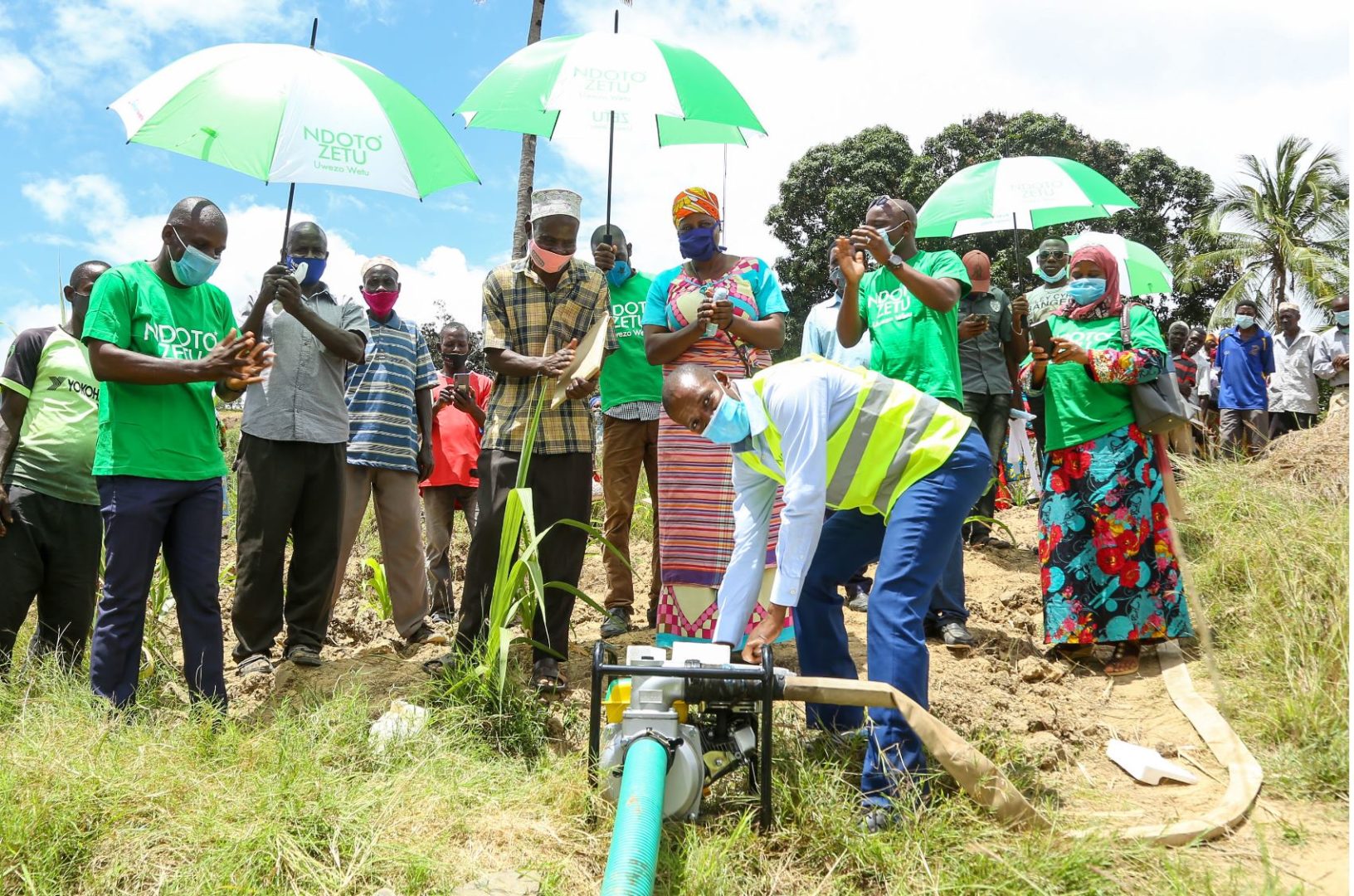
For many companies, community investment is measured by the amount donated to charity. Safaricom is increasingly measuring it by something different: the long-term economic opportunities it creates.
As the telecommunications giant evolves into a technology company, it is also expanding its investment in education, healthcare and digital inclusion, reflecting a strategy that ties commercial growth directly to community development.
The approach is rooted in the belief that thriving communities create thriving businesses. As more Kenyans gain access to education, healthcare and digital skills, they are better positioned to participate in the digital economy, whether as entrepreneurs, employees or consumers.
The impact is already being felt.
In the financial year ended March 2026, Safaricom’s sustainability initiatives directly improved the lives of more than 4.4 million people, underscoring the company’s continued emphasis on purpose-led growth.
Over the past five years, the Safaricom Foundation and M-PESA Foundation have invested KSh22.8 billion in community transformation initiatives across the country.
Education has received the largest share of that investment, with Sh17.41 billion channelled into programmes that have benefited more than 2.61 million learners, while Sh3.14 billion has gone towards healthcare initiatives that have reached approximately 11.85 million people.
Rather than treating these initiatives as standalone corporate social responsibility projects, Safaricom increasingly views them as investments that strengthen Kenya’s long-term social and economic resilience.
That philosophy is reflected in the launch of the Citizens of the Future programme, one of the company’s most ambitious education initiatives to date.
The programme aims to build or refurbish 500 schools, provide 10,000 scholarships, and equip 56,000 teachers with digital skills over the next five years, helping prepare learners for an increasingly technology-driven economy.
The initiative comes at a time when digital literacy is becoming as essential as traditional literacy, with employers placing growing value on technology skills across nearly every sector.
Beyond education, Safaricom continues to invest in healthcare, environmental conservation, economic empowerment and financial inclusion, recognizing that sustainable development extends beyond connectivity.
The company’s strategy also reflects a broader shift in global business.
Increasingly, investors are evaluating companies not only on their financial performance but also on how they create long-term value for society. Environmental, Social and Governance (ESG) performance has become an important indicator of resilience, reputation and future growth.
For Safaricom, community investment is no longer simply about giving back. It is becoming part of the company’s long-term growth strategy.
By investing in healthier communities, better schools and a digitally skilled workforce, the company is also investing in the future customers, entrepreneurs and innovators who will help drive Kenya’s digital economy.
In that sense, every classroom refurbished, every scholarship awarded and every community reached is more than a social investment, it is part of building the foundation for the next generation of economic growth.

Email your news TIPS to Editor@Kahawatungu.com — this is our only official communication channel
