


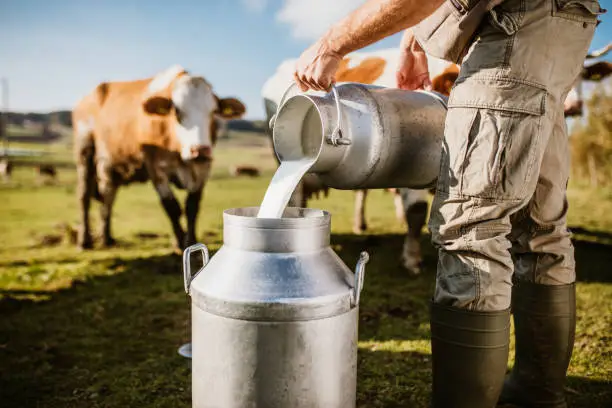
Improving milk production in dairy cows requires good nutrition, proper health care, comfortable housing and consistent milking practices. Learning how to improve milk production in dairy cows can help farmers increase yields while protecting the health and productivity of their animals. Rather than relying on a single feed or supplement, focus on several management practices that work together. Nutrition, water, cow comfort and early-lactation management are particularly important for achieving good production.
-
Provide a Balanced Dairy Cow Diet
Feed is one of the most important factors affecting milk production. Dairy cows need a balanced ration containing good-quality forage, appropriate energy sources, protein, vitamins and minerals.
The ration should be formulated according to the cow’s stage of lactation, body condition and production level. Avoid simply increasing grain without balancing the complete diet because this can contribute to digestive problems.
A properly balanced total mixed ration can help cows receive the nutrients they need consistently.
-
Provide Plenty of Clean Water
Water is essential for milk production because milk contains a large amount of water.
Make sure cows have continuous access to clean, fresh drinking water. Check water troughs regularly and keep them clean.
Limited water access can reduce feed intake and consequently affect milk production. Water should be treated as a priority rather than an afterthought.
-
Use High-Quality Forage
Good-quality hay, silage and other appropriate forages provide important nutrients and fiber.
Poor-quality, spoiled or moldy feed can reduce intake and negatively affect digestion. Regularly inspect forage for mold, unusual odors and poor fermentation.
Good forage quality supports rumen health and helps cows make better use of the rest of the ration.
-
Focus on the Period Around Calving
The period before and after calving is especially important for future milk production.
Cows experience a major increase in energy requirements shortly after calving, while also facing a higher risk of metabolic and health problems.
Provide fresh, palatable feed and adequate water immediately after calving, monitor the cow closely and address health problems promptly. Good transition management can influence health and production throughout lactation.
-
Prevent and Treat Mastitis
Mastitis can reduce milk production and affect milk quality.
Maintain good udder hygiene, keep housing clean and dry, follow proper milking procedures and check milk regularly for abnormalities.
Cows showing signs of mastitis should be assessed and treated according to veterinary advice and the appropriate treatment protocol.
-
Maintain a Consistent Milking Routine
Consistency during milking can support efficient milk letdown and reduce unnecessary stress.
Prepare the udder properly, stimulate milk letdown and maintain appropriate timing between preparation and attaching the milking equipment.
Proper preparation also provides an opportunity to identify abnormal milk that may indicate mastitis.
-
Keep Cows Comfortable
Comfort affects feeding, resting and overall productivity.
Provide clean, dry and comfortable resting areas, adequate space, good ventilation and protection from excessive heat, rain and other environmental stresses.
Heat management is particularly important because heat stress can reduce feed intake and affect milk production.
-
Reduce Heat Stress
During hot weather, provide shade, good ventilation and access to plenty of clean water.
Fans, sprinklers or other suitable cooling systems may also be useful where appropriate.
Cooling cows during the dry period can also support better milk production in the following lactation.
-
Avoid Stressful Handling
Handle cows calmly and consistently.
Avoid shouting, chasing or using unnecessary force when moving animals. Stress can interfere with normal milk letdown and may affect production.
Quiet handling also makes milking easier for both the cow and the farmer.
-
Monitor Body Condition
Regularly assess the body condition of your cows.
Cows that become excessively thin may struggle to maintain production and reproductive performance, while cows that become excessively fat can have a higher risk of metabolic problems around calving.
Monitoring body condition at dry-off, calving and during peak production can help identify nutritional problems early.
-
Maintain Good Cow Health
Healthy cows are more likely to maintain good milk production.
Monitor cows regularly for lameness, digestive problems, reproductive problems, infections and other illnesses. Make sure appropriate vaccination, parasite control and veterinary care are part of the farm’s health programme.
Treat sick animals promptly and follow professional veterinary recommendations.
-
Keep Feed Fresh and Available
Feed should be available regularly and kept fresh.
Remove spoiled feed, maintain clean feed areas and avoid long periods when cows have no access to feed.
Consistent feed access helps maintain dry matter intake, which is important for supporting milk production.
-
Consider the Cow’s Stage of Lactation
Nutritional requirements change throughout lactation.
Fresh cows and high-producing cows generally require more nutrient-dense diets than cows in late lactation. First-lactation cows may also have different nutritional and management requirements from mature cows.
Work with a qualified livestock nutritionist to develop rations for different groups where practical.
-
Avoid Relying on Unproven Milk Boosters
Farmers may hear claims about herbs, supplements or special feeds that supposedly increase milk production dramatically.
Some feed additives can have a place in a properly formulated ration, but they should not replace good forage, balanced nutrition, water, health care and proper management.
Before introducing a supplement, discuss its suitability and dosage with a livestock nutritionist or veterinarian.
-
Keep Good Production Records
Record the amount of milk produced by individual cows or groups whenever possible.
Also record calving dates, feed changes, health problems, treatments and reproductive information.
These records can help you identify cows that are performing well and reveal management changes that are associated with increases or decreases in milk production.
Also Read: How to Create a Folder on Laptop

Email your news TIPS to Editor@Kahawatungu.com — this is our only official communication channel
