


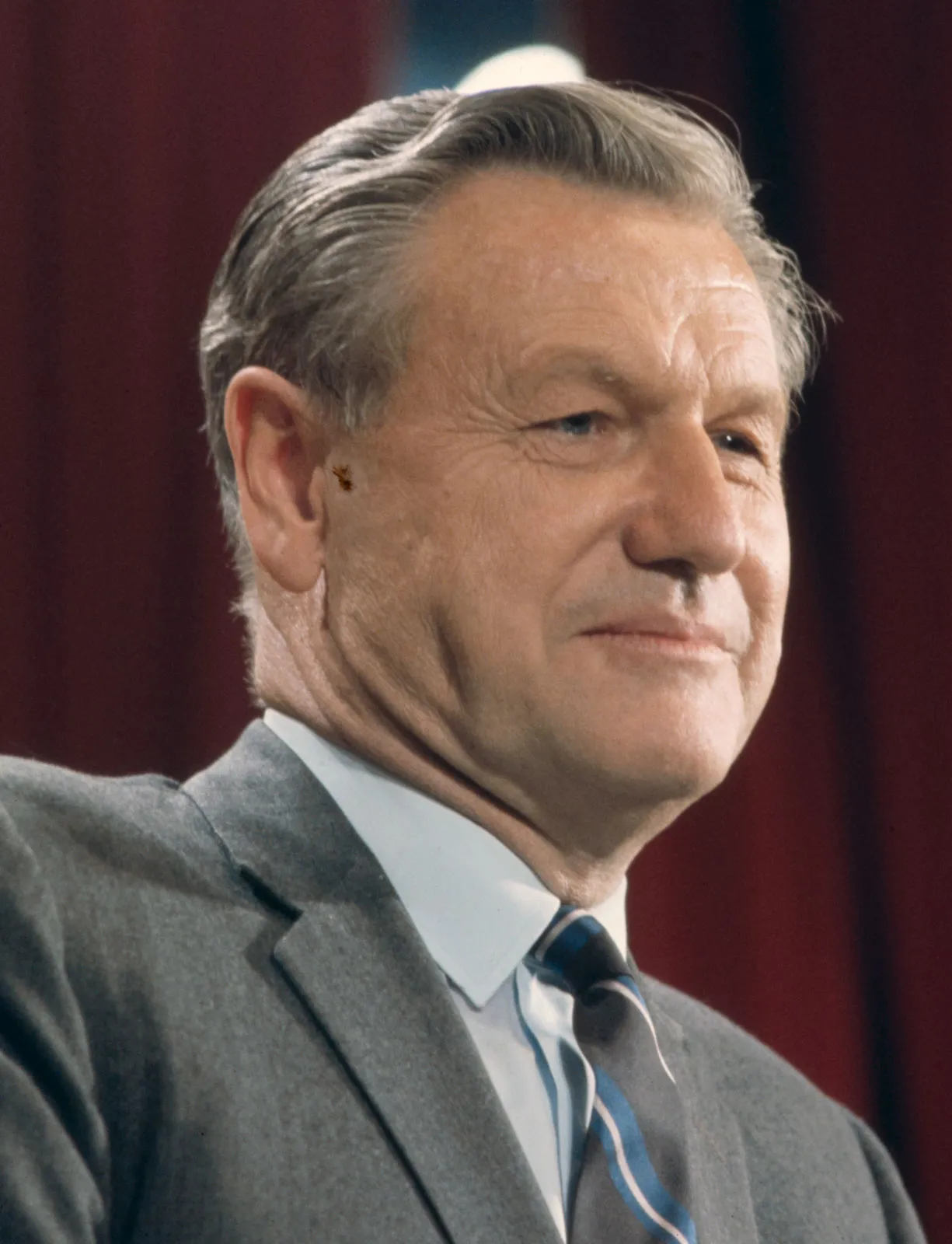
Nelson Rockefeller was an American businessman, philanthropist and politician who had an estimated net worth of $218 million at the time of his death in January 1979. Adjusted for inflation, that amount would be worth approximately $1 billion in today’s money.
A member of the wealthy Rockefeller family, Nelson built a career that combined business leadership, public service and philanthropy. He served as governor of New York for 15 years, from 1959 to 1973, before becoming the 41st vice president of the United States under President Gerald Ford.
Rockefeller was the grandson of John D. Rockefeller, the founder of Standard Oil and one of the wealthiest people in modern history. His inherited family wealth, investments and business interests made him one of the richest politicians in American history.
Beyond politics, he served as president of Rockefeller Center and held senior positions at the Museum of Modern Art. He also helped establish the Rockefeller Brothers Fund, which supported social development, education and other charitable causes.
| Nelson Rockefeller Net Worth | $218 Million |
| Date of Birth | July 8, 1908 |
| Place of Birth | Bar Harbor, Maine |
Early Life
Nelson Aldrich Rockefeller was born on July 8, 1908, in Bar Harbor, Maine. He was the second son of John D. Rockefeller Jr. and Abigail Aldrich Rockefeller.
His paternal grandfather was John D. Rockefeller, who founded Standard Oil and established one of the largest private fortunes in history. His mother was a prominent socialite, philanthropist and art collector who helped support cultural institutions.
Nelson grew up alongside five siblings: Abigail, John D. Rockefeller III, Laurance, Winthrop and David Rockefeller. His first cousin was Jay Rockefeller, who later became a Democratic politician and served as governor of West Virginia and a US senator.
The family maintained several residences, including homes in New York City, Pocantico Hills and Seal Harbor, Maine. Rockefeller attended the Lincoln School in Manhattan before enrolling at Dartmouth College.
He graduated from Dartmouth in 1930 with a degree in economics. His education and family background prepared him for a career in business, government and international affairs.
Early Business Career
After graduating from Dartmouth, Rockefeller joined the family’s business interests. In 1931, he became a member of the board of directors of Rockefeller Center, the major commercial and cultural development in Manhattan.
He later became president of Rockefeller Center, serving from 1938 to 1945. He also held leadership positions at different times as chairman of the organisation.
His business activities extended beyond real estate. He worked with Creole Petroleum Corporation and became involved in public health initiatives in Westchester County, New York.
These early positions gave Rockefeller experience in corporate management and administration. They also helped him develop relationships with influential business leaders and public officials.
His business career would later provide a foundation for his work in government, particularly in international development and economic cooperation.
Political Career
Nelson Rockefeller entered federal government service in 1940 when President Franklin D. Roosevelt appointed him coordinator of Inter-American Affairs.
The position involved promoting cooperation between the United States and Latin American countries. His work also focused on limiting the influence of Nazi Germany in the region during World War II.
In 1944, Roosevelt appointed him assistant secretary of state for American Republic Affairs. The following year, Rockefeller served as a member of the US delegation to the United Nations Conference on International Organization.
He played a role in efforts to secure New York City as the location of the United Nations headquarters.
After Harry Truman became president, Rockefeller left government service. He continued working on international development and established the International Basic Economy Corporation in 1947. He served as its president at different times through 1958.
Rockefeller returned to government in 1950 when Truman appointed him chairman of the International Development Advisory Board.
Under President Dwight D. Eisenhower, he became chairman of the Advisory Committee on Government Organization. He later served as under-secretary of the Department of Health, Education and Welfare and as a special assistant to the president for foreign affairs.
In 1956, he established the Special Studies Project, which examined major challenges facing the United States and proposed long-term national objectives.
Governor of New York
Rockefeller left federal government service in 1956 and focused on politics in New York. He initially worked on state constitutional and legislative reforms before contesting the governorship.
He was elected governor of New York in 1958 and took office in January 1959. He went on to win reelection in 1962, 1966 and 1970, serving four consecutive terms until 1973.
His administration focused on economic development, education, healthcare, environmental protection and infrastructure.
One of his major priorities was expanding the State University of New York system. His administration also increased investment in public transportation, strengthened the state police force and supported the development of cultural institutions.
Rockefeller promoted laws aimed at reducing discrimination in housing and employment. He also supported environmental conservation and measures to address drug abuse.
His administration oversaw the construction of the Empire State Plaza in Albany, which became a major government and architectural complex.
Although he was a Republican, Rockefeller held moderate-to-liberal positions on several domestic issues. He became associated with the moderate Republican wing of the party, which supported government investment in social programmes and public services.
In 1960, he reached an agreement with Richard Nixon on changes to the Republican Party platform. The agreement became known as the Treaty of Fifth Avenue.
Vice President of the United States
Rockefeller sought the Republican presidential nomination in 1960, 1964 and 1968 but did not secure the party’s ticket.
His political fortunes changed following the resignation of President Richard Nixon in August 1974. Gerald Ford became president and nominated Rockefeller as vice president.
The Senate confirmed his appointment, and Rockefeller became the 41st vice president of the United States in December 1974.
He served until January 1977. His time in office was marked by disagreements over government spending, foreign policy and the direction of the Republican Party.
Rockefeller was a strong supporter of American involvement in Vietnam and maintained close relationships with business and military leaders.
He did not seek to remain on the Republican presidential ticket when Ford contested the 1976 election. After leaving office in January 1977, Rockefeller retired from active political life.
Philanthropy
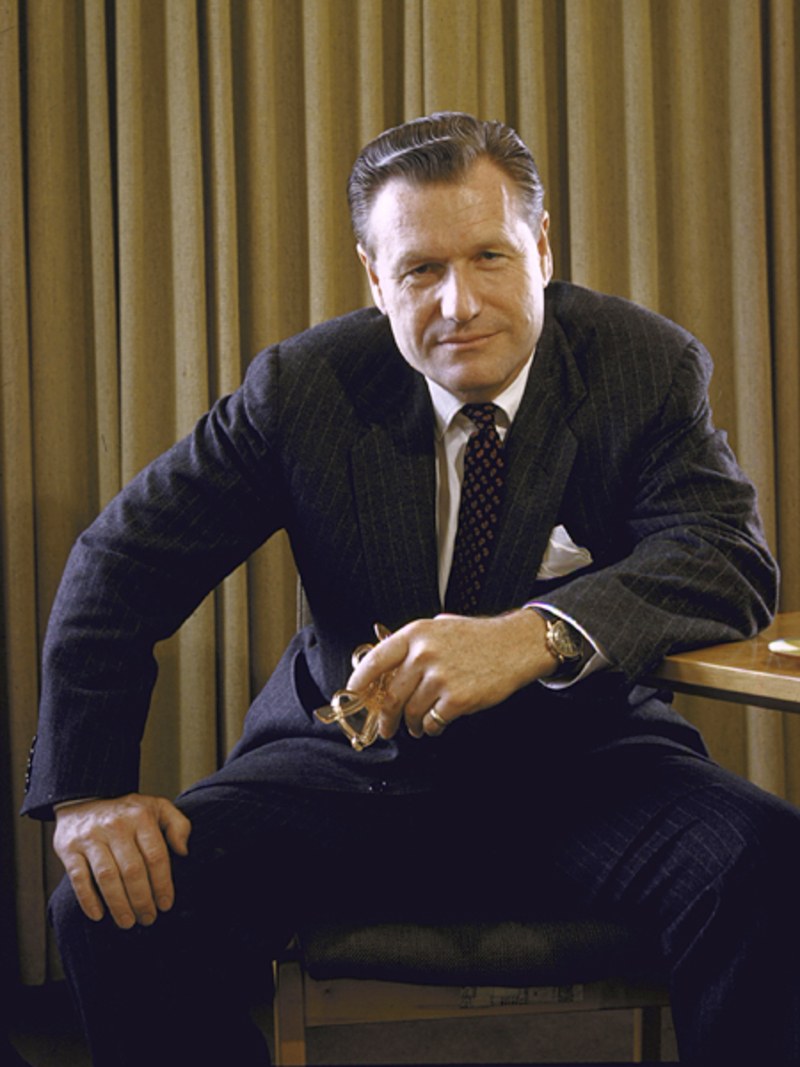
Philanthropy was an important part of Nelson Rockefeller’s life and the wider Rockefeller family tradition.
In 1940, he and his four brothers established the Rockefeller Brothers Fund. The organisation was created to support social progress and address important economic, cultural and international issues.
Rockefeller served as a trustee for many years and became president of the organisation in 1956.
He also founded the American International Association for Economic and Social Development in 1946. The organisation focused on improving living conditions and supporting economic development in developing countries.
His involvement in the arts was particularly significant. He became a trustee of the Museum of Modern Art in 1932 and served as its president from 1939 to 1941 and again from 1946 to 1953.
Rockefeller was an enthusiastic art collector and supported efforts to make modern and traditional art more accessible to the public.
In 1954, he founded the Museum of Primitive Art in New York. The institution focused on art from indigenous cultures around the world.
In 1977, he established the Nelson Rockefeller Collection to produce and sell authorised reproductions of selected works from his art collection.
His contributions helped strengthen the Rockefeller family’s reputation as one of America’s leading supporters of cultural institutions.
Rockefeller Family Wealth
Nelson Rockefeller’s fortune was closely connected to the wealth established by his grandfather, John D. Rockefeller.
John D. Rockefeller founded Standard Oil in the 19th century and became one of the richest individuals in history. His business empire helped establish the family’s influence in banking, industry, real estate and philanthropy.
Nelson’s father, John D. Rockefeller Jr., continued the family’s business and charitable activities. He was involved in major development projects, including Rockefeller Center, and supported educational, cultural and religious institutions.
Nelson’s siblings also became influential figures. David Rockefeller became chairman of Chase Manhattan Bank, while Laurance Rockefeller became a prominent investor and conservationist. Winthrop Rockefeller served as governor of Arkansas, and John D. Rockefeller III focused on philanthropy and international development.
The family maintained interests in real estate, banking, investments, art and charitable organisations. Nelson’s fortune was therefore part of a much wider family financial legacy.
Personal Life
Nelson Rockefeller married Mary Clark in 1930. The couple had five children: Rodman, Ann, Steven, Mary and Michael.
Their marriage ended in divorce in 1962. The following year, Rockefeller married Margaretta Fitler, commonly known as Happy Rockefeller.
The couple had two sons, Nelson Rockefeller Jr. and Mark Rockefeller.
Rockefeller’s personal life attracted public attention, particularly during his later years. His relationship with his much younger aide Megan Marshack also became the subject of public discussion following his death.
Despite the attention surrounding his private life, his family remained closely connected to the wider Rockefeller business and philanthropic network.
Nelson Rockefeller’s Death
Nelson Rockefeller died on January 26, 1979, at the age of 70. He suffered a heart attack in New York City.
His remains were cremated, and his ashes were buried at the private Rockefeller family cemetery in Sleepy Hollow, New York.
His death came just two years after he left the vice presidency. He had spent decades in public service, business leadership and philanthropy.
Rockefeller’s political career was unusual because he combined enormous inherited wealth with a long record in elected and appointed government positions. He helped shape New York’s education, infrastructure and cultural institutions and served at the highest level of the American government.

Email your news TIPS to Editor@Kahawatungu.com — this is our only official communication channel
