


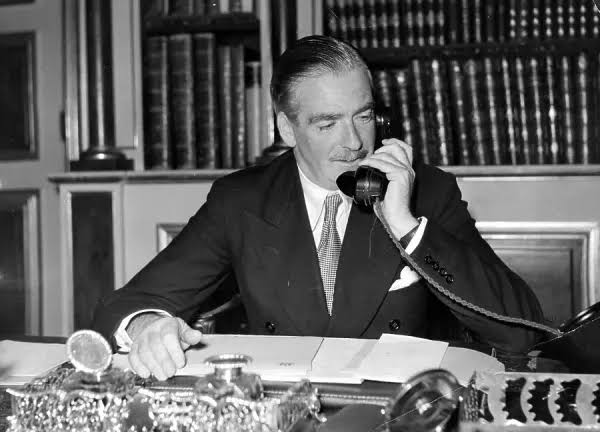
Robert Anthony Eden, later known as the 1st Earl of Avon, was a prominent British Conservative statesman born on 12 June 1897 at Windlestone Hall in County Durham, England.
He came from a family of landed gentry; his father was Sir William Eden, 7th Baronet of West Auckland and 5th Baronet of Maryland, an eccentric former colonel, magistrate, and amateur artist, while his mother was Sybil Frances Grey, from the distinguished Grey family of Northumberland.
Eden served with distinction in the First World War, studied Oriental languages at Christ Church, Oxford, and rose through the ranks of British politics to become one of the most experienced foreign secretaries of the twentieth century before briefly holding the office of Prime Minister from 1955 to 1957.
He died on 14 January 1977 at Alvediston in Wiltshire.
Siblings
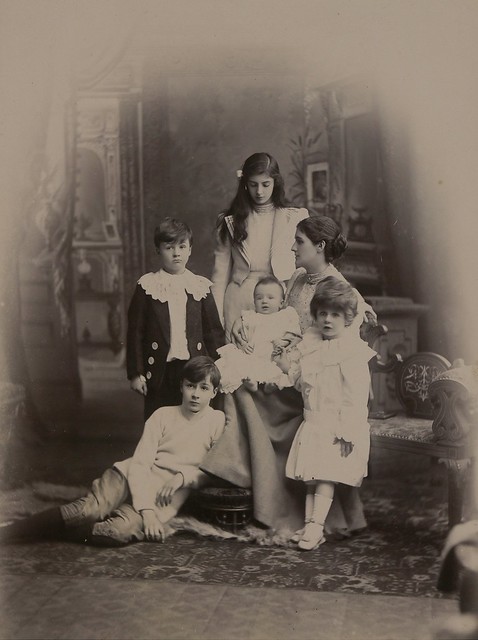
Anthony was the third of four sons and the fourth of five children in his family.
His older sister was Elfrida Marjorie Eden, known as Marjorie (1887–1943).
She married Leopold Guy Francis Maynard Greville, who became the 6th Earl of Warwick, and thus became Countess of Warwick.
His eldest brother, John William Eden, known as Jack (1888–1914), served as a lieutenant with the 12th (Prince of Wales’s Royal) Lancers and was killed in action in Belgium in October 1914 at the age of 26 during the early months of the First World War.
The next brother, Timothy Calvert Eden, known as Tim (1893–1963), succeeded to the family baronetcies upon their father’s death in 1915.
At the outbreak of the war Timothy was travelling in Germany and was interned for a period; he later sold the family seat, Windlestone Hall, in 1936 amid financial pressures.
Anthony’s youngest sibling was William Nicholas Eden, known as Nicholas (1900–1916).
Serving as a midshipman aboard the battlecruiser HMS Indefatigable, he was killed at the age of sixteen when the ship was destroyed at the Battle of Jutland on 31 May 1916.
Also Read: Nigel Farage Siblings: All About Andrew Farage
Career
Eden left Eton to join the King’s Royal Rifle Corps in 1915 and fought on the Western Front, rising to become one of the youngest brigade majors in the British Army by the end of the war.
After demobilisation he took a first-class degree in Oriental languages (Arabic and Persian) at Oxford and entered Parliament in 1923 as the Conservative Member for Warwick and Leamington, a seat he held until 1957.
He specialised in foreign affairs, serving as Parliamentary Private Secretary to the Foreign Secretary, then as Under-Secretary of State for Foreign Affairs from 1931.
He became Lord Privy Seal in 1934 and Minister for League of Nations Affairs in 1935 before being appointed Foreign Secretary later that year at the age of 38.
He resigned in February 1938 in protest against Neville Chamberlain’s policy of appeasement toward Italy.
During the Second World War he returned to government, briefly as Secretary of State for War and then again as Foreign Secretary from 1940 to 1945 under Winston Churchill, also serving as Leader of the House of Commons.
After a period in opposition he resumed the Foreign Secretaryship from 1951 to 1955, acting as Deputy Prime Minister, and succeeded Churchill as Prime Minister and Leader of the Conservative Party in April 1955.
His premiership was dominated by the Suez Crisis of 1956, after which he resigned in January 1957 on grounds of ill health.
In later years he sat in the House of Lords and published volumes of memoirs.
Accolades
For his gallantry in the First World War Eden was awarded the Military Cross.
He was sworn of the Privy Council and later received the highest order of chivalry when he was made a Knight of the Garter in 1954.
Upon retirement from the Commons he was created Earl of Avon and Viscount Eden of Royal Leamington Spa in 1961.
His long service as Foreign Secretary three times and his role in wartime diplomacy earned him recognition as a skilled international statesman.

Email your news TIPS to Editor@Kahawatungu.com — this is our only official communication channel
