


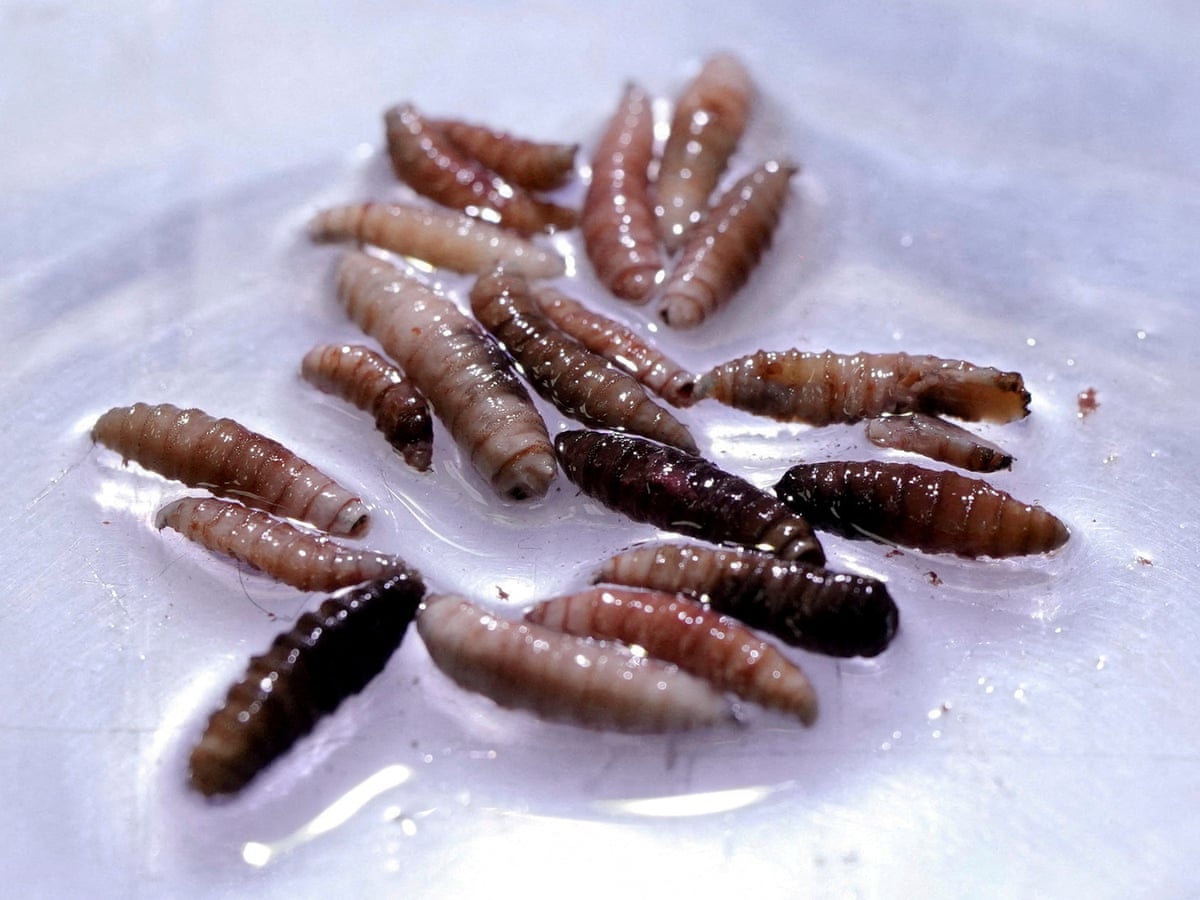
Canada’s food inspection agency has announced a temporary ban on livestock from the US state of Texas after flesh-eating screwworms were discovered in calves this week.
Cows and horses that were in Texas anytime within 21 days before crossing the border into Canada would not be accepted into the country, an agency news release said.
The announcement comes after the US Department of Agriculture (USDA) said the parasite had been found in a second calf in Texas – the leading US beef and cattle producer. Texas Gov Greg Abbott declared a state of disaster on Friday over the “imminent threat” the outbreak posed.
“This is likely to spread over the course of the summer,” Abbott told reporters on Friday.
The New World Screwworm is a parasitic fly whose females lay eggs in open wounds and mucous membranes of living warm-blooded animals and people. When the eggs hatch, hundreds of larvae burrow through living flesh with sharp mouths, eventually killing their host if left untreated.
On Wednesday, US officials announced that Texas had detected its first case in 60 years in a three-week-old calf, with the larvae found in its umbilical area. The discovery was made in the town of La Pryor about 30 miles (48km) from the Mexico border.
Then on Friday, a second case was detected in a one-month-old calf in Zavala County about 5.6 miles (9km) from the first case. The discovery was made as officials tested a “number of suspected cases,” the USDA said.
It was found in a 20km-wide “control zone” established after the first case was discovered, the USDA said. The department said it had also enacted “quarantines, movement controls, and surveillance” in that area.
The cases marked the first as part of an outbreak that’s been moving through Central America and Mexico, which has been under heavy monitoring by US agricultural and health officials.
Gov Abbott issued a proclamation declaring a state of disaster on Friday, which states the outbreak presents “an imminent threat or occurrence of widespread danger and injury to the Texas agricultural industry”. It directs more resources to the affected areas in the hope of combating the spread.
Canadian officials note the parasite is unlikely to become a problem in the country because of the colder climate – the parasites historically have spread in warmer, humid areas – but nevertheless they are warning farmers to monitor livestock for wounds and any cut that is “accompanied by discharge or foul odour”. They also urged residents to also check pets if they travel to Texas.
The US and Canada have a two-way cattle trade, with livestock moving across the border for slaughter, breeding and for dairy and wool purposes. The number of imports from the US has grown in recent years, with 550,000 cattle imported in 2025, according to Canada’s agriculture department.
In the US, the parasite was considered eradicated in 1966 but there have been cases since, including an outbreak in the 1970s.
Screwworm larvae grow into flies which can travel short distances. The primary way that they have travelled long distances is by being brought by humans.
Officials in the US and in Latin America have been combating the problem of screwworms for much of the past six decades, with limited success.
With this most recent outbreak, US agriculture and health officials have outlined a plan to release hundreds of millions of genetically altered sterile flies to try to halt the population growth, along with using sniffer dogs to identify the parasite in cattle. Some experts questions whether these tactics will be enough to halt the spread, though.
By BBC News

Email your news TIPS to Editor@Kahawatungu.com — this is our only official communication channel
