


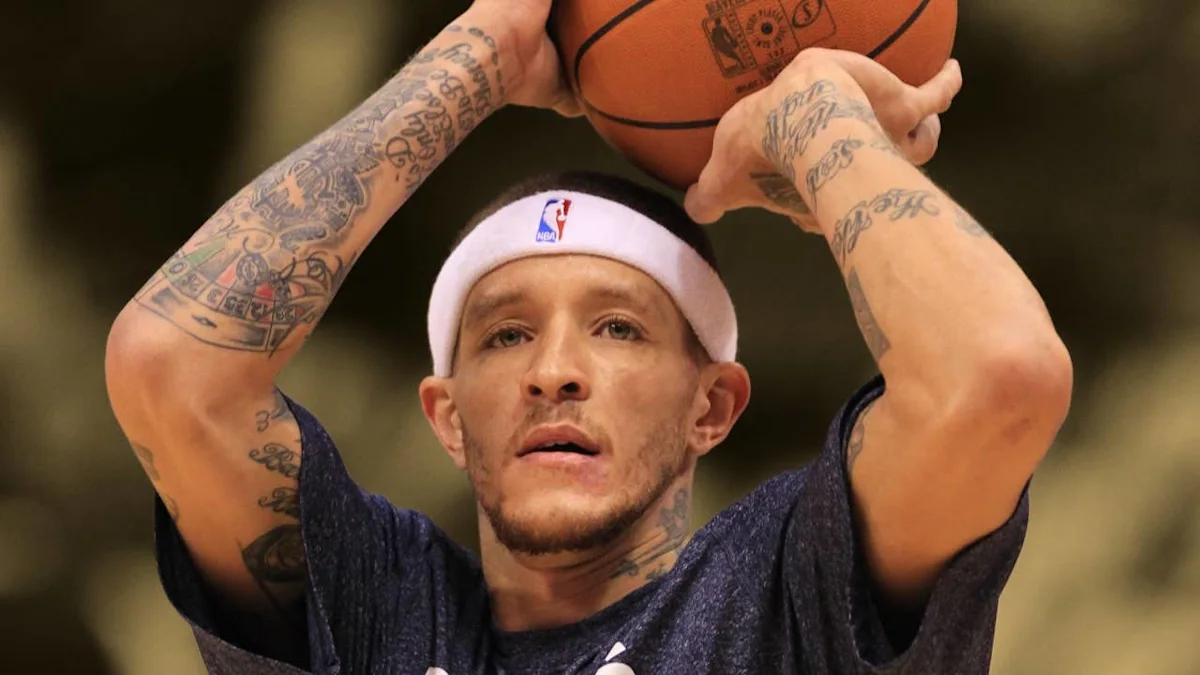
Delonte West is a former professional basketball player who has an estimated net worth of $100 according to the supplied source. Despite earning approximately $16.4 million in NBA salary during his eight-year career, West later faced serious personal and financial difficulties that affected his life after basketball. His story highlights the challenges some professional athletes encounter when managing wealth, personal struggles and life beyond competitive sports.
West made his name as a versatile guard at Saint Joseph’s University before the Boston Celtics selected him with the 24th overall pick in the 2004 NBA Draft. He went on to play for the Seattle SuperSonics, Cleveland Cavaliers and Dallas Mavericks, building a reputation for his defensive ability, outside shooting and versatility in the backcourt. However, financial instability and personal challenges eventually overshadowed his achievements on the court.
| Delonte West Net Worth | $100 |
| Date of Birth | July 26, 1983 |
| Place of Birth | Washington, DC |
Delonte West’s NBA Salary
Delonte West earned an estimated $16.4 million in NBA salaries over eight seasons. Although those earnings represented substantial income, the amount was before taxes, agent fees, legal expenses and other costs associated with maintaining a professional basketball career.
West’s contracts included a four-year deal with the Boston Celtics worth approximately $4.9 million and a three-year contract with the Cleveland Cavaliers valued at $12.7 million. He also signed one-year agreements with Boston and Dallas, each reportedly worth around $1 million.
His final NBA salaries were approximately $1.07 million for the 2010–11 season, $1.15 million for 2011–12 and $1.22 million for 2012–13, according to the supplied figures. These payments formed part of his overall career earnings of roughly $16 million to $16.5 million.
However, NBA salaries do not translate directly into personal wealth. Taxes, living expenses, legal fees and other financial obligations can significantly reduce the amount an athlete retains. West’s subsequent financial difficulties became a prominent part of his story, despite the millions he earned while playing professionally.
Early Life
Delonte West was born on July 26, 1983, in Washington, DC. He attended Eleanor Roosevelt High School in Greenbelt, Maryland, before enrolling at Saint Joseph’s University in Philadelphia.
At Saint Joseph’s, West formed an impressive backcourt partnership with Jameer Nelson. The two players became one of the most highly regarded guard combinations in college basketball, combining scoring, playmaking and defensive ability.
Their performances helped Saint Joseph’s reach the Elite Eight of the 2004 NCAA Tournament. West’s college success strengthened his prospects of entering the NBA and ultimately led to his selection by Boston in the first round of the 2004 draft.
His transition from college basketball to the professional game marked the beginning of a career that would include several NBA teams and opportunities to earn millions through player contracts.
Boston Celtics
The Boston Celtics selected West with the 24th overall pick in the 2004 NBA Draft. His rookie season was disrupted by injuries, limiting him to 39 games. Nevertheless, the team gave him an opportunity to develop into a starting point guard during the 2005–06 season.
West moved to shooting guard during the 2006–07 campaign but struggled early in the season. He was subsequently returned to the point guard position, where he could use his passing and ball-handling skills more effectively.
His first stint in Boston helped establish him as a capable NBA guard, although his role and position changed as the team worked to find the best use for his abilities.
Seattle SuperSonics and Cleveland Cavaliers
In 2007, Boston traded West to the Seattle SuperSonics. His time in Seattle was followed by another move in early 2008, when he joined the Cleveland Cavaliers as part of a three-team trade.
Playing alongside LeBron James, West became a valuable backcourt contributor. He scored a season-high 20 points against the Celtics only six days after arriving in Cleveland, demonstrating his ability to make an immediate impact with a new team.
West earned recognition for his defensive work and outside shooting. He could defend opposing guards, create scoring opportunities and provide support at both point guard and shooting guard.
In late 2008, he signed a three-year contract worth approximately $12.7 million with Cleveland. The agreement represented one of the most significant financial milestones of his NBA career.
The Cavaliers later traded West to the Minnesota Timberwolves, but that move did not result in a lasting stay with the team.

Return to Boston and Move to Dallas
In late 2010, West returned to the Celtics on a one-year contract. His role was to provide backup support for Rajon Rondo at point guard.
However, his time with Boston ended following a guilty plea to weapons charges. He later joined the Dallas Mavericks, playing for the team during the 2011–12 season.
Dallas became West’s final NBA stop. After leaving the league, he pursued additional basketball opportunities, including playing overseas and attempting to continue his professional career outside the NBA.
Across his NBA career, West averaged approximately 9.7 points and 3.9 assists per game, according to the supplied information. His combination of shooting, ball-handling and defense made him a useful contributor, even though he did not become a long-term NBA star.
What Happened to Delonte West’s Money?
Despite earning more than $16 million in NBA salary, West later experienced significant financial difficulties. His earnings were subject to taxes, fees and personal expenses, while legal costs and other challenges reportedly contributed to the loss of his wealth.
During the NBA lockout, West reportedly stayed in the Mavericks’ locker room and sold jewelry and several cars to raise money. He also applied for temporary work at Home Depot as he attempted to make ends meet.
His financial problems were reportedly compounded by the costs associated with his divorce and legal disputes. These circumstances illustrated the difference between earning a large professional salary and preserving that money over the long term.
West’s experience also attracted attention because his financial struggles became visible after his playing career had ended. The contrast between his former NBA earnings and his later circumstances raised broader questions about financial planning and support for athletes transitioning out of professional sports.
Mental Health Challenges and Public Concern
West’s difficulties extended beyond his finances. His personal struggles and mental health concerns became subjects of public attention, particularly after photographs circulated showing him in visibly distressed circumstances.
In August 2019, photographs of West prompted concern about his well-being. Earlier that year, he had also been photographed walking around a fast-food restaurant parking lot without shoes.
In September 2020, West was photographed panhandling on a street in Dallas, Texas. The images attracted widespread attention, including from Mavericks owner Mark Cuban.
After learning about West’s situation, Cuban reportedly picked him up and helped him enter a drug treatment program. For a period, West appeared to be making progress. He reunited with family and reportedly began working at the rehabilitation facility.
The episode offered a glimpse of the support that former teammates, team owners and other people in the basketball community could provide to a former player experiencing serious difficulties.
However, West’s challenges continued. The supplied source reports that he was arrested in Florida in October 2021, although it does not provide further details about the circumstances or the outcome of the case.
Life After the NBA
After his NBA career ended, West explored opportunities to continue playing basketball overseas and in lower-profile leagues. These efforts reflected his desire to return to competitive basketball, but they did not restore the income and stability associated with his years in the NBA.
West’s experience also drew attention to the difficulties athletes can face when their professional careers end earlier than expected. NBA players may earn substantial salaries during relatively short careers, but maintaining financial security requires planning for life after sport.
In West’s case, reported financial problems, legal expenses and personal challenges complicated that transition. His story became a reminder that professional success does not necessarily guarantee long-term financial stability or personal well-being.
Personal Life
West has kept aspects of his personal life out of the public spotlight, although his struggles have occasionally drawn widespread attention. His relationship with his family has been an important part of the public account of his efforts to recover, particularly during the period when Mark Cuban helped him enter treatment.
The supplied information does not provide a complete account of his family circumstances or current financial position. Consequently, his estimated net worth should be treated as a reported figure rather than a verified statement of his present assets and liabilities.
Also Read: Ken Norton Net Worth

Email your news TIPS to Editor@Kahawatungu.com — this is our only official communication channel
