


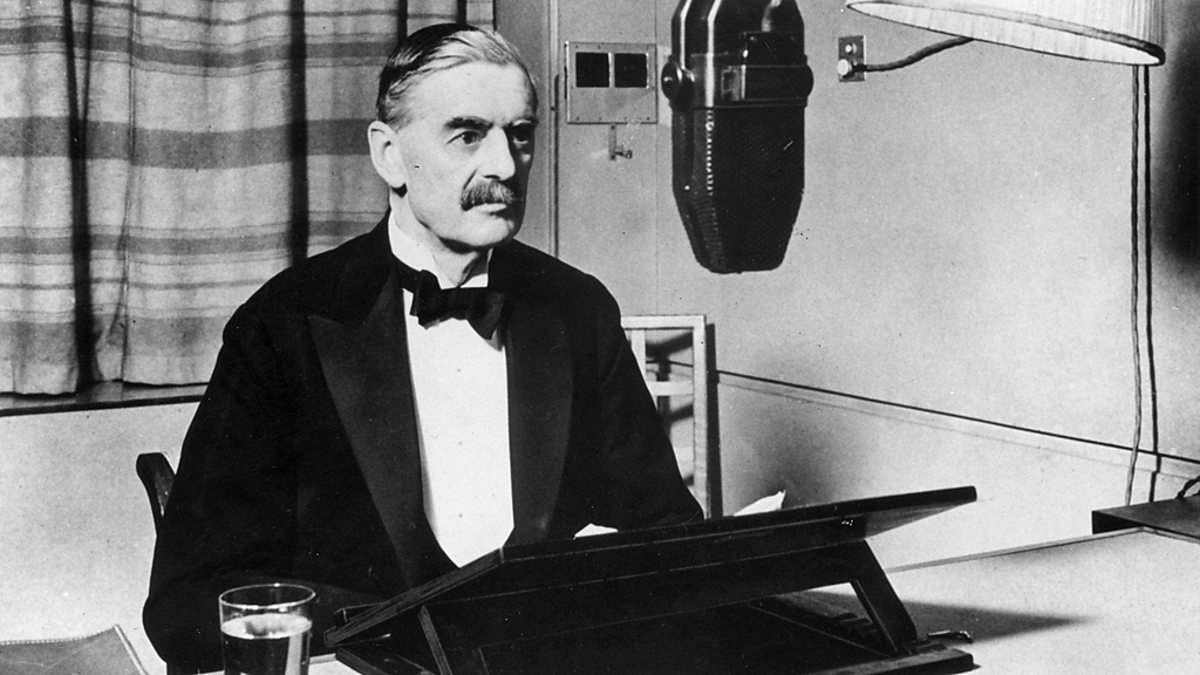
Arthur Neville Chamberlain was a British Conservative politician who served as Prime Minister of the United Kingdom from May 1937 to May 1940.
Born on 18 March 1869 in Edgbaston, Birmingham, he was the son of the prominent industrialist and statesman Joseph Chamberlain and his second wife, Florence Kenrick.
His mother died in 1875 when he was still a young child.
Chamberlain is best remembered for his policy of appeasement toward Nazi Germany in the years leading up to the Second World War, most notably the Munich Agreement of 1938.
He led Britain into war against Germany in September 1939 following the invasion of Poland and resigned as prime minister in May 1940, dying later that year on 9 November 1940 at Heckfield House in Hampshire.
Siblings
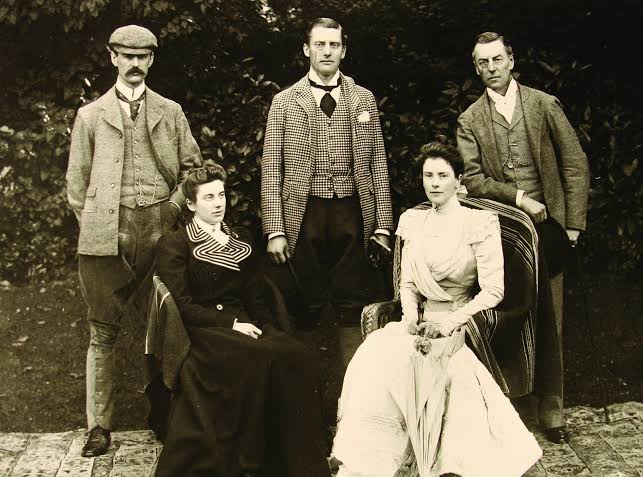
Neville grew up as part of a politically influential family with five siblings in total.
From his father’s first marriage to Harriet Kenrick came two older half-siblings: Beatrice Mary Chamberlain, born in 1862, who became an educationalist and political organiser and who taught young Neville at home before he attended school, and Joseph Austen Chamberlain, born in 1863, a distinguished statesman in his own right who held many high offices and received the Nobel Peace Prize.
From Joseph Chamberlain’s second marriage to Florence Kenrick came three full sisters younger than Neville: Florence Ida Chamberlain, born in 1870, who remained closely involved in family and political correspondence throughout her brother’s career; Caroline Hilda Chamberlain, born in 1872, who lived until 1967 and also maintained extensive correspondence with Neville; and Ethel Chamberlain, born in 1873, who died relatively young in 1905.
The sisters, particularly Ida and Hilda, formed an important personal support network for Neville, exchanging frequent letters that provide valuable insight into both family life and political events of the era.
Career
Chamberlain’s early path differed markedly from that of his half-brother Austen.
After education at Rugby School and Mason Science College in Birmingham, he was sent at the age of twenty-one to manage a family sisal plantation on Andros Island in the Bahamas.
Also Read: Edward Heath Siblings: All About John Heath
The venture proved unsuccessful and was abandoned after several years, yet it gave him practical experience in management.
Returning to Birmingham, he established himself in business, becoming a director of companies including Elliott’s Metal Company, Hoskins & Son, and the Birmingham Small Arms Company.
He entered local politics in 1911 when elected to the Birmingham City Council and served as Lord Mayor of Birmingham in 1915–1916, during which time he founded the city’s municipal savings bank.
In December 1916 he was appointed Director-General of National Service in the wartime government, resigning the following year after disagreements over the scope of his authority.
In the 1918 general election he entered Parliament as Conservative Member for Birmingham Ladywood at the age of forty-nine, later representing Birmingham Edgbaston.
His rise in national politics was rapid once he accepted office.
He served as Postmaster General in 1922–1923, Paymaster General, and then Minister of Health on multiple occasions (1923, 1924–1929 and briefly in 1931), introducing significant housing, local government and social reforms.
He was Chancellor of the Exchequer in 1923–1924 and again from 1931 to 1937, guiding economic policy during the recovery from the Depression.
In 1930 he briefly chaired the Conservative Party organisation.
On 28 May 1937 he succeeded Stanley Baldwin as Prime Minister and Leader of the Conservative Party.
His premiership was dominated by foreign affairs and the growing threat from Germany and Italy; after the failure of the Norwegian campaign he resigned on 10 May 1940.
Accolades
As Minister of Health, Chamberlain was responsible for substantial legislative achievements in housing, pensions and local government that improved conditions for many ordinary citizens.
As Chancellor of the Exchequer he helped stabilise Britain’s finances in the difficult years of the early 1930s.
He was sworn of the Privy Council and, in recognition of his scientific interests, was elected a Fellow of the Royal Society.
Upon his death in 1940 he received a state funeral and was buried in Westminster Abbey.
While his half-brother Austen received the Nobel Peace Prize, Neville’s own principal recognition lay in the high offices of state he held and in the reforming legislation associated with his name before the international crises of the late 1930s overshadowed his reputation.

Email your news TIPS to Editor@Kahawatungu.com — this is our only official communication channel
