


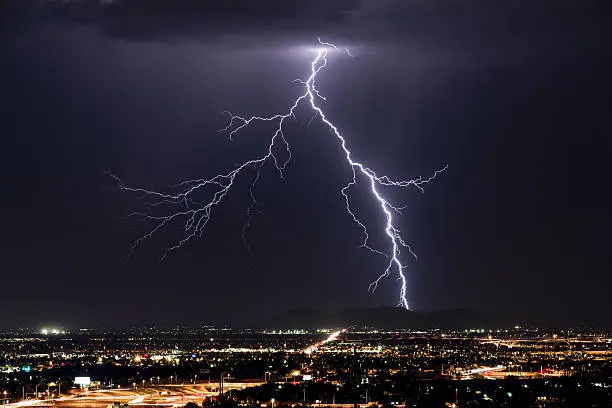
Knowing how to tell if you almost got struck by lightning can be useful after experiencing a frightening thunderstorm. A nearby lightning strike can produce a sudden flash, loud bang, electrical sensations and physical reactions that may leave you wondering how close the strike was. However, there is no reliable way to know with certainty that lightning was about to strike you based only on these sensations. Some warning signs can indicate that you were in an area of significant lightning danger and should seek shelter immediately.
-
Notice Tingling or Your Hair Standing Up
One of the commonly reported sensations associated with a nearby lightning event is a tingling feeling on the skin or the sensation that your hair is standing up.
This can happen when the electrical field around a person becomes very strong. It should be treated as an urgent warning that lightning may be nearby.
If you experience this outdoors, do not remain in the same location to investigate. Move toward safe shelter as quickly as possible.
-
Listen for a Sudden Crack or Thunder
A very loud, sharp crack of thunder can indicate that lightning occurred close to you.
Thunder is produced by the rapid expansion of air heated by lightning. The shorter the time between seeing lightning and hearing thunder, the closer the lightning is likely to have been.
If thunder is audible, you are close enough to lightning to be at risk and should seek shelter.
-
Look for a Lightning Flash Very Close By
A bright flash accompanied almost immediately by thunder can indicate a nearby strike.
You may also notice a sudden flash from an unexpected direction or see lightning strike an object nearby.
Do not remain outdoors trying to determine exactly where the lightning struck. Move indoors or into an enclosed vehicle as soon as possible.
-
Pay Attention to Electrical Sensations
Some people near a lightning strike may experience unusual sensations such as tingling, buzzing or a feeling similar to a static electrical charge.
These sensations should not be ignored during a thunderstorm.
Although such feelings do not prove that lightning was about to strike you, they are a reason to leave an exposed area and seek proper shelter.
-
Notice Nearby Objects Being Damaged
If lightning strikes a tree, pole, building or other object close to you, you may hear a powerful bang or see sparks, smoke, broken branches or other signs of damage.
This means you were in a potentially dangerous area.
Move away from damaged objects and seek substantial shelter. Do not approach electrical equipment or fallen wires because they may remain dangerous.
-
Understand That Lightning Can Strike Outside the Rainfall Area
You do not have to be standing directly under heavy rain to be at risk.
Lightning can occur away from the area where the heaviest rainfall is taking place. This is why seeing a storm in the distance should not automatically be considered safe.
If you can hear thunder, take the storm seriously and seek shelter.
-
Do Not Rely on Physical Warning Signs
There is no guaranteed physical warning that tells you lightning is about to strike you.
Tingling skin, hair standing up and other sensations may occur when a strong electrical field is present, but lightning can also strike without giving a person an obvious warning.
The safest approach is to respond to the storm itself rather than waiting for your body to provide a warning.
-
Move Away From Dangerous Locations
If you believe you have experienced a near lightning strike, leave exposed locations immediately.
Avoid open fields, hilltops, isolated trees, bodies of water, fences, poles and other exposed areas.
The safest option is to enter a substantial building or a fully enclosed vehicle.
-
Check Yourself for Possible Injuries
If a lightning strike occurred extremely close to you, check yourself for injuries once you are in a safe location.
Look for burns, bleeding, confusion, weakness, hearing problems or other unusual symptoms.
If you were actually struck or suspect that lightning passed through your body, seek emergency medical attention even if you initially feel well.
-
Check on People Around You
A nearby lightning strike can affect more than one person. If you were walking or standing with other people, check whether anyone has fallen, become unconscious or appears injured.
If someone has been struck by lightning, call emergency medical services and provide first aid if necessary. It is safe to touch a lightning victim because the person does not retain an electrical charge after the strike.
-
Follow the 30-Minute Safety Rule
After hearing thunder, remain in a safe shelter until at least 30 minutes have passed since the last thunder.
Do not leave shelter simply because the rain has stopped. Lightning can continue during or around a storm even when rainfall becomes lighter.
Waiting for the storm to move away provides additional protection.
-
Take Future Thunderstorms Seriously
Experiencing a near lightning event should be a reminder to improve your thunderstorm safety habits.
Check weather forecasts before outdoor activities, identify nearby shelters and leave exposed areas early when thunderstorms are approaching.
Also Read: How to Protect Students During Rainy Season

Email your news TIPS to Editor@Kahawatungu.com — this is our only official communication channel
