


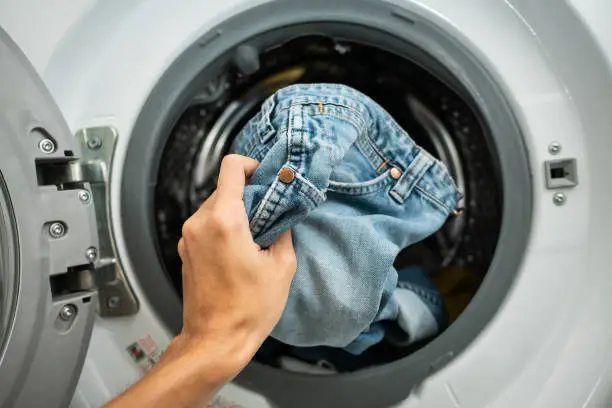
Knowing how to wash jeans for the first time in a washing machine is important for preserving their colour, shape, softness, and durability. New jeans often contain excess dye, manufacturing residue, and stiff fibres that may change after the first wash. Washing them incorrectly can cause fading, shrinkage, or colour transfer to other clothes. Whether you have black, blue, skinny, straight-leg, or baggy jeans, using the correct washing technique will help keep them looking new for longer.
-
Check the Care Label
Before washing your new jeans, check the care label inside the waistband or along the inner seam. The label provides information about the recommended water temperature, washing cycle, and drying method. Most denim jeans can be machine-washed, but some may require special care depending on their material and finish.
If your jeans contain stretch fibres such as elastane, avoid excessive heat because it can damage the elasticity and affect their fit.
-
Separate Your Jeans from Other Clothes
For the first wash, it is advisable to wash your jeans separately, especially if they are dark blue, black, or brightly coloured. New denim may release excess dye into the water, which can stain lighter garments.
If you have several new jeans of similar colours, you can wash them together. However, avoid mixing them with white, cream, or light-coloured clothing during their first wash.
-
Turn the Jeans Inside Out
Turn your jeans inside out before placing them in the washing machine. This protects the outer surface from friction, helps preserve the colour, and reduces fading around the thighs, knees, and seams.
It also protects buttons, zippers, and decorative details from rubbing against other garments or the washing machine drum.
-
Use Cold Water
Select cold water when washing your jeans for the first time. Cold water helps prevent excessive colour bleeding, shrinkage, and fading.
Avoid hot water because it can cause cotton fibres to contract and may make your jeans lose their original shape or size. Cold water is also suitable for removing ordinary dirt and fresh stains from denim.
-
Add the Right Detergent
Use a mild liquid detergent designed for coloured clothes or dark fabrics. Liquid detergent is often a good choice for denim because it dissolves well in cold water.
Add the recommended amount of detergent according to the washing machine load and product instructions. Avoid bleach, harsh detergents, and unnecessary fabric softeners, which may affect the colour and quality of your jeans.
-
Select the Gentle Washing Cycle
Set your washing machine to a gentle or delicate cycle. A normal cycle may also be suitable if the care label permits it, but a gentle cycle reduces unnecessary friction during the first wash.
Choose a low spin speed if your machine allows you to adjust it. Avoid overloading the washing machine so your jeans can move freely and rinse properly.
-
Remove the Jeans Immediately After Washing
Once the washing cycle finishes, remove your jeans promptly. Leaving them wet inside the washing machine for an extended period can encourage unpleasant smells and creasing.
Gently shake the jeans to loosen wrinkles and reshape the waistband, pockets, and legs before drying them.
-
Air-Dry Your Jeans
Hang your jeans on a clothesline or drying rack in a well-ventilated area. Keep them away from direct sunlight to reduce fading, particularly if they are dark-coloured denim.
Avoid tumble-drying them on high heat because excessive heat can cause shrinkage and damage stretch fibres. Air-drying is generally the best way to maintain the original fit of your jeans.
-
Inspect Your Jeans After Drying
Once your jeans are completely dry, check their colour, shape, seams, waistband, and overall fit. The fabric may feel slightly different after its first wash, but proper washing and drying should help prevent unnecessary shrinking or fading.
Fold them neatly or hang them in your wardrobe to keep them ready for wearing.
Also Read: How to Install iPerf3 on Windows

Email your news TIPS to Editor@Kahawatungu.com — this is our only official communication channel
